
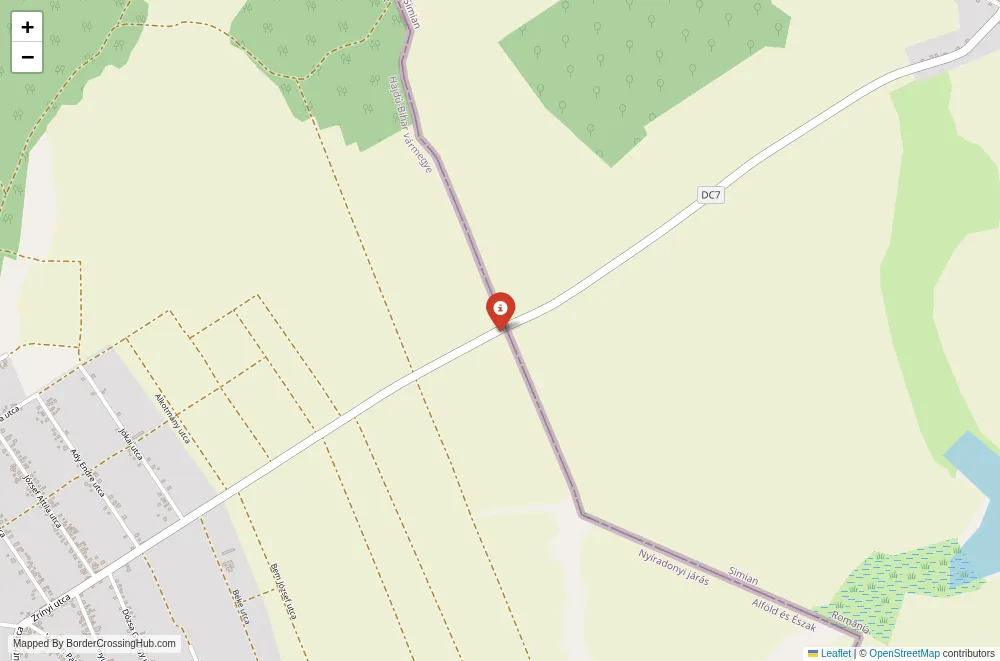
Approximate Border Location
Wait Times
Cars 0-10m; peaks 15-60m day trips
Just crossed? Tap to report:
Operating Hours
Open 24 hrs (12:00 AM-11:59 PM)
Crossing Types
Ped,cars,bikes; rural EU crossing
Border Type
Land crossing via rural road
Peak Times
10:00 AM-04:00 PM; weekends
Daily Crossings
300-1,800/day
Currency Exchange
HUF; RON in Oradea/Carei; ATMs
Safety Information
Low risk; narrow rural roads
Languages Spoken
Hungarian/Romanian
Accessibility Features
Paved but narrow; limited curb cuts
About Ömböly & Horea
Monthly Update (March 2026):
As of 03/2026, the Ömböly & Horea Border Crossing stays quiet and mostly stable. Cars move through the small rural checkpoint without much buildup, often just a few vehicles at a time. Afternoons bring a slight uptick as locals return from nearby towns. Farm traffic and weekend errands shape most of the movement.
No Cell Service at the Border? No Problem.
Don’t get caught scrambling for paperwork when you lose signal. Download the complete Europe Transit Guide directly to your device and access every critical detail, fast-track strategy, and border rule – 100% offline.
The Ömböly-Horea crossing represents a modest rural road link in the northeastern Hungary-Romania border zone, connecting the small Hungarian village of Ömböly in Szabolcs-Szatmár-Bereg county to Horea (formerly Károlypuszta) in Romania’s Satu Mare county.
Alternative Names
You may encounter it as Ömböly-Horea, Ömböly-Károlypuszta (Horea), or Ömböly–Horea határátkelő. Horea names the Romanian village, with Károlypuszta as its historical Hungarian designation.
Location and Connections
This point lies in remote flatlands near the end of paved local roads, with the border running close to the villages themselves. From Hungarian towns like Mátészalka or Nyíregyháza, rural routes (such as road 49133) lead to Ömböly in 40-70 minutes across open countryside. On the Romanian side, Horea connects via DJ196C to nearby settlements and onward to Carei or Satu Mare (about 45-60 minutes). It’s one of the most isolated crossings, far from highways or major arteries, serving primarily local needs in this peripheral border area.
Historical Background
The frontier here dates to post-World War I treaties that split historic regions like Szatmár. Ömböly and Horea sat at dead-end roads right against the border, with no direct link for decades. EU cross-border cooperation programs (HURO 2007-2013) funded road upgrades to enable connection. The crossing opened temporarily in 2017 as part of ten new occasional points, initially weekends only to test demand. It saw extra temporary use during the COVID-19 pandemic (alongside Garbolc-Bercu and Zajta-Peleș) to ease local pressure. Romania’s full Schengen accession on January 1, 2025, prompted plans to formalize such minor points, though it remains low-key amid broader expansions from 12 to 22 total crossings.
Geopolitical and Economic Role
This crossing eases limited personal traffic in agricultural communities with Hungarian and Romanian residents. Passenger cars and local vehicles use it, with no freight or buses permitted. It helps family visits, short errands, and cross-border shopping or work in an area where villages are mere kilometers apart yet long separated. Schengen integration removed routine controls, boosting ties, though Hungary maintains spot entry checks for security. The point supports regional economic revival through better local mobility in farming zones.
Operating Hours and Current Status
As a minor or planned point post-Schengen, it typically operates daily from 07:00 to 19:00, following patterns at similar rural sites, though earlier phases limited it to weekends or specific days. No 24-hour access exists. With land border checks largely abolished since January 2025, movement flows freely, but Hungary applies random verifications on entry. No live cameras or detailed real-time data cover it consistently. Verify via police.hu, politiadefrontiera.ro, or border apps like BorderWatcher for updates, as status can shift with local decisions or maintenance.
Visa Requirements for Foreign Visitors
Hungary and Romania are EU and Schengen members (Romania fully since January 2025). EU/EEA/Swiss citizens cross freely with ID. Third-country nationalities (US, Canada, Australia, etc.) enjoy visa-free short stays up to 90 days in 180 under Schengen rules. Carry your passport; random spot checks or EES biometric registration may occur. No visa-on-arrival applies for eligible travelers.
Crossing Procedures Step by Step
From Hungary (Ömböly), approach for any spot Hungarian entry checks: present passport and vehicle documents; officers may ask questions. Cross the short zone to Romania (Horea) for minimal or no routine processing. You stay in your vehicle; procedures take 5-20 minutes with very low traffic, longer if verifications apply. The setup features basic signage and barriers.
Wait Times and Peak Periods
Traffic is minimal, with waits often zero or under 10 minutes. Occasional modest increases happen during weekends, holidays, or local seasons like harvests, but it stays far quieter than main points. Reports from similar rural crossings confirm quick, hassle-free passages.
Transportation Options After Crossing
Private cars are the only practical option; no public buses cross here. From Horea, rural roads lead to Carei or Satu Mare for bus/train connections. In Hungary, Ömböly links back to Mátészalka or Nyíregyháza. Taxis in nearby towns add expense in this isolated rural spot.
Road Conditions and Scenery
Local roads (upgraded via EU funds) offer basic but usable pavement through expansive flat plains: crop fields, scattered farms, and open countryside near the border. Driving is straightforward and calm, though watch for slow agricultural vehicles or unpaved edges in places.
Weather and Seasonal Impacts
Summers feature heat and dry conditions; winters bring fog, frost, or light snow in the lowlands. River proximity can cause fog reducing visibility, but no regular seasonal closures impact this point.
Nearby Attractions
Ömböly provides serene Hungarian village atmosphere. Horea offers quiet Romanian rural life. Nearby Carei has a castle and markets; Satu Mare features historic sites and thermal options. The region suits peaceful drives through borderland heritage.
Practical Travel Tips
Cross during daylight within operating hours. Carry euros, forints, or lei for minor needs. Keep documents ready for spot checks. Use official sources or apps for status; fuel up on the Hungarian side if prices favor it. Pack snacks, as facilities remain sparse.
Common Scams and Warnings
This remote crossing has almost no scam reports. Rare unofficial money changers might offer bad rates, but they’re uncommon. Ignore unsolicited help. Travelers describe straightforward, low-key experiences when eligible.
Cultural and Economic Notes
The area mixes Hungarian and Romanian rural traditions in agriculture, with shared customs and community links. The crossing revives historic proximity, aiding local economies through easier family and trade interactions.
Final Planning Advice
Opt for Ömböly-Horea if you want a tranquil, uncrowded rural route in the northeastern borderlands, enhanced by Schengen ease. Confirm status officially, prepare your ID, and enjoy the peaceful plains connecting these close villages. Safe travels.
No reviews yet.