
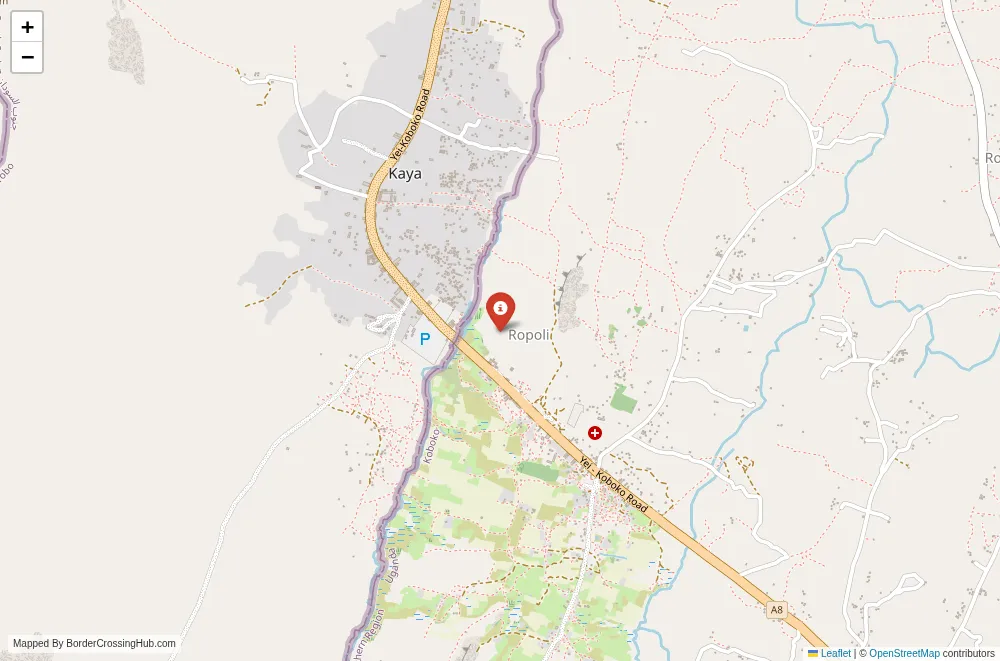
Approximate Border Location
Border Countries
- 🇸🇸South Sudan
- 🇺🇬Uganda
Border Cities
- 🇺🇬Kaya
- 🇸🇸Oraba
Wait Times
Cars 30-180m; peaks 240-600m
Just crossed? Tap to report:
Operating Hours
06:00 AM-06:00 PM
Crossing Types
Ped,cars,buses; border controls
Border Type
Land crossing via road (Sahel route)
Peak Times
07:00-10:00 AM; market days
Daily Crossings
2,000-12,000/day
Currency Exchange
SSP; UGX; USD common; exch in towns
Safety Information
Security presence; delays and checks
Languages Spoken
Arabic, English, Swahili
Accessibility Features
Basic step-free; uneven lanes
About Nsalitje & Salitje
Monthly Update (March 2026):
As of 03/2026, the Nsalitje & Salitje Border Crossing stays quiet with light local traffic. Cars and small pickups cross without much buildup most of the day. Inspections are straightforward but can slow briefly when several vehicles arrive together. Nearby rural travel shapes the rhythm.
No Cell Service at the Border? No Problem.
Don’t get caught scrambling for paperwork when you lose signal. Download the complete Africa Transit Guide directly to your device and access every critical detail, fast-track strategy, and border rule – 100% offline.
The Nsalitje-Salitje border crossing provides a quiet, low-volume land link between Eswatini and Mozambique, tucked into the northeastern corner of Eswatini where the frontier meets rural landscapes. You usually pick this route for local travel or to avoid busier southern points, often connecting from Pongola in South Africa or nearby Eswatini towns toward southern Mozambique. Alternative names include Nsalitje/Salitje Border Post, Salitje checkpoint, or simply the Nsalitje crossing.
Location and Basic Connection
Nsalitje sits in Eswatini’s Shiselweni Region (southern part), close to the hamlet of the same name, while Salitje lies directly across in Mozambique’s Gaza Province. The border runs along the eastern edge of Eswatini for about 105 kilometers total, with this post handling mainly local traffic in a rural, hilly area. It connects unpaved or basic roads on both sides, supporting foot, motorcycle, and occasional vehicle crossings rather than heavy commercial flows. The nearby Lebombo Mountains influence the terrain, with the crossing in a less developed stretch compared to major ports farther north or south.
Historical Background
The frontier here follows colonial demarcations from British and Portuguese eras, with straight-line sections defining much of the Eswatini-Mozambique boundary. The area remained relatively stable compared to other regional frontiers, though it saw minor impacts from southern African conflicts and migrations. Post-independence, the crossing served pastoral and small-scale trade communities. Recent years brought focus on regional integration through East African Community and SADC efforts, but this post stays secondary. Geopolitically, it supports quiet bilateral ties, with Eswatini relying on Mozambique’s ports for some transit while locals cross for family, markets, or work.
Current Operating Status
As of early 2026, the crossing operates daily with standard hours, typically 08:00 to 18:00 (aligned to local time, UTC+2). It remains open without major reported disruptions, though low traffic means occasional adjustments. Eswatini offers visa-free entry or visa-on-arrival for many nationalities (often 30 days); Mozambique provides visa-on-arrival for eligible travelers (usually $50 USD cash, single entry) or requires pre-arrangement for some. The point sees primarily local use, with no widespread closures from regional issues. Always confirm via embassies or recent reports, as hours can shift for holidays or maintenance.
Practical Crossing Procedures
You cross on foot or by vehicle. From Eswatini at Nsalitje, handle exit at immigration and customs for stamps and basic checks. Proceed across the short no-man’s-land to Salitje in Mozambique for entry. Mozambique requires visa payment (USD cash preferred), document review, and questions about purpose. Eswatini exit involves stamps and possible vehicle inspections. Bring passport photos, cash for fees, and proof of onward travel or funds. The process generally takes 30 to 60 minutes for straightforward cases, with separate handling for people and goods. Facilities stay basic, with limited English or amenities.
Wait Times and Peak Periods
Lines stay short due to minimal foreign traffic, often clearing in under an hour. Early mornings or late afternoons move quickest. Peaks occur with local market days or seasonal movements, but this post avoids crowds from larger crossings. No major backups reported recently.
Transportation Options
Shared taxis or private vehicles reach Nsalitje from Pongola (South Africa) or nearby Eswatini towns like Lavumisa. On Mozambique’s side, connections head toward local areas or farther to Maputo via rough roads. Motorcycles fill gaps; no regular buses cross directly. Stick to official hires at border lots to avoid issues. Roads on Eswatini’s side hold decently, but Mozambique transitions to gravel quickly.
Scams and Safety Warnings
Scam reports remain rare at this low-key post, but watch for touts offering “assistance” with forms or exchanges at poor rates; ignore and use official counters. Petty overcharges for rides happen occasionally. The rural area feels safe during open hours for foreigners, with no widespread crime noted. Mozambique’s general instability (northern insurgency, occasional unrest) stays distant here, but standard caution applies. Remote location means limited support if problems arise. Stick to marked zones and avoid unsolicited deals.
Road Conditions and Scenery
Eswatini approaches feature tarred or good gravel roads through rolling hills and farmland. The border zone includes basic facilities amid scrub and small settlements. Mozambique’s side starts with gravel tracks that can rut after rain, surrounded by open countryside, acacia trees, and distant Lebombo ridges. Dry season keeps paths passable; wet periods add mud.
Seasonal Variations and Weather Impacts
Dry months (May-September) offer clearest travel and steadier local flows. Wet season brings rain that slows vehicles on unpaved sections, though the crossing rarely closes. Trade or migration aligns with drier periods, keeping activity modest year-round.
Nearby Attractions
Nsalitje and Salitje provide rural hamlet feels with small markets selling local produce. Nearby Pongola in South Africa offers dam views and basic amenities. In Eswatini, Lavumisa nearby has community life. The area suits border enthusiasts or those exploring quiet southern routes over big sights.
Cultural and Economic Role
Local trade in goods, livestock, and essentials sustains the crossing, supporting jobs in transport and small commerce. It enables family ties and daily movement for border communities. The post reinforces practical links in this under-visited frontier, aiding economic exchanges without the intensity of major corridors.
Final Planning Tips
Arrive early with USD cash for visas, printed documents, and offline maps. Prepare for basic facilities and variable roads. Check status ahead via embassies or forums. With prep, you manage formalities smoothly and continue across this understated border.
Wrapping Up the Crossing
Nsalitje-Salitje keeps things simple and local-focused between Eswatini and Mozambique. Time it right, handle the basics, and it offers a calm passage through rural southern Africa. Safe travels.
No reviews yet.