
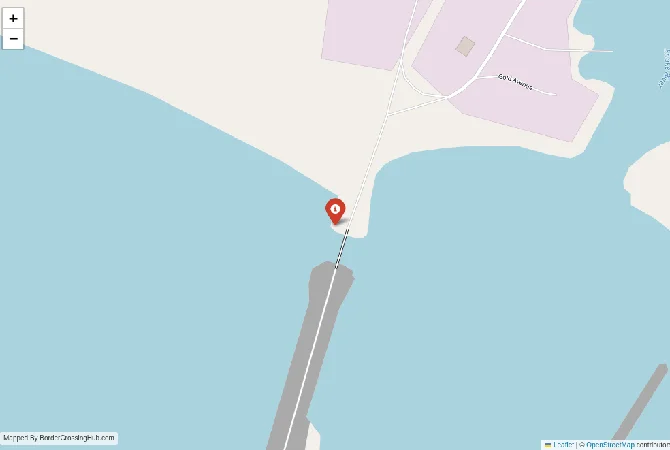
Approximate Border Location
Border Countries
- 🇺🇸United States
- 🇷🇺Russia
Border Cities
- 🇺🇸Nome
- 🇷🇺Provideniya
Wait Times
No regular service; ad hoc
Just crossed? Tap to report:
Operating Hours
Irregular seasonal openings
Crossing Types
Charter, cargo, limited travel
Border Type
Maritime
Peak Times
Summer
Daily Crossings
10
Currency Exchange
USD/RUB
Safety Information
Extreme conditions
Languages Spoken
English/Russian
Accessibility Features
None
About Nome & Provideniya
No Cell Service at the Border? No Problem.
Don’t get caught scrambling for paperwork when you lose signal. Download the complete South America Transit Guide directly to your device and access every critical detail, fast-track strategy, and border rule – 100% offline.
A Remote Maritime Link Across the Bering Sea
Far from typical land crossings, the Nome–Provideniya route connects United States and Russia across the cold waters of the Bering Sea. This crossing links the Alaskan town of Nome with the Russian port town of Provideniya. Unlike most international borders, this is not a fixed checkpoint you can walk or drive through. It is a maritime and occasionally air-based connection shaped by extreme weather, distance, and strict regulations.
Not a Regularly Accessible Crossing
You cannot treat Nome–Provideniya as a standard border crossing. There is no routine ferry service or open transit route for travelers. Movement between these two points is highly restricted and rarely available to the public. Travel between the United States and Russia generally requires flights through major cities, not direct travel across the Bering Sea. Special expeditions, research trips, or chartered vessels occasionally make the journey, but these are not typical options. You should not plan this as a practical crossing route.
Historical Context and Cold War Legacy
During the Cold War, this region marked part of the tense boundary between the United States and the Soviet Union. The proximity of Alaska to Russia made it strategically important, with limited direct interaction between the two sides. Nome and Provideniya were occasionally linked through controlled exchanges, including cultural visits and limited trade, but these were exceptions rather than the norm. Today, the route remains symbolic of how close the two countries are geographically, despite limited direct travel.
Geography and Harsh Conditions
The Bering Sea is one of the most challenging environments for travel. Ice, strong winds, and freezing temperatures dominate much of the year. In winter, sea ice can cover large areas, while summer brings fog and unpredictable storms. These conditions make regular maritime travel difficult and sometimes dangerous. Distances may appear short on a map, but the environment turns even simple journeys into complex operations.
No Standard Immigration Process
There is no direct immigration checkpoint linking Nome and Provideniya. If you were to travel legally between the United States and Russia, you would go through established international entry points, typically airports in major cities. Immigration procedures are handled there, not at these remote coastal towns. Any arrival by private vessel or charter requires prior authorization from both countries, including visas and security clearance.
Transport Possibilities and Limitations
On rare occasions, chartered boats or small expedition cruises may travel between Alaska and Russia, sometimes including stops near Provideniya. These trips are highly specialized and require extensive planning. Air connections between Alaska and Russia have existed in limited forms, but they are not consistent or widely available. For most travelers, the only realistic option is to travel via indirect routes through hubs like Anchorage, Moscow, or other international gateways.
Life in Nome and Provideniya
Nome is a small but historically significant town in Alaska, known for its gold rush past and remote Arctic setting. It has basic infrastructure, including an airport and seasonal port access. Provideniya, on the Russian side, is a similarly remote port town with a focus on local industry and regional transport. It serves as a key point in Russia’s far eastern Arctic region. Both towns experience long winters, limited connectivity, and a strong dependence on seasonal supply routes.
Seasonal Realities and Travel Impact
Seasonality is a major factor in this region. Winter brings extreme cold and ice, limiting both sea and air travel. Summer offers slightly more accessibility, but fog and storms remain common. Even in the best conditions, travel plans can be disrupted with little notice. Flexibility is essential if you are dealing with this part of the world.
Security and Legal Considerations
The maritime border between the United States and Russia is closely monitored. Unauthorized crossings are taken seriously and can result in detention or legal action. Both countries require proper visas and prior approval for any form of entry. This applies especially to remote regions like Nome and Provideniya, where security oversight is strict. You should never attempt to approach or cross this border without official authorization.
Cultural and Regional Context
Despite the political boundary, the Bering Strait region has shared cultural roots. Indigenous communities on both sides have historical connections that predate modern borders. However, modern regulations limit interaction, and cross-border cultural exchange is rare. The region remains one of the most isolated parts of both countries, with lifestyles shaped by the Arctic environment.
Why This Crossing Stands Out
The Nome–Provideniya crossing is unique because it exists more in theory than in practice for travelers. It represents one of the closest maritime distances between the United States and Russia, yet remains largely inaccessible. The combination of geography, climate, and political controls makes it unlike typical border crossings. You are dealing with a boundary defined by ocean and ice rather than roads or checkpoints.
Final Notes
If you are planning travel between the United States and Russia, you should use standard international routes rather than attempting to connect Nome and Provideniya. This route is best understood as a remote and symbolic link rather than a usable crossing. While it captures the imagination due to its location and history, the practical realities make it unsuitable for regular travel.
No reviews yet.