Monthly Update (October 2026):
In October 2026, Nievieĺ & Prykladniki remains closed. The Belarusian checkpoint is listed as open, but the Ukrainian side is not operating, as at every Belarus-Ukraine road crossing. Travel between the two countries currently goes through a third country.
About this crossing
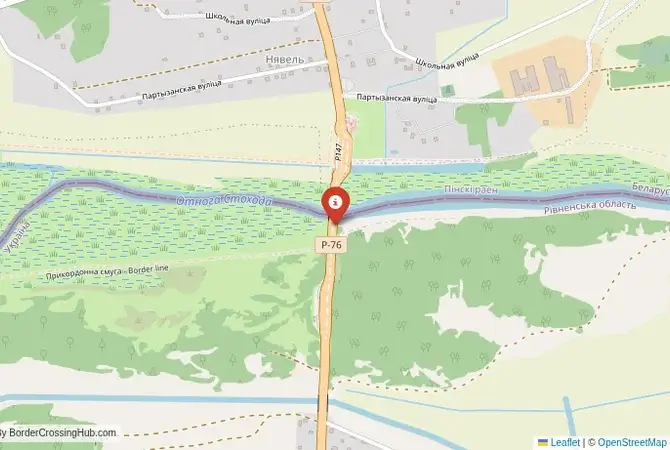
Location
The Belarusian checkpoint is at Nievieĺ (Nevel), in the Pinsk district of the Brest region. On the Ukrainian side the road leads to Prykladnyky, in the Varash district of the Rivne region. The area is part of Polesia, a region of forests, rivers and marshes, and the roads on both sides are quiet rural routes.
Current Status
The Belarusian State Border Committee still lists its own checkpoint as open around the clock, as an interstate checkpoint reserved for citizens of Belarus and Ukraine. It also states that the Ukrainian checkpoint at Prykladnyky is not operating, at Ukraine's initiative. In practice you cannot cross here in either direction. The only point where Ukraine still lets anyone in from Belarus is Mokrany-Domanove in the Volyn region, and only for Ukrainian citizens returning home on foot. Nobody can leave Ukraine for Belarus there, and foreigners cannot use it.
Nearby Border Crossings
Why the Border Is Closed
Russian troops entered Ukraine from Belarusian territory in February 2022. Since then Ukraine has kept its border with Belarus closed to traffic and has fortified it. The border areas on both sides are militarised, and parts of the Ukrainian side may be mined. Do not try to approach or cross the border away from an official checkpoint.
Alternatives
Travellers between Belarus and Ukraine currently go through a third country, most often Poland or Lithuania, and then use a Polish-Ukrainian crossing. Check the entry rules of every country on the way. Many governments, and the EU countries next to Belarus, restrict entry and transit for some nationalities.
Before the War
The crossing was a small interstate checkpoint for local traffic, open only to Belarusian and Ukrainian citizens. It linked villages in the Pinsk area with the Varash district, home to the Rivne nuclear power plant. Like other border points, it was also closed for a time during the COVID-19 pandemic in 2020.
Final Planning Notes
Do not plan a trip around this crossing. Check the Belarusian State Border Committee and the State Border Guard Service of Ukraine for any change. A reopening would be announced by both governments.
View all border crossings between Belarus and UkrainePractical information
Fuel
Belarus: 2 km - Ukraine: 2 km
Currency
Limited kiosks; BYN, UAH
Safety information
High-risk security zone; border closed
Connectivity
3G coverage
Have you crossed here?
Help other travelers by sharing your experience, wait times, and any updates.