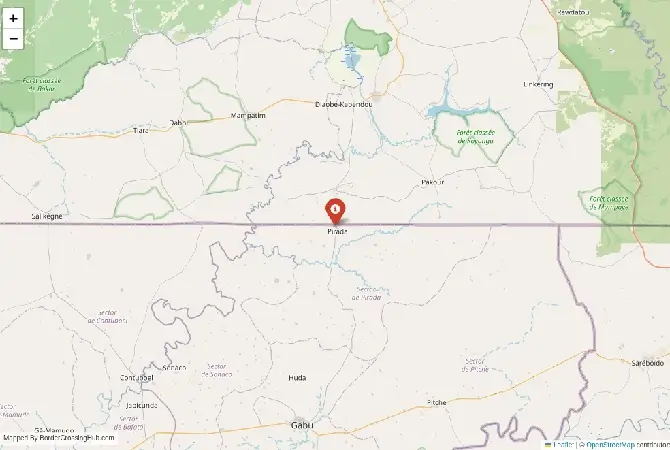
Monthly Update (September 2026):
Nianao & Pirada remains a small rural Senegal-Guinea-Bissau crossing, with no significant September closure or disruption identified. Security cooperation along the two countries' frontier has increased, with Senegal and Guinea-Bissau agreeing in August on a schedule of joint patrols covering priority border sectors. For travelers using smaller crossings such as Pirada, the practical issue is the limited infrastructure and services rather than queueing. Conditions can also be more difficult during the rainy season.
About this crossing
A Border Drawn by Colonial Lines
The border here reflects the legacy of European colonialism rather than natural divisions. Senegal was governed by France, while Guinea-Bissau was controlled by Portugal. When Guinea-Bissau secured independence in 1973 after a prolonged conflict, this line became formalized as an international border.
Despite that separation, ethnic groups such as the Fulani and Mandinka live on both sides. You will notice shared languages and traditions, especially in markets and roadside interactions. Still, administrative differences are clear once you deal with officials, as each country maintains its own procedures and expectations.
Nearby Border Crossings



First Impressions at the Checkpoints
When you reach Nianao, expect a basic checkpoint with a handful of officers and simple buildings. Traffic tends to be light, often limited to motorbikes, shared taxis, and traders moving goods. After crossing into Pirada, the setup feels even more minimal, with fewer visible facilities.
There is rarely clear signage telling you where to go. You will need to ask officials directly for immigration and customs steps. Patience helps here, as processes can take time even when there are few travelers.
Crossing Procedures and Wait Times
You should plan for a straightforward but sometimes slow process. On the Senegal side, exit formalities usually involve a passport check and an exit stamp. Entry into Guinea-Bissau can take longer, especially if officers need to verify visas or ask additional questions.
Wait times vary widely. On a quiet day, you might complete the crossing in 20 to 30 minutes. During busier periods or if systems are down, it can stretch beyond an hour. Power outages or administrative delays are not uncommon in this region.
Make sure you have all documents ready before arriving. Border officials may not accept digital copies, so printed paperwork is recommended.
Visa Rules and Entry Requirements
For Guinea-Bissau, most foreign visitors need a visa in advance. While visas on arrival have been reported at some crossings, you should not rely on this option at Pirada. It is safer to arrange your visa beforehand through an embassy or consulate.
Senegal, on the other hand, allows visa-free entry for many nationalities for short stays. Still, you should confirm your eligibility before traveling, as rules can change.
Carry multiple copies of your passport and visa. Occasionally, officials request them for record-keeping, and having extras saves time.
Road Conditions and Transport Options
The roads leading to Nianao are generally passable but can become rough, especially during the rainy season from June to October. Dirt tracks may turn muddy, and travel times can increase significantly.
On the Guinea-Bissau side, conditions are often more challenging. The road from Pirada toward larger towns can be uneven, with potholes and limited maintenance. You should prepare for slower travel once you cross.
Transport options are limited. Shared taxis and minibuses operate irregularly, and schedules depend on demand rather than fixed timetables. Hiring a private vehicle offers more control but may require negotiation.
Scams & Warnings
While this crossing is not considered highly dangerous, you should remain cautious. Petty corruption can occur, particularly in the form of unofficial “fees” requested by individuals claiming to assist with paperwork.
You may encounter people offering help with forms or guiding you through the process. Some are legitimate, but others expect payment afterward. Politely decline if you do not need assistance, and rely on official staff instead.
Keep your belongings secure and avoid displaying large amounts of cash. Rural crossings tend to be calmer than major ones, but awareness is still important.
Seasonal Factors and Delays
Weather plays a significant role here. During the rainy season, roads can become difficult, and delays are more likely. Flooded sections may slow vehicles or force detours.
In the dry season, conditions improve, but dust and heat can make travel uncomfortable. Border posts may operate at a slower pace during extreme heat, especially in the afternoon.
Arriving early in the day often helps reduce waiting times and avoids potential disruptions later on.
Local Life Around the Border
The communities around Nianao and Pirada rely heavily on cross-border trade. You will see small markets where goods such as produce, textiles, and everyday items are exchanged. These markets reflect the close ties between people on both sides despite the international boundary.
Languages spoken include French in Senegal and Portuguese or Crioulo in Guinea-Bissau, though local languages are widely used. Basic communication may require gestures or simple phrases if you do not speak these languages.
Facilities are limited. Do not expect restaurants, ATMs, or reliable internet access near the crossing. It is best to prepare everything you need before arrival.
Cultural and Economic Context
This crossing plays a modest but important role in regional trade. Goods move informally as much as formally, and local economies depend on this exchange. You will notice a relaxed approach compared to larger borders, though this can also mean less consistency in how rules are applied.
The area offers a glimpse into everyday life in rural West Africa. It is less about infrastructure and more about human connections and long-standing relationships across the border.
Practical Tips for Your Trip
Preparation makes a big difference here. Bring enough cash in local or widely accepted currencies, as card payments are not an option. Keep your documents organized and easily accessible.
Dress modestly and remain respectful when interacting with officials. A calm attitude goes a long way if delays occur or procedures seem unclear.
If you are traveling overland across multiple borders in the region, build extra time into your schedule. Unexpected delays are part of the experience.
Final Thoughts
The Nianao–Pirada crossing offers a quieter, more rural alternative to busier West African borders. You will deal with simple infrastructure, occasional delays, and a need for patience, but also gain a closer look at cross-border life in this part of the continent. Careful preparation and awareness of local conditions will help you handle the crossing without unnecessary complications.
View all border crossings between Senegal and Guinea-BissauPractical information
Fuel
Senegal: 2 km - Guinea-Bissau: 2 km
Currency
Not required (both countries use XOF)
Safety information
Rural area, low security
Connectivity
Cellular 2G/3G/4G
Have you crossed here?
Help other travelers by sharing your experience, wait times, and any updates.