
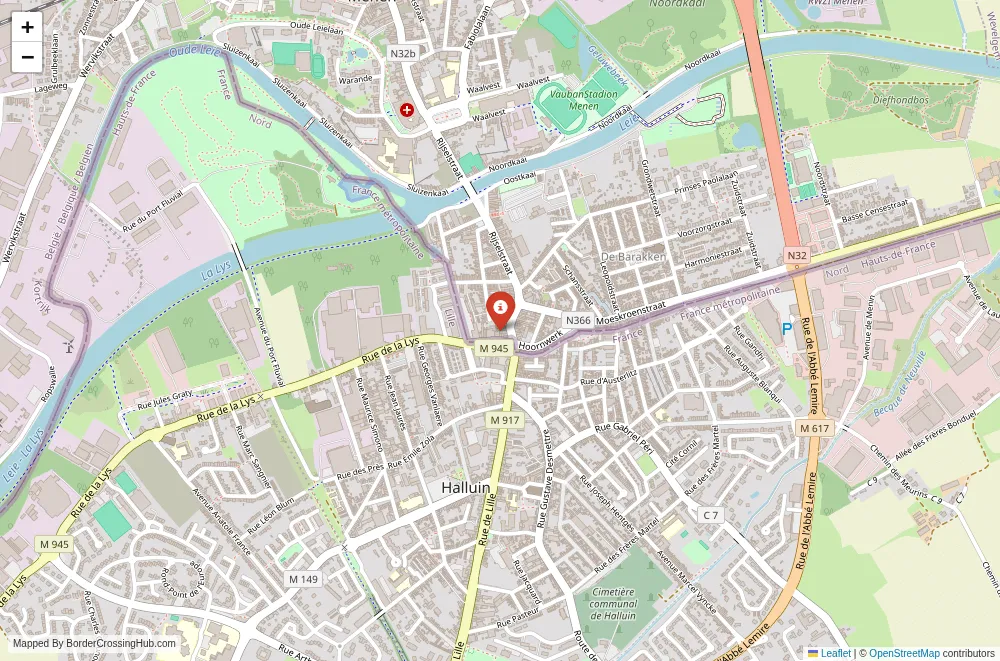
Approximate Border Location
Wait Times
Cars 0-10m; peaks 20-60m commute
Just crossed? Tap to report:
Operating Hours
Open 24 hrs (12:00 AM-11:59 PM)
Crossing Types
Ped,cars,bikes,buses; no routine checks
Border Type
Land crossing via city streets
Peak Times
07:00-09:00 AM; 04:30-06:30 PM
Daily Crossings
15,000-55,000/day
Currency Exchange
EUR only; ATMs and banks nearby
Safety Information
Urban traffic; occasional controls
Languages Spoken
French/Dutch
Accessibility Features
Step-free pavements; accessible stations nearby
About Neuville‑en‑Ferrain & Rekkem / Risquons‑Tout
Monthly Update (March 2026):
As of 03/2026, the Neuville-en-Ferrain & Rekkem / Risquons-Tout Border Crossing stays busy but predictable. Commuters drive through steadily between France and Belgium, especially during early morning and late afternoon. Traffic sometimes slows briefly on the French side near local intersections. Weekday work travel and shopping trips shape most of the flow here.
No Cell Service at the Border? No Problem.
Don’t get caught scrambling for paperwork when you lose signal. Download the complete Europe Transit Guide directly to your device and access every critical detail, fast-track strategy, and border rule – 100% offline.
Neuville-en-Ferrain connects France to Belgium in the suburbs of Lille, where the border runs through residential streets and marks a subtle shift in this densely populated Euroregion.
Location and Basic Connections
You reach this crossing where the French town of Neuville-en-Ferrain meets the Belgian areas of Rekkem and Risquons-Tout in West Flanders province. It lies along local roads in the greater Lille metropolitan area, close to the A22 motorway that links Lille to Kortrijk. Foreign visitors often use it when moving between northern France and Belgian cities like Kortrijk or Ghent, or for everyday cross-border activities in this urban fringe. Alternative names include the Neuville-en-Ferrain-Rekkem border or the Risquons-Tout crossing. As a Schengen internal point, it features no permanent controls, though temporary spot checks continue as of February 2026.
Historical Background and Geopolitical Role
The Franco-Belgian border here dates to the 1839 Treaty of London, which established Belgium’s independence and set much of the current line. Risquons-Tout gained fame from an 1848 incident when Belgian émigrés and revolutionaries attempted to invade from France to spark a revolution but were repelled by Belgian forces near the hamlet. The name “Risquons-Tout” (let’s risk everything) reflects that bold but failed effort. The area industrialized with textiles and manufacturing in the 19th and 20th centuries, drawing workers across the line. World wars brought fighting nearby, but post-1945 integration through Benelux and Schengen in 1995 turned it into a seamless zone. It now supports heavy commuter traffic and economic ties in the cross-border Lille-Kortrijk-Tournai region.
Current Status and Safety Considerations
France maintains temporary internal border controls with Belgium until at least April 30, 2026, due to ongoing concerns over jihadist threats, rising antisemitic incidents, criminal smuggling networks, and migration pressures. Belgium conducts targeted internal checks on roads, buses, trains, and some flights until July 31, 2026, focusing on irregular migration and security. These result in random police stops for ID verification rather than fixed booths at every crossing. Travelers report quick interactions in suburban settings, with most passages unaffected but occasional roadside checks adding minutes. The area has standard urban safety levels, with low risks of scams or issues specific to the border itself. Carry your passport or national ID at all times to handle any stop without hassle.
Operating Hours and Wait Times
The crossing remains open 24 hours on local roads, with no routine infrastructure to block passage. Temporary controls create variable interruptions: many crossings happen without notice, while selected stops last 5 to 20 minutes for document review or questions. Rush hours or weekends see slightly higher chances of checks near main access points. Weather rarely disrupts, though rain or fog can slow suburban driving. Peak tourism seasons bring more activity but no major queues like external borders.
Visa Requirements for Foreign Visitors
Schengen rules apply fully: EU/EEA/Swiss citizens move freely with valid ID. Non-EU nationals qualify for visa exemptions up to 90 days in any 180-day period if eligible, or hold a Schengen visa. The Entry/Exit System (EES), phased in since late 2025 and nearing full operation by April 2026, registers biometrics at external borders but not routinely at internal points like this. During spot checks, present your passport and any supporting documents like proof of funds or accommodation if requested. No fees occur at the crossing.
Crossing Procedures Step by Step
You drive or walk along suburban streets where the border often lacks clear markers beyond language changes on signs or occasional boundary stones. Under normal conditions, no stop happens. If police signal during a control, pull over safely, present ID promptly, and answer basic travel questions. The process usually ends fast in this low-key residential zone. Pedestrians and cyclists follow the same roads without dedicated lanes. The shift from French to Belgian territory feels immediate, with shops and homes continuing unbroken across the line.
Transportation Options and Road Details
Local buses connect Neuville-en-Ferrain to nearby Belgian towns, while trains from Lille reach Kortrijk with stops close by. The A22 motorway provides quick access for longer trips. Roads stay paved and well-maintained, passing through residential neighborhoods, small commercial areas, and occasional green spaces. Traffic flows steadily but can thicken during commute times. Cycling routes exist in the area, making it feasible for short hops across the border.
Nearby Attractions and Practical Tips
Explore Lille’s historic center with its Flemish architecture, markets, and museums just minutes away on the French side. In Belgium, Kortrijk offers textile history sites and the Leie River paths. Always keep ID handy due to possible checks. Euros work on both sides, with cards widely accepted. Pack for variable weather in this northern region. For drivers, note speed limits change slightly across the border. Shoppers often cross for price differences in everyday goods.
Cultural and Economic Significance
The crossing sustains a tightly integrated zone where people live, work, and shop across national lines daily. Shared Flemish influences appear in language, cuisine, and traditions on both sides. Commuters rely on it for jobs in Lille or Kortrijk, while cross-border commerce in retail and services thrives. It represents Schengen’s success in blending economies despite occasional security-driven checks.
Final Planning Notes
Monitor updates on temporary controls through official sources, carry ID consistently, and build in extra time for any random stop. This suburban route makes regional travel straightforward when prepared.
No reviews yet.