
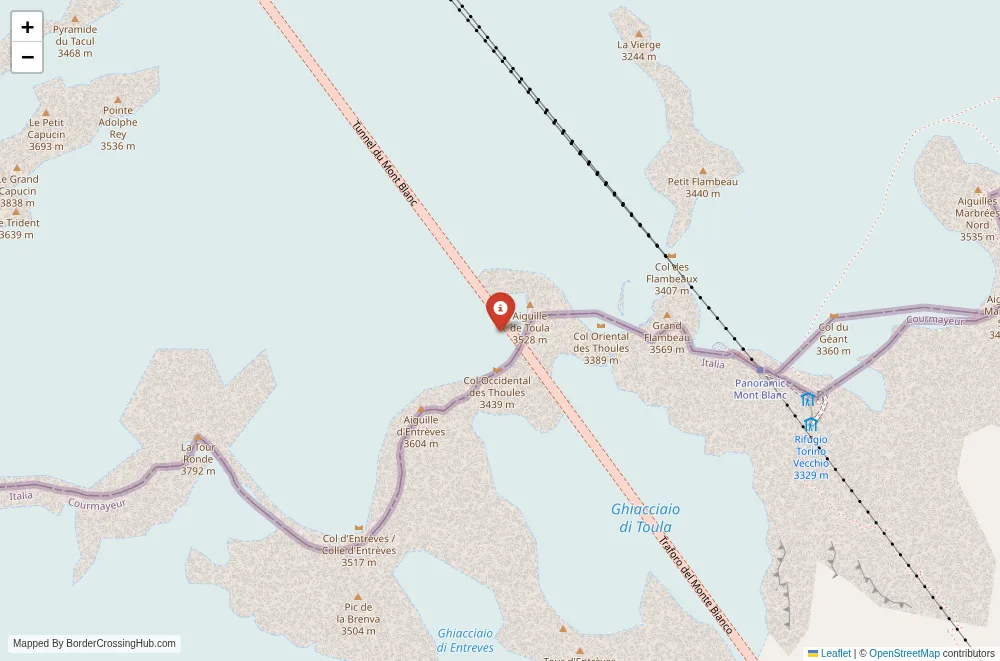
Approximate Border Location
Wait Times
Cars 10-45m; peaks 60-240m holidays
Just crossed? Tap to report:
Operating Hours
Open 24 hrs; metering during peaks
Crossing Types
Cars,buses,trucks; toll + safety rules
Border Type
Land crossing via road tunnel (Mont Blanc)
Peak Times
Fri-Sun 08:00 AM-12:00 PM; Dec-Mar
Daily Crossings
10,000-25,000/day
Currency Exchange
EUR only; ATMs at toll plazas/towns
Safety Information
Congestion + tunnel incidents; follow controls
Languages Spoken
French/Italian
Accessibility Features
Accessible toilets at terminals; ramps present
About Mont Blanc Tunnel & Courmayeur
The Mont Blanc Tunnel border crossing bores 11.6 km through the heart of Mont Blanc massif at around 1,300 meters altitude, providing the most direct road link between Chamonix in France’s Haute-Savoie department and Courmayeur in Italy’s Aosta Valley.
Location and Basic Connections
You enter the tunnel from the French side near Chamonix along the RN205 (Route Blanche), about 15 km south of the town center, or from the Italian side near Courmayeur along the SS26 (Traforo del Monte Bianco). The tunnel connects directly to the A40 motorway in France (toward Geneva) and the A5 in Italy (toward Turin or Milan). Chamonix serves as the main French hub with trains and buses from Geneva or Lyon, while Courmayeur links to Aosta or Milan. The crossing handles heavy tourist, ski, and freight traffic, shortening journeys by avoiding longer alpine routes. Buses from Chamonix or Courmayeur sometimes coordinate with tunnel schedules.
Alternative Names
This tunnel is called Tunnel du Mont-Blanc (French), Traforo del Monte Bianco (Italian), Mont Blanc Tunnel, or the Chamonix-Courmayeur crossing.
Historical Background
The tunnel opened in 1965 as a binational engineering feat after decades of planning, becoming Europe’s longest road tunnel at the time. It replaced exposed high passes for year-round transit. A tragic 1999 fire killed 39 people, leading to major safety upgrades like ventilation, emergency galleries, and stricter regulations. The parallel railway tunnel (built 1915) closed after an incident but serves as an emergency escape route. Ongoing improvements tie into the 2026 Winter Olympics preparations in northern Italy and France.
Geopolitical Significance
As a Schengen internal border, no routine passport controls apply; France and Italy allow free movement for most travelers. France’s temporary internal Schengen checks (extended to April 30, 2026, due to security threats like terrorism and migration) can lead to random ID or vehicle inspections, though Mont Blanc Tunnel sees them less than surface borders. The tunnel supports tourism (skiing, Mont Blanc access), freight between France and Italy, and regional ties. In early 2026, the tunnel operates normally with planned night closures for maintenance (e.g., February 9-10, 2026: 22:00-06:00 full closure; other nights alternating one-way or brief stops). No major long-term closures reported beyond scheduled work; always verify real-time status via the official site.
Practical Crossing Procedures
You drive straight through the tunnel, paying tolls at booths on either end (cash, card, or electronic tags). No immigration stamps occur under Schengen; random patrols may stop vehicles for ID, customs (goods over limits), or safety checks. Most nationalities cross freely (90 days visa-free short stay). Carry your passport or ID. Vehicles need registration, insurance, and winter equipment (chains/snow tires November-March). Prohibited items include certain hazardous loads; pedestrians and bikes banned. The tunnel enforces speed limits (50-70 km/h), no overtaking in places, and ventilation rules. Heavy vehicles face night restrictions during some periods.
Typical Wait Times and Operating Hours
The tunnel runs 24/7 when open, with no queues in normal flow. Planned night closures (e.g., 8-12 hours for maintenance) occur monthly, with alternating one-way traffic or full stops announced ahead. Tolls cause brief stops at booths (minutes). Traffic can build during ski seasons or holidays, but delays rarely exceed 30-60 minutes outside closures.
Transportation Options
Private cars dominate for flexibility. Regional buses from Chamonix or Courmayeur sometimes link with tunnel schedules. No direct public buses cross routinely; taxis or rideshares work for short hops. The tunnel suits most vehicles (cars, vans, trucks); cycling or walking prohibited. The route fits ski trips (Courmayeur from Chamonix) or drives between Geneva and Turin.
Road Conditions and Scenery
The tunnel stays well-maintained, lit, and ventilated, with constant monitoring. Approaches feature steep alpine climbs with switchbacks, snow in winter (chains mandatory November-March), and stunning Mont Blanc views. Inside, it’s a straight, 11.6 km bore with emergency bays. The French side starts scenic valley roads; Italian side descends into Aosta Valley.
Scams and Warnings
Tunnel tolls are fixed; avoid unofficial “helpers.” Random checks mean have ID ready. Winter hazards (snow, ice) require chains; avalanches or maintenance cause closures. The 1999 fire legacy means strict safety rules; follow ventilation and speed limits. No major crime issues, but high traffic in peaks adds congestion risks.
Nearby Attractions
Chamonix offers Aiguille du Midi cable car, Mont Blanc views, and skiing. Courmayeur provides Skyway Monte Bianco, thermal baths, and Val Veny trails. The tunnel links to Mont Blanc massif hikes, skiing (Espace San Bernardo nearby), or Aosta Valley wine/food.
Seasonal Variations and Delays
Winter demands chains/snow tires; night closures frequent for maintenance. Summer sees tourism peaks but reliable flow. Planned 2026 closures (nights January-August) announced; check forecasts.
Cultural and Economic Role
The tunnel ties French and Italian alpine communities, boosting tourism and trade. It blends Savoyard and Valdostan cultures in food, festivals, and mountain life.
Final Planning Notes
Check real-time status via tunnelmb.net or app. Carry ID, chains in winter, and cash/card for tolls (around €50-60 one-way car). This suits alpine drivers prepared for weather and occasional checks.
Driving Through This Alpine Tunnel
The Mont Blanc Tunnel delivers a fast, engineering marvel of a border crossing beneath Europe’s highest peak, connecting Chamonix and Courmayeur with straightforward Schengen ease. Stay informed on night closures and winter prep for a smooth transit across this iconic Franco-Italian link.
No reviews yet.