
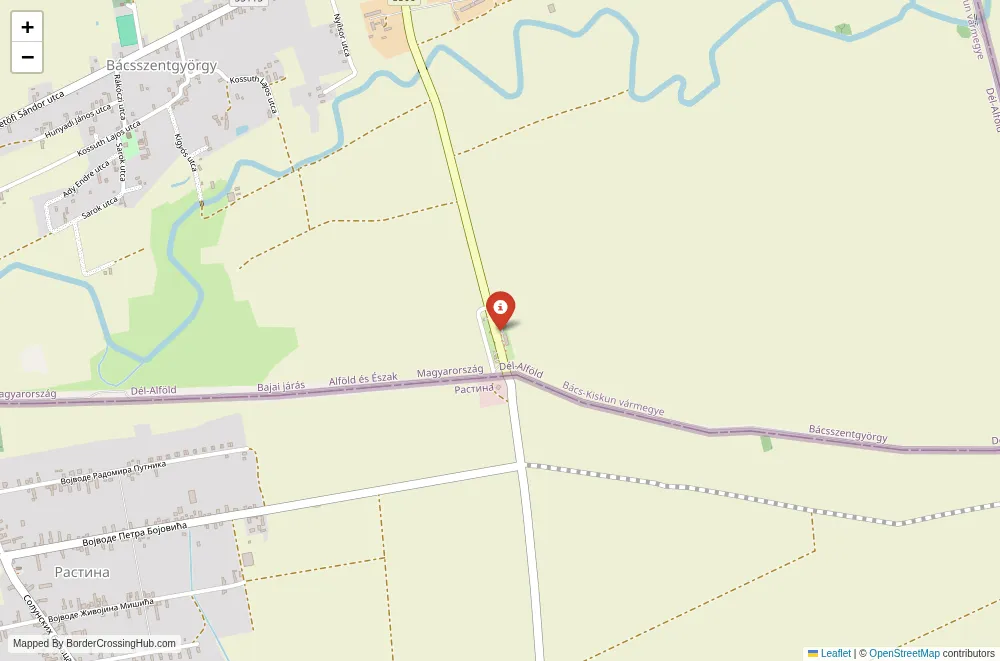
Approximate Border Location
Wait Times
Cars 10-45m; peaks 60-180m summer
Just crossed? Tap to report:
Operating Hours
07:00 AM-07:00 PM
Crossing Types
Ped,cars; border controls
Border Type
Land crossing via rural road
Peak Times
09:00 AM-01:00 PM; weekends
Daily Crossings
500-2,500/day
Currency Exchange
HUF; RSD in Sombor; EUR common; ATMs
Safety Information
Quiet crossing; limited lighting at dusk
Languages Spoken
Hungarian/Serbian
Accessibility Features
Uneven shoulders; minimal ramps
About Mohács & Bezdan / Serbia
Monthly Update (March 2026):
As of 03/2026, the Mohács & Bezdan / Serbia Border Crossing runs on a slower river rhythm. Vehicles gather briefly before ferry departures across the Danube, then the small queue clears once the crossing begins. Midday sailings often feel the smoothest. River conditions and weekend travel can change the pace.
No Cell Service at the Border? No Problem.
Don’t get caught scrambling for paperwork when you lose signal. Download the complete Europe Transit Guide directly to your device and access every critical detail, fast-track strategy, and border rule – 100% offline.
The Mohács-Bezdan river crossing on the Danube functions as a specialized fluvial border point for vessels, mainly private boats, yachts, and occasional commercial traffic, rather than a public passenger ferry service between the Hungarian town of Mohács and the Serbian village of Bezdan.
Alternative Names
It gets called the Mohács fluvial border crossing, Mohács vízi határátkelő, Bezdan border control point (Serbia), or Danube river entry/exit at Mohács/Bezdan. Mohács sits on the west bank (Hungary), Bezdan on the east bank (Serbia), about 30 km downstream from Mohács along the river.
Location and Connections
The Danube here marks the Hungary-Serbia border after passing through a tripoint area (Hungary-Croatia-Serbia nearby). Mohács lies upstream on the Hungarian side, with good road access from Pécs or Baja. Bezdan sits downstream in Serbia’s West Bačka District, near Apatin or Sombor. No bridge or regular passenger ferry operates across this stretch; the river serves navigation, with border checks at dedicated points for boats. Mohács has a border control facility on the west bank for exit from Hungary/Schengen; Bezdan provides the first Serbian entry point on the east bank at Danube km 1425.
Historical Background
The Danube has long served as a natural frontier, with Mohács tied to major events like the 1526 battle that reshaped regional history. Fluvial border controls evolved post-World War I and during EU integration, with Mohács designated as Hungary’s main Danube river checkpoint. Bezdan handles Serbian entry for downstream traffic. Upgrades in the 2010s focused on security and efficiency for Schengen compliance, including pontoons and joint procedures.
Geopolitical and Economic Role
This point manages the transition from EU/Schengen (Hungary) to non-EU Serbia on the international waterway. It supports leisure boating, some cargo, and private vessels along the popular Danube navigation route. Commercial river cruises sometimes pass through without stopping for passenger disembarkation here, but private boaters must clear formalities. It aids regional tourism and water-based trade, though volumes stay lower than road crossings.
Operating Hours and Current Status
Mohács (exit from Hungary) and Bezdan (entry to Serbia) operate for fluvial traffic, often during daylight or extended hours for vessels, but exact schedules depend on customs and border police. Mohács functions as a full border harbor with controls for outgoing boats; Bezdan uses a customs pontoon (often an old barge) for entry. Recent reopenings (e.g., early 2024 for some small craft) suggest occasional adjustments. No public ferry runs; services cater to registered vessels. Check Hungarian police (police.hu), NAV customs, or Serbian border authorities for current status, as river conditions or security can affect availability.
Visa Requirements for Foreign Visitors
Hungary requires Schengen compliance for entry/exit. Serbia grants visa-free short stays to many nationalities (EU, US, Canada, Australia, etc.) up to 90 days. For river travel, your passport must satisfy both sides; third-country nationals may need biometric registration under EU systems. Private boaters often hire agents for paperwork. No visa-on-arrival applies specifically for river crossings; prepare in advance via embassies.
Crossing Procedures Step by Step
For private vessels: Clear exit at Mohács border control on the Hungarian bank (passport checks, customs declaration, Schengen exit stamp). Proceed downstream (about 30 km) to Bezdan on the Serbian east bank. Moor at the customs pontoon for entry: present documents, pay mooring fees (around 10 euros reported), and handle immigration/customs. Agents often assist (required in some cases), involving extra time and costs for permits. You stay on your vessel; procedures take 1-2 hours or more. No pedestrian or car ferry exists; this is vessel-only.
Wait Times and Peak Periods
Waits vary by vessel traffic and paperwork; reports mention 2 hours or standing around at Bezdan due to agent requirements and town trips for payments. Low-volume means shorter times in quiet periods, but peaks during summer boating season stretch things. No queues like road borders.
Transportation Options After Crossing
Once cleared in Bezdan, continue downstream by boat toward Apatin, Novi Sad, or Belgrade. No onward public transport from the pontoon; Bezdan town (6 km away) requires a drive or taxi for ATMs/services. Upstream from Mohács, road links connect to Hungary’s network.
Road Conditions and Scenery
Not applicable for river, but the Danube stretch offers wide, scenic waterway views: wooded banks, islands, and flat plains. Navigation stays straightforward for experienced boaters, with channels and markers.
Weather and Seasonal Impacts
High water/floods in spring from melt/rain affect depths and currents; low water in late summer/fall can limit drafts. Summers bring heat and more leisure traffic; winters risk ice. No year-round closures, but conditions dictate safe passage.
Nearby Attractions
Mohács features historic sites from the 1526 battle, museums, and busó carnival traditions. Bezdan offers quiet village life near the Danube-Tisza-Danube canal. Nearby Batina (Croatia) has a battle monument; Apatin downstream has breweries and river vibes.
Practical Travel Tips
This suits private boaters only; no passenger ferry or public option exists. Hire an agent if required for Serbia entry. Carry cash (euros/dinars) for fees, permits, and town runs. Monitor river levels via hydroinfo.hu or hidmet.gov.rs. Report to authorities before departure. Use pilot books for details.
Common Scams and Warnings
Low reports of scams, but agent requirements at Bezdan lead to extra costs (fees, transport to town). Avoid unofficial helpers. River currents stay strong; illegal crossings risk patrols or hazards. Stick to official points; travelers note bureaucracy but straightforward processes for prepared vessels.
Cultural and Economic Notes
The Danube links Hungarian and Serbian communities through shared waterway heritage, fishing, and tourism. Mohács and Bezdan reflect rural river life with agricultural roots.
Final Planning Advice
Approach this fluvial point only with your own vessel and proper preparations; it connects the Danube’s upper and middle sections reliably for boaters. Verify procedures and conditions officially, handle paperwork ahead, and enjoy the scenic river route between these historic spots. Safe travels.
No reviews yet.