
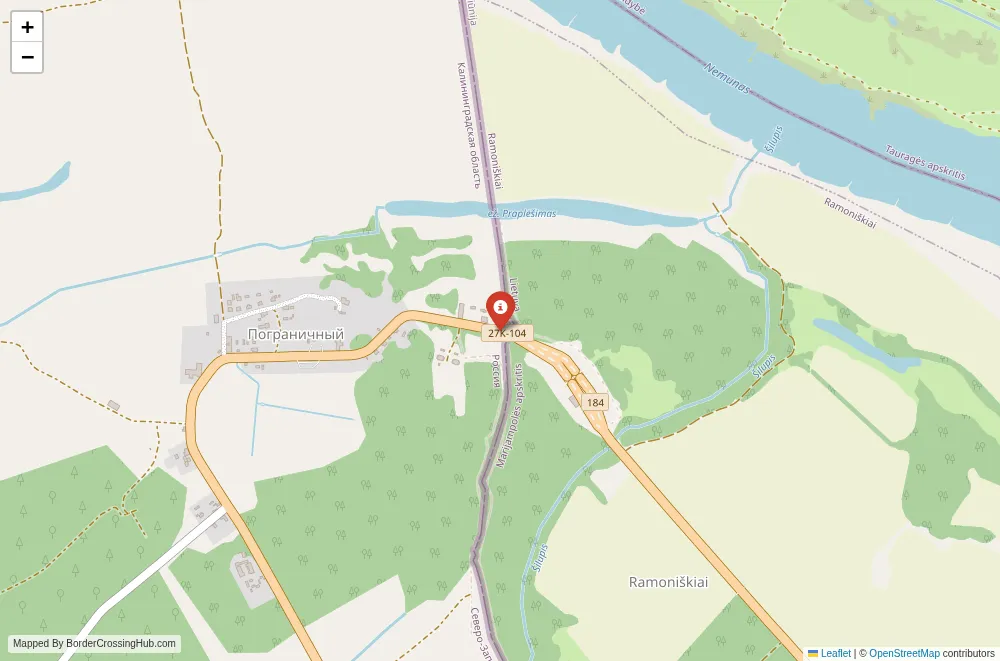
Approximate Border Location
Wait Times
Closed/very limited; delays 240-720m if open
Just crossed? Tap to report:
Operating Hours
Hours variable; restrictions likely
Crossing Types
Cars,buses,trucks; full controls if open
Border Type
Land crossing via road checkpoint
Peak Times
N/A; limited operations
Daily Crossings
0-500/day
Currency Exchange
EUR; RUB in towns; cash only near border
Safety Information
High restrictions; status can change
Languages Spoken
Lithuanian/Russian
Accessibility Features
Basic; limited accessibility
About Mali Prolog & Zaton Doli
Monthly Update (March 2026):
As of 03/2026, the Mali Prolog & Zaton Doli Border Crossing stays mostly quiet with occasional cars and small vans crossing. Lines are rare, though inspections can pause things briefly when vehicles arrive together. Late afternoons tend to see a bit more movement. Local commuting and seasonal tourism shape the pace.
No Cell Service at the Border? No Problem.
Don’t get caught scrambling for paperwork when you lose signal. Download the complete Europe Transit Guide directly to your device and access every critical detail, fast-track strategy, and border rule – 100% offline.
The Mali Prolog-Zaton Doli border crossing serves as a minor rural land connection between Croatia and Bosnia and Herzegovina, tucked into the southeastern corner of Croatia’s Dubrovnik-Neretva County and the western edge of Bosnia and Herzegovina’s Herzegovina-Neretva Canton. You typically reach this point when traveling overland from Dubrovnik or Metković in Croatia toward Stolac or Mostar in Bosnia and Herzegovina, often choosing it as a quieter alternative to the much busier Doljani-Metković or Ivanica crossings farther north. Alternative names include the Mali Prolog Border Post (Croatia side), Zaton Doli Border Post (Bosnia and Herzegovina side), or simply the Mali Prolog-Zaton Doli crossing.
Location and Basic Connection
Mali Prolog lies in Croatia near the small hamlet of the same name in the municipality of Zažablje, close to the Neretva River delta lowlands. Zaton Doli sits across in Bosnia and Herzegovina’s Čapljina municipality, near the village of Zaton Doli along the local road network. The crossing connects Croatia’s D9 state road (from Metković) to Bosnia and Herzegovina’s secondary roads toward Stolac and the upper Neretva valley. It handles passenger vehicles, motorcycles, minibuses, and local foot traffic in a flat to gently rolling landscape of fertile fields, vineyards, and the distant backdrop of the Dinaric Alps.
Historical Background
The border follows the post-World War II republican boundaries within Yugoslavia, with the line running through the historic Herzegovina region. The area saw intense fighting during the 1991-1995 Croatian War of Independence and the Bosnian War, when front lines shifted across the Neretva lowlands between Croatian and Bosnian Serb/Bosniak forces. Mali Prolog and Zaton Doli were near confrontation zones, with significant damage to villages and infrastructure. After the Dayton Agreement in 1995, the crossing reopened gradually for local traffic. Post-war reconstruction in the 2000s improved road access and border facilities, though it remains a low-priority post compared to larger crossings. The region carries deep cultural significance for Croat and Bosniak communities that were divided by the war.
Current Operating Status
As of early 2026, the crossing operates daily from 07:00 to 19:00 local time (UTC+1 for both countries; both observe daylight saving). It remains open without major disruptions reported recently. Croatia offers visa-free entry for many nationalities (90 days for most); Bosnia and Herzegovina provides visa-free entry or visa-on-arrival for eligible travelers (often 90 days). The post sees modest local and regional traffic, with very low foreign tourist use. Confirm via embassies or official border service websites, as hours can adjust for holidays or weather-related road issues.
Practical Crossing Procedures
You cross by vehicle or on foot. From Croatia at Mali Prolog, complete exit formalities at the small Croatian border post for passport stamps and basic checks. Proceed across the short distance (often a bridge or pass over a stream) to Zaton Doli in Bosnia and Herzegovina for entry. Bosnia and Herzegovina requires document review, questions about purpose or accommodation, and possible luggage or vehicle inspections. Bring passport photos, cash for any minor fees, proof of funds, and onward travel details. The process typically takes 30 to 60 minutes for straightforward cases, with basic facilities on both sides.
Wait Times and Peak Periods
Queues remain short due to modest foreign traffic, often clearing in under an hour. Early mornings or late afternoons move quickest. Peaks occur with local market days, seasonal trade, or holiday movements from Croatia to Bosnia and Herzegovina, but this post avoids heavy delays. No significant backups reported recently.
Transportation Options
Local roads from Metković or Dubrovnik reach Mali Prolog in Croatia. In Bosnia and Herzegovina, tracks lead toward Stolac or Mostar. Shared taxis, private vehicles, or motorcycles work; no regular buses cross directly. Use official hires. Roads on both sides are paved but winding and narrow, with occasional potholes. Arrange transport ahead, especially in winter.
Scams and Safety Warnings
Scam reports stay minimal at this quiet post, but watch for informal offers of “help” with forms or currency exchange at poor rates; ignore and use official counters. Petty overcharges for transport happen occasionally. The rural highland area feels low-risk during open hours, with no major crime noted. Both countries maintain standard security; expect routine checks. Standard border caution applies. Stick to marked zones and avoid unofficial deals.
Road Conditions and Scenery
Croatia’s approach features paved roads through fertile lowlands, vineyards, and small villages. The border zone includes basic posts amid open fields. Bosnia and Herzegovina’s side starts with similar paved or gravel sections, surrounded by rolling hills, distant Dinaric peaks, and traditional stone houses. Scenery includes the Neretva valley views, agricultural plains, and seasonal wildflowers. Dry season keeps roads clear; wet periods or winter snow add hazards.
Seasonal Variations and Weather Impacts
Dry season (May-September) offers best conditions. Wet autumn and spring can worsen minor potholes. Winter snow and ice affect roads, though the crossing rarely closes. Traffic remains low year-round.
Nearby Attractions
Mali Prolog offers rural Croatian life and nearby Hutovo Blato Nature Park with wetlands and birdlife. In Bosnia and Herzegovina, Stolac features historic Stećci tombstones and the Badanj cave. The area suits those interested in rural exploration, nature, or quiet border travel over major tourism.
Cultural and Economic Role
Local trade in agricultural goods, wine, and essentials sustains the crossing, supporting small communities on both sides. It enables family ties and small exchanges across the frontier. The post reinforces practical links in this historic region, though traffic remains modest.
Final Planning Tips
Arrive early with cash (USD or local currencies), printed documents, and offline maps. Prepare for mountainous weather (cold nights, possible snow) and basic facilities. Check road conditions and status ahead via embassies or forums. With preparation, you manage formalities and enjoy the scenic highland passage.
Wrapping Up the Crossing
Strmica-Vagan keeps things simple and rural between Croatia and Bosnia and Herzegovina. Time your visit thoughtfully, handle the essentials, and it offers a peaceful route through Dinaric countryside. Safe travels.
See other crossings between Bosnia and Herzegovina and Croatia
See other crossings between Bosnia and Herzegovina and Croatia
No reviews yet.