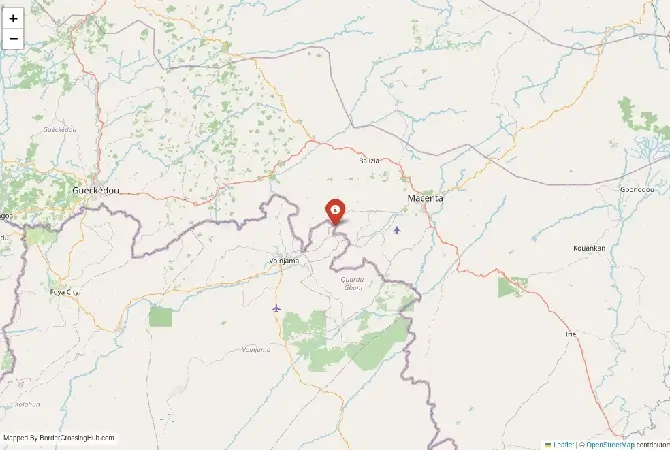
Monthly Update (September 2026):
Macenta region and Voinjama remains a remote Liberia-Guinea crossing with no significant September reopening or closure identified. The route is mainly relevant to communities in the border region rather than long-distance international travelers. Road conditions can become a bigger issue than immigration queues during the rainy season, particularly on secondary approaches. Travelers should verify local conditions before making the trip.
About this crossing
You will find yourself in a region where dense forests, agricultural land, and scattered settlements dominate the landscape. This is not a crossing designed for heavy traffic, but it remains important for communities on both sides.
Historical Ties Across the Border
The connection between this part of Liberia and Guinea predates modern borders. Communities in this region have long shared trade routes, family ties, and cultural links that continue today.
Nearby Border Crossings




During the civil conflicts in Liberia, crossings like this one played a role in displacement and aid movement. Although the region is now more stable, infrastructure development has lagged behind more central corridors.
Voinjama remains an important administrative and commercial center in Lofa County, while Macenta serves as a key town in southeastern Guinea, linking rural areas to larger regional networks.
Security Situation You Should Monitor
While this area is generally calmer than some parts of West Africa, you should still remain cautious. Border regions in Guinea and Liberia can experience occasional tensions, and infrastructure limitations can complicate travel.
You should consult current travel advisories before planning your journey. Conditions can change, particularly during election periods or local disputes.
Travel during daylight hours is strongly recommended, and you should avoid unnecessary stops in isolated المناطق.
Border Facilities and Infrastructure
Facilities at the Voinjama–Macenta crossing are minimal. You should expect small buildings or checkpoints rather than structured terminals.
Electricity and communication systems are inconsistent. Most procedures rely on manual processes, including handwritten logs and passport stamping.
The border itself may not be clearly marked beyond a checkpoint or a few buildings. You will likely need to ask officials for guidance to complete all steps.
Operating Hours and Availability
The crossing generally operates during daylight hours, though official opening and closing times are not always clearly defined.
Arriving early in the day gives you the best chance of completing the process without delays. Late arrivals may result in waiting until the next day, especially if staff have already left.
Staffing levels can vary, and the process depends heavily on who is on duty.
Visa Requirements and Documentation
You should ensure all documents are prepared before arriving.
For Liberia, most travelers require a visa obtained in advance.
For Guinea, a visa is also typically required in advance.
A yellow fever vaccination certificate is mandatory for both countries and is commonly checked.
Carrying printed copies of your passport details, visa approvals, and vaccination records is strongly recommended, as digital access may not be reliable.
Crossing Procedure and Wait Times
The crossing process is straightforward but informal. You will exit one country, then proceed to the other side to complete entry formalities.
Distances between checkpoints are short, often requiring only a brief walk.
Wait times are usually between 20 and 40 minutes under normal conditions. However, delays can occur if officials are not immediately available or if additional checks are required.
Because traffic is low, the timing of your crossing depends more on staffing than on queues.
Road Conditions and Accessibility
Reaching this crossing is one of the main challenges. Roads in this region are largely unpaved and can vary significantly in quality.
During the rainy season, heavy rainfall can turn roads into mud, making travel slow or even impossible in some sections. In the dry season, dust and uneven surfaces are the main obstacles.
Public transport options are limited. Shared taxis and minibuses may operate between towns, but direct routes to the border are not guaranteed. Many travelers rely on private or arranged transport.
Fuel stations and repair services are scarce in rural areas, so planning ahead is essential.
Seasonal and Environmental Factors
Weather plays a major role in how accessible this crossing is. The rainy season can disrupt travel due to poor road conditions and flooding in low-lying areas.
In the dry season, high temperatures and dust can make travel uncomfortable, especially on long journeys without shade.
The surrounding environment is heavily forested, with agricultural activity depending on seasonal rainfall. This adds to the isolation of the crossing.
Scams & Warnings
Even at a quiet crossing, you should remain cautious. Requests for unofficial payments can occur, particularly if officials assume you are unfamiliar with procedures.
You should remain polite but firm. Ask for receipts for any payments and avoid handing over money without a clear explanation.
Another common issue is inconsistent instructions. Procedures may vary depending on the officer on duty, so confirming each step is important.
Local Atmosphere and Cross-Border Movement
The Voinjama–Macenta crossing reflects the daily life of nearby communities. You will likely see farmers, traders, and families moving between the two countries.
Movement is often informal and tied to local needs rather than international travel. This creates a calm but unstructured atmosphere.
Language can vary. English is widely spoken in Liberia, while French is used in Guinea, along with local languages.
Practical Travel Tips
You should carry enough water, food, and fuel, as services near the border are minimal.
Mobile network coverage may be weak or nonexistent in some areas. Having offline maps or written directions can help.
Keeping your documents organized and accessible will make the process easier.
Flexibility is essential, as delays and unexpected changes are always possible.
Final Thoughts
The Voinjama–Macenta crossing is a remote and lightly used route between Liberia and Guinea, shaped by forest landscapes and local movement.
Closing Note
You should approach this crossing with preparation and patience. It is not a major transit route, but with careful planning and awareness of conditions, it can serve as a functional connection between these two countries in a less-traveled part of West Africa.
View all border crossings between Liberia and GuineaPractical information
Fuel
Liberia: 2 km - Guinea: 2 km
Currency
LRD,GNF limited
Safety information
Remote, minimal services
Connectivity
Limited mobile coverage (2G/3G)
Have you crossed here?
Help other travelers by sharing your experience, wait times, and any updates.