
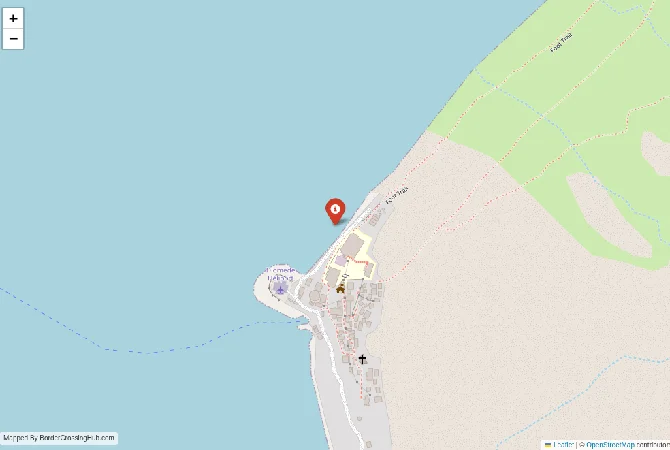
Approximate Border Location
Border Countries
- 🇺🇸United States
- 🇷🇺Russia
Border Cities
- 🇺🇸Little Diomede
- 🇷🇺Big Diomede
Wait Times
Not permitted; no wait time
Just crossed? Tap to report:
Operating Hours
Closed; no civilian access
Crossing Types
Military restricted only
Border Type
Maritime
Peak Times
None
Daily Crossings
Unknown
Currency Exchange
USD/RUB
Safety Information
Extremely restricted
Languages Spoken
English/Russian
Accessibility Features
None
About Little Diomede & Big Diomede
No Cell Service at the Border? No Problem.
Don’t get caught scrambling for paperwork when you lose signal. Download the complete South America Transit Guide directly to your device and access every critical detail, fast-track strategy, and border rule – 100% offline.
A Border Split by Islands and Time
In the icy waters of the Bering Strait, the Little Diomede–Big Diomede crossing connects United States and Russia in one of the most unusual ways on Earth. The two islands, Little Diomede and Big Diomede, sit only about 4 kilometers apart. Despite the short distance, they are separated not just by an international border but also by the International Date Line. When you stand on Little Diomede, you are technically looking at “tomorrow” on Big Diomede.
A Crossing You Cannot Casually Make
This is not a functional border crossing for travelers. You cannot simply move between Little Diomede and Big Diomede, even though they are within sight of each other. Big Diomede is a restricted military zone controlled by Russia, with no civilian population. Access is highly limited and requires special authorization that is not available for tourism. Even reaching Little Diomede is difficult. There are no regular ferries or roads. Travel typically involves small aircraft or, in winter, helicopter or limited ice-based transport. You should not plan this as a crossing route. It is more of a geopolitical boundary than a usable travel connection.
Cold War History in Plain Sight
The Diomede Islands were once a symbol of Cold War division. The narrow stretch of water between them was often referred to as the “Ice Curtain,” reflecting the separation between the United States and the Soviet Union. Families of indigenous Inupiat people once lived and traveled freely between the islands. That movement stopped during the Cold War, when the Soviet Union relocated residents from Big Diomede to mainland Russia. Today, Little Diomede remains inhabited, while Big Diomede has no permanent civilian population.
Geography and Extreme Conditions
The islands sit in the Bering Strait, where conditions are harsh for most of the year. Ice, strong winds, and freezing temperatures dominate the environment. In winter, sea ice can form between the islands, making it physically possible to walk across. However, doing so is illegal and extremely dangerous due to shifting ice and strict border enforcement. Visibility can be surprisingly clear on certain days, allowing you to see the opposite island easily despite the international boundary.
No Standard Immigration Process
There are no immigration facilities connecting Little Diomede and Big Diomede directly. If you were to travel legally between the United States and Russia, you would need to use standard international routes such as flights between major cities. The Diomede Islands are not recognized as an official crossing point for travelers. Any attempt to cross here without authorization would result in serious legal consequences from both countries.
Getting to Little Diomede
Reaching Little Diomede is an adventure in itself. The island is accessible from mainland Alaska, usually via Nome. Flights depend heavily on weather conditions, and delays are common. There are no large airports; small aircraft land on a gravel airstrip or, in winter, on ice. Supplies for the island often arrive by barge during the brief summer season when sea ice recedes.
Life on the American Side
Little Diomede has a small population, primarily indigenous Inupiat residents. The community relies on subsistence hunting and fishing, along with limited external supplies. There are no hotels or tourist infrastructure. If you visit, arrangements must be made in advance, often through local contacts or special programs. The isolation is significant, and you should be prepared for limited services and unpredictable conditions.
The Russian Side: Big Diomede
Big Diomede, also known as Ratmanov Island, is controlled by Russia and used mainly for military and border monitoring purposes. There are no civilian settlements, and access is tightly restricted. The island’s position makes it strategically important, especially given its proximity to the United States. From Little Diomede, you can see the Russian coastline and sometimes structures on Big Diomede, reinforcing how close yet inaccessible it is.
Seasonal Realities and Weather Impact
Weather conditions in the Bering Strait are among the most challenging you will encounter anywhere. Winter brings extreme cold, sea ice, and limited daylight. Summer offers slightly milder conditions but still includes fog, strong winds, and rough seas. Travel disruptions are common year-round. Flights to Little Diomede can be delayed for days due to weather alone.
Why This Border Is Unique
Few international borders are as visually striking yet inaccessible as this one. You can stand on American soil and clearly see Russian territory just a few kilometers away. The added factor of the International Date Line means the islands exist nearly a full day apart in time, despite their proximity. This combination of geography, politics, and history makes the Little Diomede–Big Diomede boundary one of the most unusual borders in the world.
Final Notes
If you are interested in this border, approach it as a remote and symbolic location rather than a practical crossing. Visiting Little Diomede alone requires careful planning and flexibility due to weather and logistics. Crossing to Big Diomede is not an option for travelers. Instead, this location offers a rare chance to observe one of the closest points between the United States and Russia, shaped by history, distance, and strict control.
No reviews yet.