
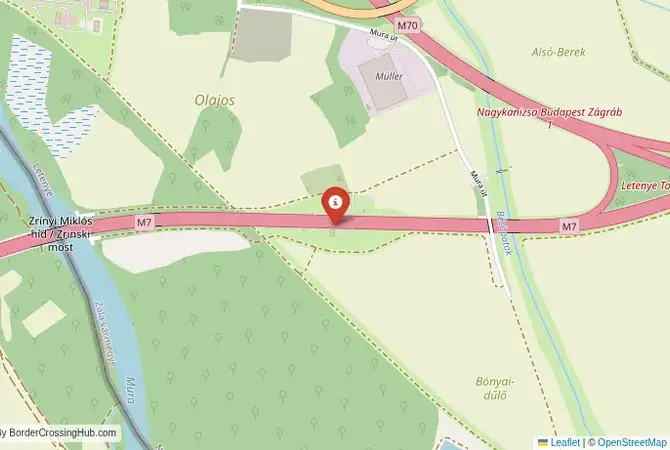
Approximate Border Location
Wait Times
25-90 min pedestrians/vehicles
Just crossed? Tap to report:
Operating Hours
Open 24 hours
Crossing Types
Pedestrians, vehicles, commercial
Border Type
Land crossing via road
Peak Times
7-10 AM, weekends
Daily Crossings
9000-11000 travelers/vehicles
Currency Exchange
Near Letenye (HUF, EUR)
Safety Information
Busy, low crime
Languages Spoken
Hungarian/Croatian
Accessibility Features
Ramps, elevators
About Goričan & Letenye
Monthly Update (April 2026):
Truck lanes fill up quickly along the motorway, especially by midday. Through April 2026, Goričan & Letenye Border Crossing is busy and somewhat variable. Freight traffic slows things more than passenger cars, particularly heading into Croatia. Weekend travel and transit flows can stretch waits.
No Cell Service at the Border? No Problem.
Don’t get caught scrambling for paperwork when you lose signal. Download the complete South America Transit Guide directly to your device and access every critical detail, fast-track strategy, and border rule – 100% offline.
General Overview
Where the Mura River winds through lush plains, the Letenye-Goričan border crossing connects Letenye in Hungary’s Zala county with Goričan in Croatia’s Međimurje county. Known as the Letenye-Goričan Határ or M7/E65 crossing, it’s a vital route for travelers, truckers, and tourists moving between Budapest and Zagreb or heading to Croatia’s Adriatic coast. As Schengen Area members, Hungary and Croatia allow free movement, making this crossing straightforward. You’ll find Hungarian efficiency blending with Croatian hospitality, framed by rolling vineyards, fertile fields, and the serene Mura River. Stay alert for occasional customs checks, as patrols monitor goods like alcohol, tobacco, or agricultural products due to tax differences.
Historical and Geopolitical Context
The border was shaped by the 1920 Treaty of Trianon, which dismantled the Austro-Hungarian Empire and assigned Međimurje to Croatia, then part of Yugoslavia. During the Yugoslav Wars (1991-1995), the crossing faced disruptions, with temporary closures due to regional conflicts. Hungary’s 2007 and Croatia’s 2023 entry into the Schengen Area eliminated routine passport checks, boosting daily crossings for tourism, wine trade, and commerce. Schengen rules allow free movement, but non-Schengen travelers need valid passports or visas. Verify border status before traveling to avoid unexpected waits.
Crossing Procedures and Wait Times
No passport checks are required for Schengen nationals, but carry a valid ID, as Hungarian or Croatian police may conduct random checks on highways, buses, or trains, especially during peak hours. Non-Schengen travelers must present passports or visas at the border post. Customs inspections target alcohol (1L spirits), tobacco (200 cigarettes), or agricultural goods, with Croatian officers vigilant for tax evasion. Pedestrians and cyclists cross in 5-10 minutes via dedicated footpaths or side roads, while vehicles wait 15-30 minutes during peak hours (7-9 AM, 4-6 PM). The border operates 24/7, with delays up to 45 minutes during summer tourist peaks (July-August) or Croatian holidays like Statehood Day. Early mornings or midweek travel minimize congestion for those driving or walking.
Routes and Transportation
From Letenye, local buses (15 minutes, HUF 1000) or taxis (HUF 5000) cross the M7/E65 to Goričan. By car, the crossing takes 10 minutes (5km). Trains like MÁV’s Railjet connect Letenye to Budapest (3 hours, HUF 5000), while Croatian buses reach Čakovec (20 minutes, EUR 3) or Zagreb (1.5 hours, EUR 10). Cyclists can follow the Mura Cycle Route, a scenic 15km path winding through vineyards and riverbanks. From Goričan, buses connect to Rijeka (3 hours, EUR 15). Roads are well-paved, but summer tourist traffic or roadworks can cause delays. Avoid unofficial taxis at Letenye’s bus terminal, as travelers report overcharges up to HUF 10,000 for short trips across the border.
Travel Tips and Scam Warnings
Always carry ID for potential spot checks, particularly on cross-border buses or trains. Goričan’s markets and shops advertise “deals” on local wines, rakija, or Međimurje cheeses, but prices may be inflated for tourists; compare at Letenye’s local markets or supermarkets for better value. Use ATMs in Letenye or Goričan for HUF or EUR to avoid poor exchange rates at roadside kiosks. Pickpocketing is rare but reported at Goričan’s markets during festivals like the Međimurje Wine Festival. Some travelers have encountered fake “toll collectors” charging HUF 5000 for road access; pay tolls only at official booths or online. Declare goods when entering Hungary to avoid fines up to HUF 50,000 for undeclared alcohol or tobacco.
Cultural and Economic Significance
With daily crossings, the region thrives on tourism, wine production, and cross-border trade. Hungarian and Croatian languages mix in markets and cafes, creating a lively cultural blend. Letenye’s restaurants serve hearty goulash and paprika-spiced dishes, while Goričan’s eateries offer purica s mlincima and local wines. The annual Mura Festival unites both sides with music, dance, and wine tastings, celebrating the region’s shared heritage. Economic differences drive shopping, with Hungarians seeking Croatian wines and cheeses, and Croatians purchasing Hungarian electronics or clothing, boosting local economies and fostering cultural exchange.
Nearby Attractions
Letenye’s Mura River walks and local wineries offer scenic and cultural charm. Goričan’s Međimurje vineyards and Čakovec Castle, a 20-minute drive, provide historical depth. For a detour, visit Varaždin (1 hour) for its baroque architecture. Explore Goričan’s markets for artisanal rakija or Letenye’s cafes for Hungarian pastries like rétes.
Seasonal and Weather Considerations
Summer (June-August) brings 20-30°C weather, ideal for cycling or vineyard tours but crowded with Adriatic-bound tourists. Winter (December-February) sees -5-5°C with occasional snow, slowing rural roads or cycle paths. Spring and fall offer mild 10-20°C weather, though rain or Mura River fog may reduce visibility for drivers or cyclists. Check forecasts for sudden weather changes, which can impact travel.
Planning Recommendations
Cross early to avoid peak delays and carry HUF or EUR for convenience. Book train or bus tickets via MÁV or Volánbusz apps for savings, and check schedules for real-time updates. Verify border status for customs patrols, especially during summer or Croatian holidays. Visit Letenye’s tourist office for winery tour details, cycling maps, or festival schedules. Pack sunscreen and hats for summer or warm layers for winter to stay comfortable. With preparation, this crossing connects you to the Mura region’s cultural richness and scenic beauty seamlessly.
No reviews yet.