
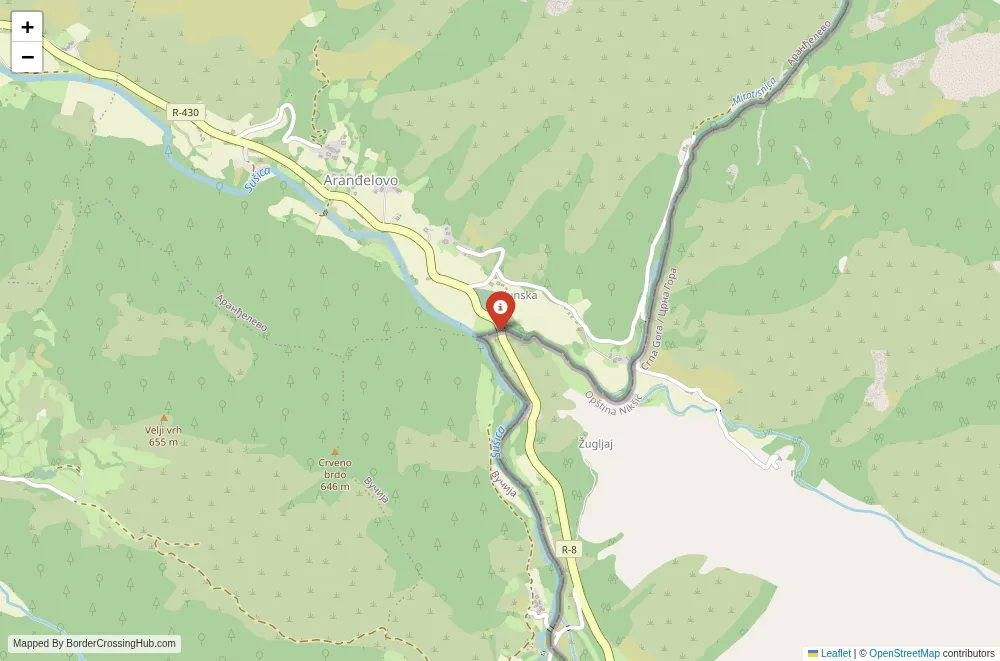
Approximate Border Location
Border Countries
Border Cities
- 🇲🇪Krstac
- 🇧🇦Aranđelovo
Wait Times
Cars 10-40m; peaks 60-180m summer
Just crossed? Tap to report:
Operating Hours
07:00 AM-07:00 PM
Crossing Types
Ped,cars; mountain road controls
Border Type
Land crossing via mountain road pass
Peak Times
10:00 AM-04:00 PM; Jul-Sep
Daily Crossings
600-3,000/day
Currency Exchange
EUR; BAM in Nikšić/Trebinje; ATMs
Safety Information
Steep road; fog/ice outside summer
Languages Spoken
Montenegrin/Bosnian
Accessibility Features
Limited; narrow shoulders
About Krstac & Aranđelovo
The Krstac border crossing (also known as Krstac – Krstac, or sometimes referenced with nearby local names like Bobotovo Groblje in traveler discussions) provides a small, low-key road link between Montenegro and Bosnia and Herzegovina in the eastern mountainous region.
Location and Basic Connections
You find this point along a secondary rural road in the border area between Nikšić Municipality in Montenegro and the Bileća or Gacko area in Republika Srpska, Bosnia and Herzegovina. It connects quiet villages and serves mainly local residents or those exploring inland routes away from the main corridors. Access comes via winding mountain paths from Nikšić (Montenegro) or Bileća/Foča directions in Bosnia. The crossing handles passenger cars and light vehicles, with pedestrians allowed, but heavy cargo or large buses rarely use it due to the narrow, hilly terrain. It’s a backup option for travelers avoiding busier points like Šćepan Polje-Hum or Vraćenovići-Deleuša.
Historical Background
This frontier follows post-Yugoslav administrative lines through the rugged karst landscape of eastern Herzegovina and southern Montenegro. The area has long featured shared rural communities with overlapping cultural influences from Orthodox traditions and pastoral lifestyles. Krstac functioned as a local passage for decades, seeing temporary reclassifications and adjustments. In 2025, authorities temporarily upgraded it for international traffic until October 2025 to ease pressure elsewhere, though it reverted to standard status afterward. It reflects ongoing bilateral efforts to maintain functional minor crossings in remote zones, supporting regional stability without major infrastructure investment.
Current Status and Safety Warnings
As of early 2026, the crossing operates as a standard road point for passengers, open daily with no major ongoing restrictions reported. It remains very quiet, often described as unburdened even in peak seasons. Live cameras and traveler accounts confirm short or nonexistent queues most days. Risks are low in this isolated rural spot. No notable scams, touts, or crowds appear in reports; the low volume reduces theft chances. The main concerns involve mountain roads: narrow sections, potential ice in winter, or poor visibility in fog. Some older traveler notes mention monotonous stretches on the Montenegrin side after crossing. Check official sources like Montenegro’s Ministry of Interior cameras or Bosnia’s border police updates before traveling. Weather or rare maintenance can cause brief halts, but the point generally stays reliable for its scale.
Operating Hours and Wait Times
The crossing runs daily, typically from early morning to late evening (around 6:00 a.m. to 10:00 p.m., though smaller points may vary slightly). Processing stays fast due to minimal traffic, often 10 to 30 minutes total. Waits rarely exceed 15 minutes; it’s frequently empty outside local rush hours or holidays. Midweek or off-peak offers the quickest passage.
Visa Requirements for Foreign Visitors
Montenegro allows visa-free entry for many nationalities up to 90 days. Bosnia and Herzegovina provides similar visa-free access (90 days) for most passports. At this land point, standard entry/exit stamps apply without additional requirements for foreigners. Biometric passports help with quick verification. Confirm your nationality’s rules, as land borders follow general visa policies with no special restrictions noted here.
Crossing Procedures Step by Step
Approach from Montenegro at Krstac for exit formalities, including passport and basic vehicle check. Cross the short road segment, then clear Bosnian entry with stamp and possible customs declaration. The reverse applies outbound. Facilities are basic: small booths and lanes suited to low volume. Focus remains on documents and quick inspections; luggage stays with you throughout.
Transportation Options
Private cars or off-road capable vehicles suit the rural, potentially rough roads best. No direct public buses or taxis target this minor point; arrange rides from Nikšić (Montenegro) or Bileća (Bosnia). Onward connections link to larger towns for buses or further travel. Negotiate local fares carefully in remote areas.
Road Conditions and Scenery
Access roads are paved in parts but narrow and winding through mountains, with gravel or wear in sections after weather. The scenery impresses with karst hills, forested slopes, open valleys, small hamlets, and distant peaks. Views offer a peaceful, wild Balkan highland feel, with seasonal wildflowers or snow adding variety.
Nearby Attractions
Krstac lies in quiet countryside near Nikšić, with access to Pivsko Lake or regional hikes. In Bosnia, the area connects to Bileća Lake and surrounding hills. Farther, Trebinje features historic old town, monasteries, and wine routes; Nikšić offers brewery tours and palace sites. The crossing suits nature-focused travelers exploring inland Herzegovina or southern Montenegro.
Seasonal Variations and Weather Impacts
Winter snow and ice can slow or limit mountain roads for periods. Spring brings mud, summer clearer conditions but occasional storms. Low traffic minimizes seasonal crowds, though weather dictates access far more than other factors.
Practical Travel Tips
Carry euros (accepted both sides) or local currencies. Fuel up before rural stretches. Declare goods honestly. Time crossings for daylight on winding roads. Use official paths only. Bring water/snacks for waits or delays. Monitor border sites or cameras for updates.
Cultural and Economic Role
It supports local connections in this sparsely populated border zone, enabling family visits, small trade in produce or timber, and rural ties. The point aids modest cross-border life in the highlands, reflecting shared heritage despite national lines.
Final Thoughts on This Quiet Crossing
Krstac offers a peaceful, fast Montenegro-Bosnia passage in the mountains, perfect for avoiding crowds and enjoying scenery. Prepare for basic rural conditions, check weather and status ahead, and cross with patience for the remote drive. Safe journeys through the Balkans.
See other crossings between Bosnia & Herzegovina and Montenegro
See other crossings between Bosnia & Herzegovina and Montenegro
No reviews yet.