
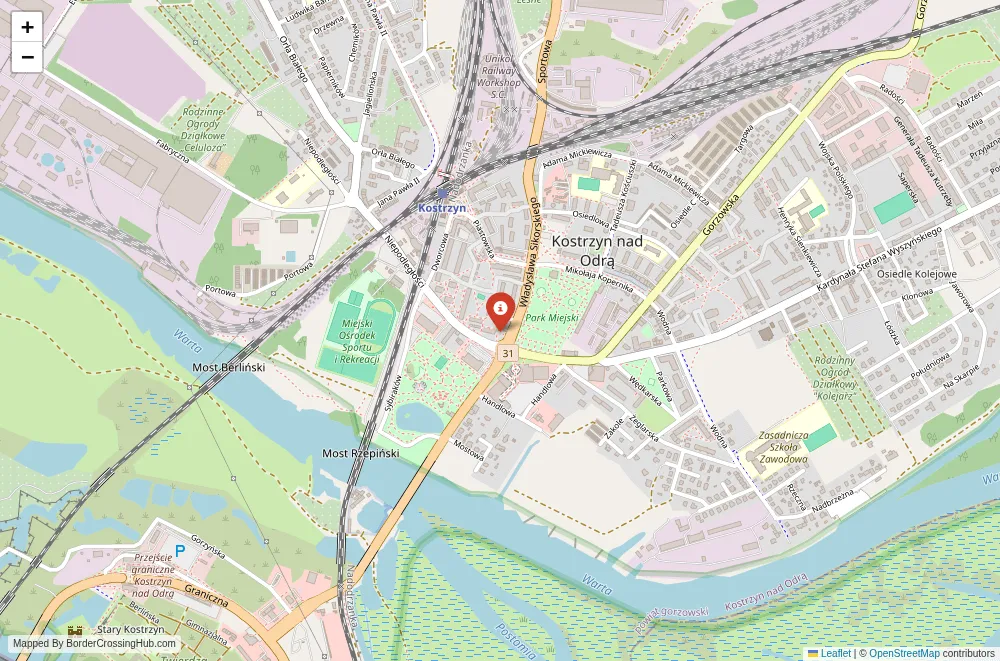
Approximate Border Location
Wait Times
Cars 0-20m; peaks 30-90m events
Just crossed? Tap to report:
Operating Hours
Open 24 hrs (12:00 AM-11:59 PM)
Crossing Types
Ped,cars,bikes; rail bridge nearby
Border Type
Land crossing via road bridge (Oder)
Peak Times
Festivals; Fri-Sun 10:00 AM-08:00 PM
Daily Crossings
5,000-22,000/day
Currency Exchange
EUR; PLN in Kostrzyn; ATMs common
Safety Information
Traffic near bridges; occasional controls
Languages Spoken
German/Polish
Accessibility Features
Step-free pavements; station access varies
About Krajnik Dolny & Schwedt
Monthly Update (March 2026):
As of 03/2026, the Krajnik Dolny & Schwedt Border Crossing ticks along at an easy pace with mostly local vehicles. Cars move freely with no noticeable stops at the bridge. Late afternoons sometimes bring a small rush of commuters heading back into Poland. Local errands and work travel drive most of the movement.
No Cell Service at the Border? No Problem.
Don’t get caught scrambling for paperwork when you lose signal. Download the complete Europe Transit Guide directly to your device and access every critical detail, fast-track strategy, and border rule – 100% offline.
Krajnik Dolny connects Poland to Germany across the Oder River, where a dedicated bridge links this small Polish village to the town of Schwedt in Brandenburg in a straightforward rural river crossing.
Location and Basic Connections
You reach this crossing where the Polish village of Krajnik Dolny in West Pomeranian Voivodeship meets Schwedt/Oder in Germany. It lies on the Oder River, with the main link via a road bridge carrying local traffic. Foreign visitors cross here when moving between northwestern Poland (near Szczecin or Gryfino) and northeastern Germany (Uckermark region or toward Berlin via secondary routes), or for local errands like cheaper fuel or shopping. Alternative names include the Krajnik Dolny Schwedt border or Oder bridge at Schwedt. As a Schengen internal point, it normally allows free passage, but temporary controls remain in force as of February 10 2026 on both sides due to extended migration and security policies.
Historical Background and Geopolitical Role
The border follows the Oder-Neisse line established in 1945 after World War II, placing this area on the new frontier. Before 1989, it formed part of the Iron Curtain divide between communist Poland and East Germany, with strict surveillance and limited crossings. The bridge itself has served as a local connection for decades, handling people and goods under varying restrictions. After German reunification and Poland’s Schengen accession in 2007, the crossing opened fully, supporting cross-border daily life in this sparsely populated Oder valley. It reflects post-Cold War reconciliation, with locals commuting for work or services, though periodic temporary measures have reappeared in response to broader EU migration challenges.
Current Status and Safety Considerations
Germany maintains temporary checks at all land borders with Poland until at least March 15 2026, driven by ongoing irregular migration, smuggling networks, asylum system overload, and global security factors including the Ukraine war and Middle East tensions. Poland extends controls on its German border until April 4 2026, citing migratory spillover from Belarus routes, increased illegal crossings on the Polish-German side, and risks to public order. At this smaller river crossing, police conduct random stops for ID verification on the bridge or approaches rather than permanent booths. Reports note occasional checks, such as brief stops for vehicles from Schwedt heading to Poland for fuel, but interactions stay short with no widespread queues or major disruptions here. The area has low crime typical of rural border zones, with no common scams or aggressive touts reported. Carry your passport or national ID at all times to handle any verification smoothly.
Operating Hours and Wait Times
The bridge and road remain open 24 hours with no routine barriers under standard Schengen conditions. Temporary controls create occasional variability: most crossings proceed without intervention, while a random stop extends time by 5 to 20 minutes for document checks or questions. This low-traffic point avoids significant buildup even during spot operations. Peak local activity, like morning commutes or weekends, might see marginally higher police presence near the bridge. Weather has minimal effect, though river fog, winter ice, or heavy rain can slow driving on the approaches.
Visa Requirements for Foreign Visitors
Schengen rules apply: EU/EEA/Swiss citizens move freely with valid ID or passport. Non-EU nationals qualify for visa exemptions up to 90 days in any 180-day period if eligible, or require a Schengen visa. The Entry/Exit System registers non-EU travelers at external borders but not routinely at internal points; spot checks may verify your status or documents. Present your passport during any control, along with proof of purpose, funds, accommodation, or onward travel if requested. No fees occur at this crossing.
Crossing Procedures Step by Step
You approach on local roads from either side, reaching the bridge where the Oder marks the line and signs change languages. Normally, drive, cycle, or walk across as the river views continue and the road flows onward. If police initiate a control, expect a roadside or bridge halt for ID presentation and basic travel questions. Provide documents directly; the exchange concludes quickly in this quiet setting. Pedestrians and cyclists use the same bridge without separate lanes. The transition appears seamless, with immediate rural scenery on both sides.
Transportation Options and Road Details
Local buses run from Schwedt to Krajnik Dolny, with some services extending toward Szczecin on the Polish side. Driving uses paved secondary roads like the German B166 or Polish equivalents, passing flat farmland, riverbanks, and small settlements. Scenery features the wide Oder, occasional woods, and open fields. Traffic stays light outside local peaks, making it suitable for calm drives. Cycling works on the flat terrain, though shoulder space varies.
Nearby Attractions and Practical Tips
Schwedt offers industrial heritage sites and proximity to the Uckermark nature areas; on the Polish side, head toward Gryfino or Szczecin for urban exploration. Carry ID consistently due to controls. Euros function on both sides, zloty useful in Poland; cards see wide acceptance. Pack for northern weather with layers for river chill or wind. Watch for agricultural traffic on rural approaches. Cross in daylight for better visibility and easier navigation.
Cultural and Economic Significance
The crossing supports everyday cross-border routines in this Oder valley region, where people shop across for price advantages or commute for jobs. Shared post-war history and river ties appear in local traditions and bilingual elements. It facilitates regional trade and cooperation, exemplifying Schengen integration adapted to current security realities.
Final Planning Notes
Verify the latest on temporary controls from official EU or national sources close to your travel date, keep ID accessible, and include a small buffer for random checks. This simple river bridge route delivers a low-key passage between Poland and Germany when you stay prepared.
No reviews yet.