Monthly Update (September 2026):
Kourémalé & Siguiri remains the principal Guinea-Mali road corridor in this part of West Africa, but the wider Mali border region remains security-sensitive. Guinea's political and security environment can also change quickly, and smaller frontier routes may be subject to local restrictions without much advance notice. No significant September closure has been identified for Kourémalé. Travelers using the main corridor should nevertheless verify the latest security situation before departure rather than relying solely on normal crossing hours.
About this crossing
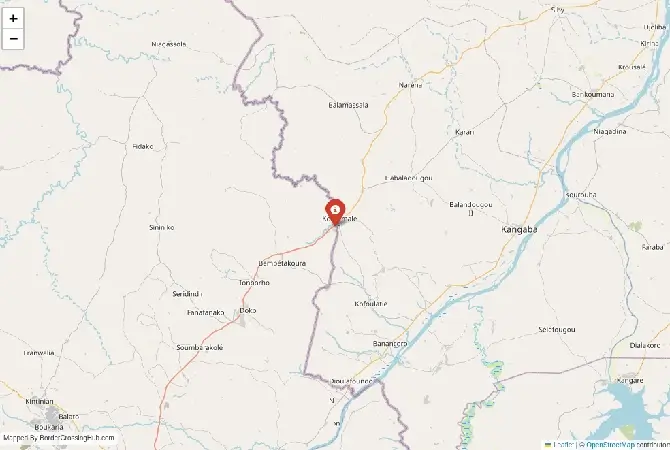
Often called the Kourémalé Border or simply the Guinea–Mali crossing, it connects Guinea’s northeastern Siguiri region with southwestern Mali. It is one of the few crossings in this part of West Africa that sees consistent overland traffic.
Where the crossing actually is
Kourémalé itself is a small border settlement in Guinea, located within Siguiri Prefecture. While people often refer to the crossing as “Siguiri,” the town of Siguiri is actually some distance away. What matters for you is that Kourémalé sits directly on the main road linking Guinea to Mali.
Nearby Border Crossings





On the Malian side, the crossing connects into a road network that eventually leads toward Bamako. This positioning makes it far more important than its size suggests.
Why this route matters
This crossing plays a major role in regional movement. Trucks carrying goods, shared taxis, and long-distance buses all pass through here. It is one of the primary corridors linking Mali to the Guinean coast, which is important for trade.
You will notice that freight traffic often dominates the scene. This is not a tourist-heavy border. Instead, it serves traders, transport operators, and locals moving between the two countries.
Because of that, the crossing tends to stay active, even when smaller borders in the region see little use.
What the border looks like
Do not expect a modern terminal. The facilities are functional but basic. You will find immigration offices, checkpoints, and a mix of vehicles waiting to pass through, often under hot and dusty conditions.
The area around the crossing can feel busy and disorganized, especially when trucks line up. Small vendors, money changers, and transport operators gather near the border, adding to the atmosphere.
Even though it is a major route, the setup still reflects the realities of rural West Africa rather than a polished international crossing.
Border procedures and documents
You will need to complete exit formalities on one side and entry on the other, as usual. Start by stamping out of Guinea or Mali, then proceed to the opposite side for entry.
Visa requirements depend on your nationality. Both countries typically require visas, and you should arrange them in advance unless you are certain of your eligibility for entry without one.
You should also carry proof of yellow fever vaccination, as this is often checked when entering Guinea.
Have printed copies of your documents ready. Border officials may ask for them, and relying only on your phone is not a good idea here.
Wait times and delays
Processing times vary. On a quiet day, you might complete everything in 20 to 40 minutes. However, this crossing is tied to a major road, so delays are common.
If trucks are being processed or if there are security checks, you could wait much longer. It is not unusual for the process to stretch beyond an hour.
Arriving early in the day helps reduce delays and gives you more time to deal with any unexpected issues.
Road conditions and transport
The road leading to Kourémalé is one of its defining features. From the Guinean side, you typically travel through Kankan and the Siguiri area. From Mali, the road connects toward Bamako.
This is one of the more established road routes in the region, but conditions can still vary. Some sections are paved, while others may be rough or affected by weather.
Shared taxis and minibuses are the most common transport options. Long-distance buses also pass through, though schedules are not always reliable.
You should not expect precise departure times. Vehicles usually leave when full.
Seasonal factors
The rainy season, generally from June to October, can affect travel. Roads may become muddy, and delays are more likely, especially near the border itself.
In the dry season, dust and heat become the main challenges. Temperatures can be high, and waiting at the border without shade can be uncomfortable.
Crossing in the morning is usually the best option regardless of the season.
Security concerns you should take seriously
This is one of the most important considerations. Parts of Mali are affected by instability, and many governments advise against travel to certain areas.
Even on major routes, risks such as banditry, unofficial checkpoints, and security incidents exist. You should stay informed about the latest conditions before traveling.
On the Guinean side, issues are generally less severe, but you may still encounter roadblocks or requests for small payments.
You should travel during daylight hours, avoid unnecessary stops, and keep your plans flexible.
Scams & Warnings
At Kourémalé, the most common problems involve small-scale scams rather than serious incidents. You may be approached by individuals offering to help with paperwork or speed up the process.
These services are not official. It is best to handle everything yourself unless you clearly understand what is being offered.
Keep your passport with you at all times and only hand it to uniformed officials. If someone asks for a fee, ask for a receipt or clarification.
Currency exchange at the border is possible but often comes with poor rates. If you can, exchange money before arriving.
Nearby context and travel flow
Kourémalé itself is not a destination. It exists because of the road and the border. Siguiri, further inside Guinea, provides more context as a regional center known for mining and trade.
Most travelers pass through rather than stay. The crossing is part of a longer journey between major cities, not a place where you stop for long.
Understanding that helps set expectations. You are here to cross, not to explore.
Practical preparation tips
Before arriving, make sure you have all required documents printed and organized. Carry enough cash in local currency, as facilities at the border are limited.
Bring water and some food in case of delays. Shade is not guaranteed, and waiting times can stretch.
Plan your onward transport in advance if possible. Do not assume you will find a vehicle immediately after crossing.
Keep your belongings secure and avoid displaying valuables.
Final thoughts
A busy but demanding crossing
Kourémalé is one of the most important land borders between Guinea and Mali, and that importance makes it useful for overland travel. At the same time, it requires patience and awareness.
If you arrive prepared, stay alert, and allow extra time, you can get through without major issues. It is not the easiest crossing in West Africa, but it remains a practical route for those traveling between these two countries.
View all border crossings between Mali and GuineaPractical information
Fuel
Mali: <1 km - Guinea: <1 km
Currency
GNF,XOF exchangers
Safety information
Active crossing, stable
Connectivity
Highway,buses
Have you crossed here?
Help other travelers by sharing your experience, wait times, and any updates.