
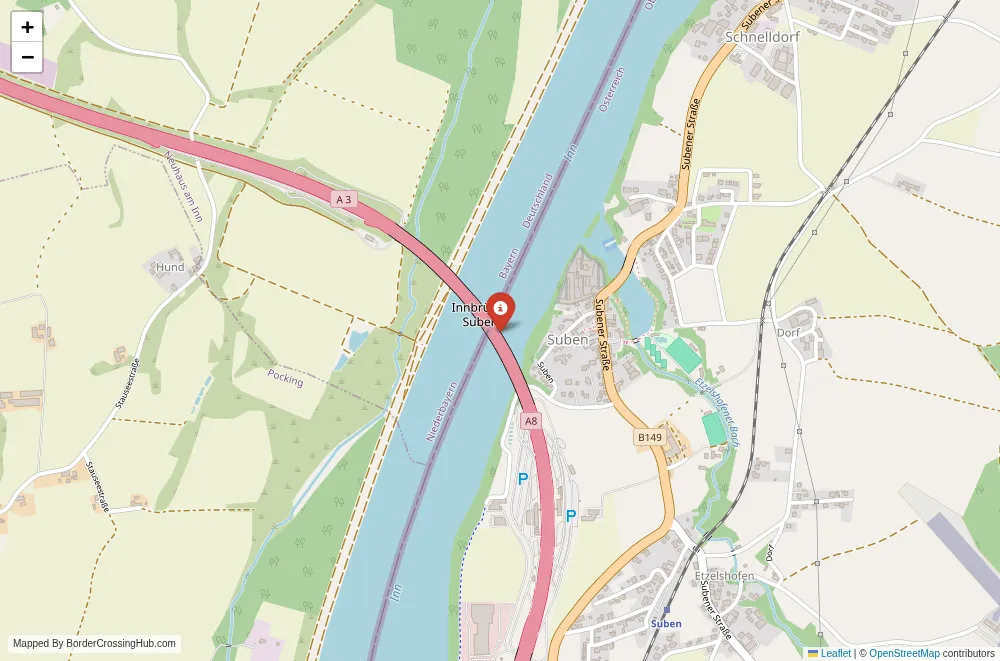
Approximate Border Location
Wait Times
Cars 0-20m; peaks 30-180m controls
Just crossed? Tap to report:
Operating Hours
Open 24 hrs (12:00 AM-11:59 PM)
Crossing Types
Cars,buses,trucks; motorway corridor
Border Type
Land crossing via motorway (A3)
Peak Times
Mon-Fri 02:00-07:00 PM; holidays
Daily Crossings
25,000-80,000/day
Currency Exchange
EUR only; ATMs at service areas
Safety Information
Queue spillback possible; follow signage
Languages Spoken
German
Accessibility Features
Accessible rest stops; step-free toilets
About Konstanz & Kreuzlingen
Monthly Update (March 2026):
As of 03/2026, the Konstanz & Kreuzlingen Border Crossing remains active but generally stable. Cars, cyclists, and pedestrians move constantly between the two towns, though traffic can slow on the German side during late afternoon commuting. Midday tends to move a bit easier. Cross-border shopping and weekend visitors keep the crossing lively.
No Cell Service at the Border? No Problem.
Don’t get caught scrambling for paperwork when you lose signal. Download the complete Europe Transit Guide directly to your device and access every critical detail, fast-track strategy, and border rule – 100% offline.
The Konstanz-Kreuzlingen crossing unites two cities that function almost as one, split only by an invisible line across streets, bridges, and the Rhine outflow from Lake Constance, creating a seamless urban area where you can stroll from Germany to Switzerland in minutes.
Location and Connections
You find this border where Konstanz in Baden-Württemberg, Germany, meets Kreuzlingen in Thurgau canton, Switzerland. Multiple points exist: road crossings on the Rhine bridges (like the old bridge or new ones), pedestrian paths in the old town, rail lines at Konstanz/Kreuzlingen stations, and ferry links across the lake. Konstanz old town lies south of the Rhine, with Kreuzlingen north. From Konstanz center, crossings are immediate; from Zurich or St. Gallen, Kreuzlingen is about 45 minutes to an hour by train or car. Regional trains (S14/S44 St. Gallen S-Bahn) run frequently across, and buses connect the conurbation. The area forms a trinational hub near the Lake Constance tripoint with Austria.
Alternative Names
It goes by Konstanz-Kreuzlingen border crossing, Kreuzlingen-Konstanz Grenzübergang, or simply the Rhine crossings at Konstanz/Kreuzlingen.
Historical Background
Konstanz and Kreuzlingen grew as twin settlements along the Rhine outflow, with Konstanz’s old town (south of the river) historically part of the Holy Roman Empire and later Baden. The border solidified in the 19th century after Napoleonic wars and Swiss confederation changes. During WWII, the Rhine served as a divide, with Switzerland neutral. Post-war, customs formalities eased until Schengen in 2008 (Switzerland joined Schengen in 2008). The shared urban space includes cross-border schools, hospitals, and daily life, with the Rhine bridges symbolizing unity despite the line.
Geopolitical Context
Schengen since 2008 normally means no routine passport or customs checks for EU/Swiss citizens or visa-exempt travelers. Germany maintains temporary internal border controls due to migration and security concerns. As of February 10, 2026, these extend at least through March 15, 2026, with Bundespolizei random spot inspections at land borders, including Switzerland crossings like Konstanz-Kreuzlingen. Switzerland occasionally increases checks for security or traffic, but no widespread temporary controls apply here. Spot checks focus on irregular migration or smuggling; queues have occurred at Konstanz-Kreuzlingen during peaks. No permanent booths exist; controls are mobile. Check German Bundespolizei or Swiss Border Guard sites for updates.
Practical Crossing Procedures
You walk, drive, or ride across bridges or streets with border markers or signs. On roads, drive straight over; pedestrians use sidewalks. Temporary German measures may lead to random stops for ID checks, travel questions, or vehicle review. EU/Swiss citizens show passport or national ID. Non-EU nationals need valid passports, visas/Schengen entry if required, and proofs like accommodation. Carry vehicle insurance; Swiss motorway vignette needed if continuing beyond local roads (Lake Constance area often vignette-free short distances). Rail passengers face rare onboard checks. Customs rules apply for goods (Switzerland not in EU customs union).
Typical Wait Times
Normal passage takes seconds to minutes. Random checks add variability: most clear quickly, but selected stops or peaks (weekends, holidays, events) can cause 10 to 45 minute delays, especially on bridges or roads. Foot crossings in town often face no waits. Rail and pedestrian paths stay smooth.
Operating Hours
Roads, bridges, and rail operate 24/7 year-round. Schengen removed fixed hours. Winter weather or rare events might slow access briefly, but crossings remain open.
Transportation Options and Road Conditions
Drive across Rhine bridges; regional trains (S14/S44) run frequently between stations. Buses and ferries serve the lake area. Roads offer good pavement with urban traffic; bridges have lanes for cars/bikes. Scenery includes Rhine views, Lake Constance, and old town architecture. Watch for cyclists, trams, or lake traffic.
Scams and Warnings
Scams stay rare in this integrated twin-city area. No common touts or fake services reported. Watch for parking fees or informal money changers with poor rates. Carry ID for spot checks. The area feels safe and binational; drive attentively in urban traffic.
Nearby Attractions
Konstanz offers the old town, Münster cathedral, harbor, and Sea Life aquarium. Kreuzlingen provides lakefront paths and shopping. Lake Constance attractions include boat trips, Mainau island (flower island), and Zeppelin Museum in Friedrichshafen. The region suits lake activities, historic walks, or day trips to Switzerland/Germany/Austria tripoint.
Seasonal Variations and Weather Impacts
Winter brings snow; roads clear quickly but lake ferries reduce. Summer sees crowds and clear weather. Autumn offers mild days and foliage. Rain can slick bridges, but closures stay rare.
Travel Tips and Preparation
Carry passport/ID for spot checks. Buy Swiss vignette if needed for highways. Use cross-border apps for transport. Pack layers for lake weather. Check police sites for control updates.
Cultural and Economic Significance
The crossing supports binational life: shared schools, hospitals, jobs, and events. Lake Constance tourism and commerce thrive on seamless movement, tying German-Swiss economies through daily cross-border flows.
Before You Cross
Verify spot check status and traffic from official sources near your travel date. With prep for rare stops and urban driving, you manage this integrated Rhine crossing and explore the shared Konstanz-Kreuzlingen conurbation. Safe travels.
No reviews yet.