
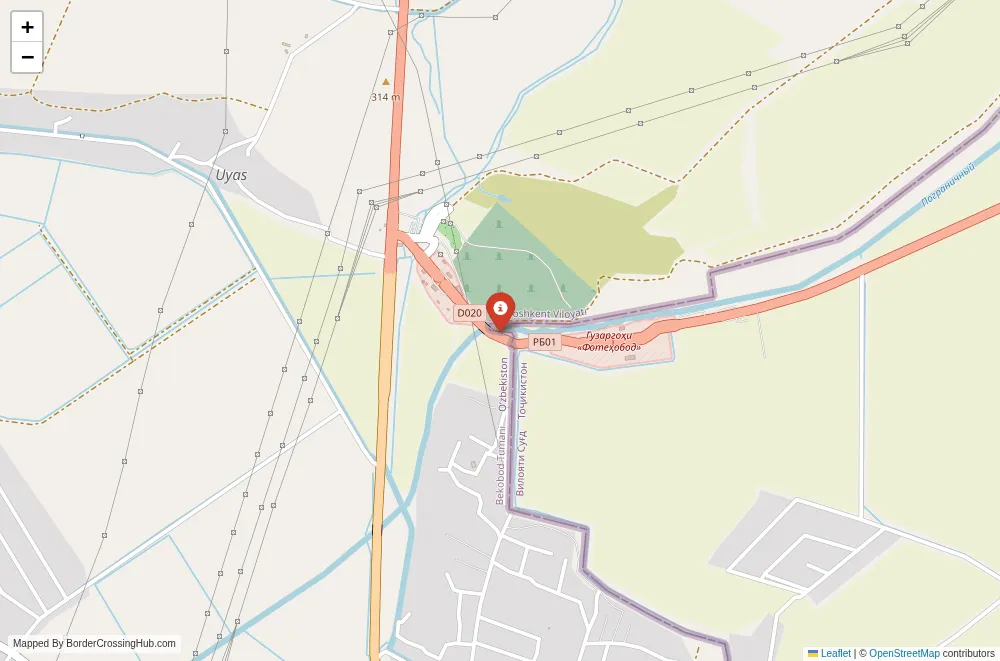
Approximate Border Location
Border Countries
Border Cities
- 🇹🇯Ruzvay / Ruzvai
- 🇦🇫Nusai
Wait Times
Closed/limited; delays 240-720m if open
Just crossed? Tap to report:
Operating Hours
Hours variable; permit-only likely
Crossing Types
Ped,cars by permit; controls
Border Type
Land crossing via road bridge (Panj)
Peak Times
N/A; restricted route
Daily Crossings
0-120/day
Currency Exchange
TJS; AFN; USD common; ATMs scarce
Safety Information
High security; restrictions likely
Languages Spoken
Tajik, Dari, Russian
Accessibility Features
Minimal; uneven ground
About Khumroghi & Afghan side near Vanj
Monthly Update (March 2026):
As of 03/2026, the Khumroghi & Afghan side near Vanj Border Crossing stays very quiet with only occasional movement. Vehicles appear sporadically at the bridge, and crossings tend to involve local or official travel rather than steady traffic. Inspections can take time when a vehicle does arrive. Weather in the narrow mountain valley sometimes slows access roads as well.
No Cell Service at the Border? No Problem.
Don’t get caught scrambling for paperwork when you lose signal. Download the complete Asia Transit Guide directly to your device and access every critical detail, fast-track strategy, and border rule – 100% offline.
The Khumroghi border crossing (also known as Khumrogi or Khumroghi CBP on the Tajik side, with the Afghan side often referred to in the same context near Vanj district) spans the Panj River, linking Tajikistan’s Vanj district in Gorno-Badakhshan Autonomous Province to Afghanistan’s Badakhshan province. You approach this automobile point when navigating the Pamir region, particularly along routes from Dushanbe or Kulob toward the Pamir Highway or attempting northern access into Afghanistan. Inaugurated in August 2011 as the Vanj Bridge (the fourth in a series funded by the Aga Khan Development Network), the 216 meter suspension bridge was the longest cross-border span at the time, designed to carry over 3,000 commercial and passenger crossings annually while supporting humanitarian aid, socio-economic exchange, tourism, and trade in this isolated high-altitude area.
Location and Connections
The bridge crosses the Panj River in the Vanj district of Tajikistan’s GBAO, near Khumroghi village, approximately 300 kilometers from Dushanbe and positioned along the Pamir Highway corridor. On the Afghan side, it connects to areas in Badakhshan province, with rudimentary tracks extending toward Faizabad or other districts. The Tajik approach uses the Pamir Highway (M41), a paved but demanding route featuring steep inclines, narrow passages, river gorges, and multiple military checkpoints. Afghan access depends on unpaved, mountainous paths highly susceptible to landslides, floods, and seasonal closures. The bridge accommodates limited vehicles (with a 25-ton capacity in similar designs) and pedestrians when functional, with the river span keeping the neutral zone short.
Historical and Geopolitical Background
The Tajikistan-Afghanistan border follows the Panj River for much of its 1357 kilometer extent, established through 19th century Anglo-Russian pacts that separated Pamiri populations with shared ethnic, linguistic, and Ismaili cultural heritage. Khumroghi in Vanj district served as a local crossing site, with the bridge opening in 2011 to foster reconnection after disruptions from the Tajik civil war and Taliban periods in Afghanistan. It joined earlier bridges like those at Tem-Demogan (2002), Darwaz (2004), and Ishkashim, as part of AKDN cross-border initiatives to enhance aid delivery and economic links. The point enabled Saturday border markets and trade in goods, but security challenges including drug smuggling and militant activity prompted intermittent restrictions. Fun fact: the bridge’s construction embodied efforts to bridge divided Pamiri communities, where traditions and languages cross the river more freely than official boundaries allow.
Current Status and Operating Hours
As of early 2026, Khumroghi remains closed to foreign travelers and general public traffic. Northern Tajik-Afghan crossings face severe restrictions due to cross-border violence, armed clashes, militant incursions (including from groups like IS-Khorasan), and Tajik security measures post-2021 Taliban takeover. Incidents in 2025-2026, such as neutralized militants and increased drug trafficking confrontations, have heightened tensions, with Tajikistan bolstering defenses via CSTO aid. Only the southern Shir Khan Bandar-Panji Poyon point operates for limited crossings; northern points like Khumroghi, Ruzvay-Nusai, and others stay shut. When active previously, hours limited to weekdays (approximately 9:00 a.m. to limited afternoon windows), dependent on local conditions. Pamir weather adds severe winters with snow-blocked roads, summer floods along the Panj, and high-altitude risks. Tajikistan maintains heavy military presence. Verify through Tajik Border Service, Afghan authorities, or traveler forums like Caravanistan, as geopolitical shifts could influence northern access.
Crossing Procedures Step by Step
No procedures apply for public use due to closure. In past operations, you cleared Tajik immigration near Khumroghi (passport exit stamp, GBAO permit verification for foreigners, security questions), crossed the bridge by foot or vehicle, then handled Afghan entry (visa checks, customs, possible searches). Reverse applied from Afghanistan. Waits ranged from under an hour to longer with manual processing and limited staff. Foreigners required advance permits; attempts now result in immediate denial or security intervention. Direct efforts to the open southern crossing for any Tajik-Afghan land travel.
Visa Requirements for Foreign Visitors
The crossing offers no entry. Tajikistan requires visas or e-visas for most nationalities, plus a mandatory GBAO permit for Badakhshan access (apply well in advance). Afghanistan demands visas through embassies or approved channels (visa-on-arrival unavailable at land points; strict rules under current authorities). Bring passport photos, exact fees, and copies. Policies fluctuate rapidly; many nationalities face denials or delays. Restricted groups encounter extra scrutiny. Verify via embassies, as Tajik-Afghan borders enforce rigorous controls amid instability.
Transportation Options and Road Details
From Dushanbe or Kulob, 4WD vehicles or shared taxis follow the Pamir Highway to Vanj/Khumroghi vicinity (paved but steep, narrow, with checkpoints). No public transport crosses; private or tour arrangements manage when open. Afghan side uses rugged 4WDs over unpaved tracks prone to disruptions. Bridge supports limited vehicles, but closure eliminates options. Roads require preparation: altitude sickness risks, fuel scarcity, landslides, and snow blockages.
Scams and Safety Warnings
This volatile frontier demands extreme caution. Afghanistan’s Badakhshan involves Taliban control, militant threats, kidnappings, and crime; Tajikistan deploys heavy forces with ongoing clashes. Foreigners attempting approaches risk arrest, detention, or violence. Drug routes intensify patrols and scrutiny. Governments issue strong advisories against travel to Afghanistan or border zones. Monitor news for incidents, refugee flows, or attacks. Register with embassies, avoid solo travel, and prepare evacuation plans.
Nearby Attractions and Practical Tips
Vanj district offers Pamir scenery, local markets, and Pamir Highway access. Afghan side, if accessible, leads to Wakhan nomadic routes and historic sites. Carry USD cash, warm layers for altitude, water, snacks, and power banks; facilities remain basic. Secure GBAO permits early when open. Rely on official channels.
Final Notes for Planning
Khumroghi stays closed amid security volatility, offering no viable crossing for foreign visitors. Track official updates; consider flights or other borders for Pamir exploration. Prioritize safety in this sensitive region. Safe travels.
No reviews yet.