
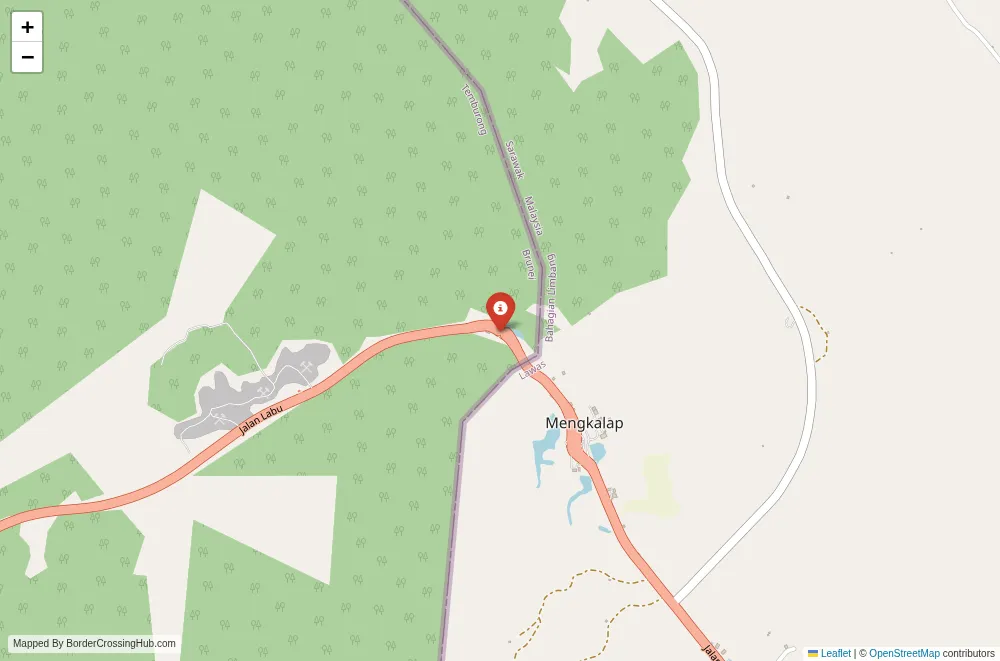
Approximate Border Location
Wait Times
Cars 10-45m; peaks 60-180m weekends
Just crossed? Tap to report:
Operating Hours
06:00 AM-10:00 PM
Crossing Types
Ped,cars,buses; border controls
Border Type
Land crossing via rural road
Peak Times
Sat-Sun 09:00 AM-01:00 PM
Daily Crossings
1,500-7,000/day
Currency Exchange
BND/MYR; MYR; ATMs in Limbang
Safety Information
Rural roads; limited services at night
Languages Spoken
Malay, English
Accessibility Features
Basic step-free; uneven verges
About Khangi & Mandula
Monthly Update (March 2026):
As of 03/2026, the Khangi & Mandula Border Crossing sees a steady rhythm of freight trucks. Cargo vehicles gather in small lines before clearing customs on the Mongolian side. Passenger traffic is minimal. Trade demand and inspection times shape how quickly things move.
No Cell Service at the Border? No Problem.
Don’t get caught scrambling for paperwork when you lose signal. Download the complete Asia Transit Guide directly to your device and access every critical detail, fast-track strategy, and border rule – 100% offline.
The Khangi-Mandula border crossing (also known as Khangi in China’s Inner Mongolia Autonomous Region and Mandula in Mongolia’s Dornogovi province) connects the town of Mandula in Mongolia’s Saikhan-Ovoo sum to the Chinese side near the town of Mandula in Ejin Banner, Alxa League, Inner Mongolia. You reach this remote point when traveling overland between central Mongolia and western Inner Mongolia, often as part of routes from Ulaanbaatar toward Ejin Banner, Jiuquan, or the Hexi Corridor in Gansu province. The crossing serves as a minor land port for local trade, passenger movement, and occasional cross-border herding in a sparsely populated Gobi Desert region where nomadic and semi-nomadic communities interact across the frontier.
Location and Connections
Khangi lies in Ejin Banner, Alxa League, Inner Mongolia, China, about 150 kilometers southwest of Ejin Banner’s administrative center and roughly 600 kilometers west of Hohhot. Mandula sits directly across the border in Saikhan-Ovoo sum, Dornogovi aimag, Mongolia, with onward dirt tracks leading toward Sainshand (around 200 kilometers) or farther to Ulaanbaatar (over 700 kilometers). The crossing features basic immigration and customs buildings on both sides, with a short neutral zone and a simple paved or gravel road. The surrounding Gobi landscape consists of arid plains, low rocky hills, sparse vegetation, and scattered herder camps typical of the eastern Gobi. No major river or mountain range divides the two sides; the border follows a straight surveyed line through open desert. No rail or significant air links serve directly; the route relies on road transport amid extreme isolation and harsh desert conditions.
Historical and Geopolitical Background
The China-Mongolia border spans 4,710 kilometers, one of the world’s longest, largely defined by Qing-era treaties and post-1949 agreements. Khangi-Mandula emerged as a minor crossing point in the mid-20th century, used by herders and traders exchanging livestock, wool, salt, and daily goods in this remote Gobi region. The crossing gained formal status in the 1990s after Mongolia’s transition to democracy and China’s economic opening, supporting limited border trade under bilateral protocols. It remains one of the least-used ports between the two countries, overshadowed by major crossings like Zamyn-Üüd-Erlian or Gashuun Sukhait-Ganqmod. The point reflects the shared nomadic heritage of Mongol and Inner Mongolian communities, with seasonal herder movements and small-scale barter persisting despite modern restrictions. Geopolitical stability has allowed quiet operations, though China’s border infrastructure upgrades (including fencing and surveillance) and Mongolia’s economic ties to China influence local dynamics. Fun fact: the Gobi’s vast emptiness around Khangi-Mandula has preserved ancient petroglyphs and fossil sites, with occasional paleontological expeditions crossing the border area for research.
Current Status and Operating Hours
As of early 2026, Khangi-Mandula operates as a functional but low-volume international crossing for pedestrians, motorcycles, light vehicles, and occasional trucks. It opens daily from approximately 8:00 a.m. to 6:00 p.m. (China time; Mongolia is one hour behind), with possible adjustments for local needs or weather. The crossing sees minimal traffic, primarily herders, local traders, and rare tourists or officials. Operations are seasonal, with reliable access from April to October; winter (November to March) brings extreme cold (down to -40°C) and snow-blocked roads, often closing the point for weeks or months. Summer sandstorms and occasional flash floods can disrupt unpaved approaches. Security involves Chinese border police and Mongolian border guards conducting thorough checks. No major closures reported recently, but verify through China’s Inner Mongolia Border Inspection or Mongolia’s Border Protection Agency, as weather, permits, or minor bilateral issues can affect access.
Crossing Procedures Step by Step
You process exit and entry on both sides. From China to Mongolia: at the Khangi Chinese post, present your passport for exit stamp, answer questions on purpose and duration, and clear customs if carrying goods. Walk or drive the short distance to Mandula Mongolia immigration for entry stamp (Mongolian citizens cross freely; foreigners use visa or visa-on-arrival depending on nationality). The reverse from Mongolia follows the same sequence: Mongolia exit stamp followed by Chinese entry (customs check for restricted items). Procedures include manual document verification, occasional bag or vehicle scans, and security questions. Wait times typically range from 15 minutes to an hour, often shorter due to low traffic. Foreigners report straightforward processing, though expect additional scrutiny for goods or longer stays.
Visa Requirements for Foreign Visitors
Chinese and Mongolian citizens cross without visas under bilateral arrangements for border residents or short trips. Foreigners entering Mongolia from China can obtain visa-on-arrival at land borders for many nationalities (30 days for $50 USD single entry; payable in cash, USD preferred). Bring passport photos and exact fees. Passports need six months validity. China requires no visa for Mongolian citizens but may check foreigners for onward permits if traveling to restricted areas in Inner Mongolia. Rules remain stable, but confirm via embassies or official portals, as enforcement can vary at remote crossings.
Transportation Options and Road Details
From Hohhot or Ejin Banner, buses or private 4WD vehicles reach Khangi (long desert drives, 8-12 hours from Ejin). From Mandula, shared jeeps or private vehicles head to Sainshand or Ulaanbaatar. Private cars cross if compliant (insurance, permissions). No public buses routinely cross; arrange onward locally after clearance. Roads from Ejin stay paved in parts but turn to gravel and dirt near the border; Mongolian side includes rough tracks. Extreme weather (sandstorms, cold) can delay travel. Full Hohhot-Sainshand trip takes 2 days with border time. Daylight travel essential for safety and navigation.
Scams and Safety Warnings
Remote location minimizes scams, but unofficial drivers may overcharge for transport (use official contacts). Poor exchange rates near posts (change elsewhere). The Gobi carries high risks: extreme temperatures, isolation, and limited rescue options. Altitude and dehydration risks exist; carry water, fuel, and emergency gear. Monitor weather and news for sandstorms or border incidents. Avoid unofficial paths. Register with embassies if venturing into remote areas.
Nearby Attractions and Practical Tips
Ejin Banner offers Badain Jaran Desert dunes and ancient Silk Road sites. Mandula leads to Gobi herder camps and dinosaur fossil areas. Carry USD/CNY/MNT cash, warm layers, water, snacks, medications, and power banks; facilities nonexistent. Secure permits early; travel with locals or guides.
Final Notes for Planning
Khangi-Mandula offers a remote, low-traffic crossing between China and Mongolia’s Gobi, with simple procedures and open-border ease for citizens. Confirm status, prepare visas/fees, and plan for extreme desert conditions. With thorough preparation, it provides passage across this vast, empty frontier. Safe travels.
No reviews yet.