
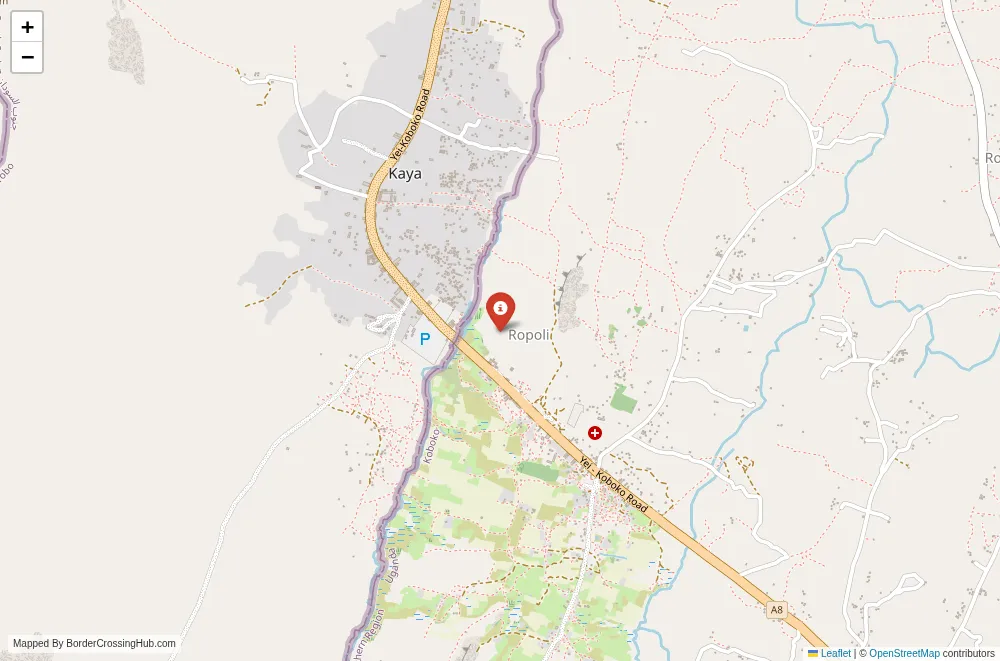
Approximate Border Location
Border Countries
- 🇸🇸South Sudan
- 🇺🇬Uganda
Border Cities
- 🇺🇬Kaya
- 🇸🇸Oraba
Wait Times
Cars 30-180m; peaks 240-600m
Just crossed? Tap to report:
Operating Hours
06:00 AM-06:00 PM
Crossing Types
Ped,cars,buses; border controls
Border Type
Land crossing via road (Sahel route)
Peak Times
07:00-10:00 AM; market days
Daily Crossings
2,000-12,000/day
Currency Exchange
SSP; UGX; USD common; exch in towns
Safety Information
Security presence; delays and checks
Languages Spoken
Arabic, English, Swahili
Accessibility Features
Basic step-free; uneven lanes
About Kaya & Oraba
Monthly Update (March 2026):
As of 03/2026, the Kaya & Oraba Border Crossing continues to see steady truck and bus traffic through the checkpoint. Vehicles sometimes stack up heading into Uganda during busy trading hours. Midday crossings tend to move a bit smoother. Cross-border commerce keeps the road active.
No Cell Service at the Border? No Problem.
Don’t get caught scrambling for paperwork when you lose signal. Download the complete Africa Transit Guide directly to your device and access every critical detail, fast-track strategy, and border rule – 100% offline.
The Kaya-Oraba border crossing stands as a vital though often unpredictable land connection between South Sudan and Uganda, situated in the West Nile region where Central Equatoria State meets Koboko District. You pick this route when traveling overland from northern Uganda toward Yei, Morobo, or other parts of South Sudan’s Equatoria region, usually as a secondary option to the more trafficked Nimule-Elegu point. Alternative names include Kaya border, Oraba checkpoint, or the Kaya-Oraba crossing.
Location and Basic Connection
Kaya lies on the South Sudanese side in Morobo County, Central Equatoria State, while Oraba sits directly across in Koboko District, Northern Region, Uganda. The crossing links Uganda’s well-maintained tarmac highways to South Sudan’s gravel and dirt tracks, creating an immediate and visible shift in road quality. It handles buses, trucks, shared taxis, motorcycles, and pedestrians, supporting cross-border trade, family visits, and small freight in this area near the tripoint with the Democratic Republic of Congo to the southwest.
Historical Background
The border follows colonial boundaries drawn in the early 20th century that divided communities such as the Kakwa and Lugbara. After South Sudan’s independence in 2011, the crossing became a lifeline for trade but suffered heavily during the 2013-2018 civil war, when insecurity and displacement reduced flows to a trickle. Periodic closures followed due to smuggling crackdowns and conflict spillover. In 2023, after six years of limited access, both governments agreed to reopen the point for controlled trade. Further resumption came in late 2024, allowing restricted items like fuel, food, and consumer goods after four years of tight controls. Geopolitically, it reflects efforts to stabilize porous frontiers while managing smuggling and refugee movements.
Current Operating Status
As of early 2026, the crossing remains open with fluctuating activity tied to security conditions in South Sudan. Uganda operates an immigration post at Oraba, and South Sudan maintains one at Kaya. Hours generally run daytime based on demand, without round-the-clock service. Uganda grants visa-on-arrival or e-visa for many nationalities; South Sudan requires visas arranged in advance (typically from Juba, Kampala, or embassies, with on-arrival options unreliable at this point). Recent trade data from late 2025 showed daily truck numbers dropping from over 150 to around 10 due to instability, though passenger movement continues at lower levels. Verify status through embassies, humanitarian networks, or recent traveler reports, as many governments advise against all but essential travel to South Sudan.
Practical Crossing Procedures
You cross by vehicle or on foot. From Uganda at Oraba, complete exit formalities at immigration and customs for passport stamps and checks. Proceed across to Kaya in South Sudan for entry. South Sudan requires visas, proof of onward travel or accommodation, sufficient funds, and often yellow fever vaccination certificates. Officers scan documents, ask about purpose and duration, and may inspect luggage or vehicles. The entire process usually takes 30 to 90 minutes, though it extends with additional scrutiny or groups. Vehicles need insurance papers, temporary import permits, and fees.
Wait Times and Peak Periods
Waits tend to stay shorter than at Nimule due to lower overall volume, but insecurity introduces uncertainty. Early mornings or quieter weekdays often allow faster passage. Busier periods align with market days, seasonal trade, or when restrictions ease, though recent instability has kept crowds modest. Security incidents can cause abrupt slowdowns or temporary halts.
Transportation Options
Uganda’s paved roads reach Oraba from Arua or Koboko via buses, shared taxis, or private cars. On the South Sudan side, motorcycles, shared vans, or hired vehicles connect Kaya to Yei or Morobo, though roads quickly become rough. No direct long-distance buses cross routinely; locals use informal networks. The sharp change from smooth tarmac to gravel tracks slows onward travel considerably.
Scams and Safety Warnings
Touts frequently approach offering “help” with paperwork, currency exchange at bad rates, or transport; ignore them and proceed to official counters. Small overcharges for rides or services appear regularly. Beyond the border zone, South Sudan’s risks include armed groups, unofficial checkpoints, sporadic violence, or banditry on roads. Instability in Central Equatoria has disrupted trade and movement in recent months. The remote setting limits immediate assistance. Many foreign ministries strongly advise against non-essential travel to South Sudan. Stay alert, decline unofficial offers, and keep updated on security through reliable sources.
Road Conditions and Scenery
Uganda’s approach uses reliable paved highways through settlements, farmland, and low hills. At the border, pavement ends abruptly, replaced by gravel, murram, or dirt in South Sudan, often uneven and rutted. Scenery features open savanna, scattered trees, small villages, and cultivated fields, with the infrastructure contrast underscoring the transition.
Seasonal Variations and Weather Impacts
Dry season from November to April provides easier road access and steadier trade volumes. Wet season turns South Sudan’s tracks muddy and potholed, increasing delays and vehicle wear. Security concerns frequently override seasonal patterns, with flare-ups closing the crossing regardless of weather.
Nearby Attractions
Oraba offers basic border markets and local life. Kaya provides similar small-scale commerce and views of the road change. Yei, a few hours into South Sudan, features markets and community insights, though access carries risks. Koboko in Uganda has modest amenities and West Nile cultural elements. The crossing appeals more to those studying regional connectivity than to leisure tourists.
Cultural and Economic Role
Trade in fuel, food, household goods, and agricultural products keeps the crossing alive, generating work for drivers, vendors, and porters. It supports family ties and small commerce across ethnic lines. Recent reopenings have revived some economic activity, though broader instability caps potential in this shared border area.
Final Planning Tips
Secure visas well in advance, carry US dollars or local currencies, multiple document copies, and translation tools. Cross early, prepare for rough roads, and include buffers for delays or disruptions. Monitor security news closely and consult embassies or humanitarian contacts. With careful preparation, you complete the formalities and navigate this transitional frontier.
Wrapping Up the Crossing
Kaya-Oraba delivers a practical yet challenging connection between Uganda and South Sudan, defined by infrastructure differences and ongoing trade efforts. Plan thoughtfully, prioritize safety amid volatility, and it becomes a workable step in regional overland journeys. Safe travels.
No reviews yet.