
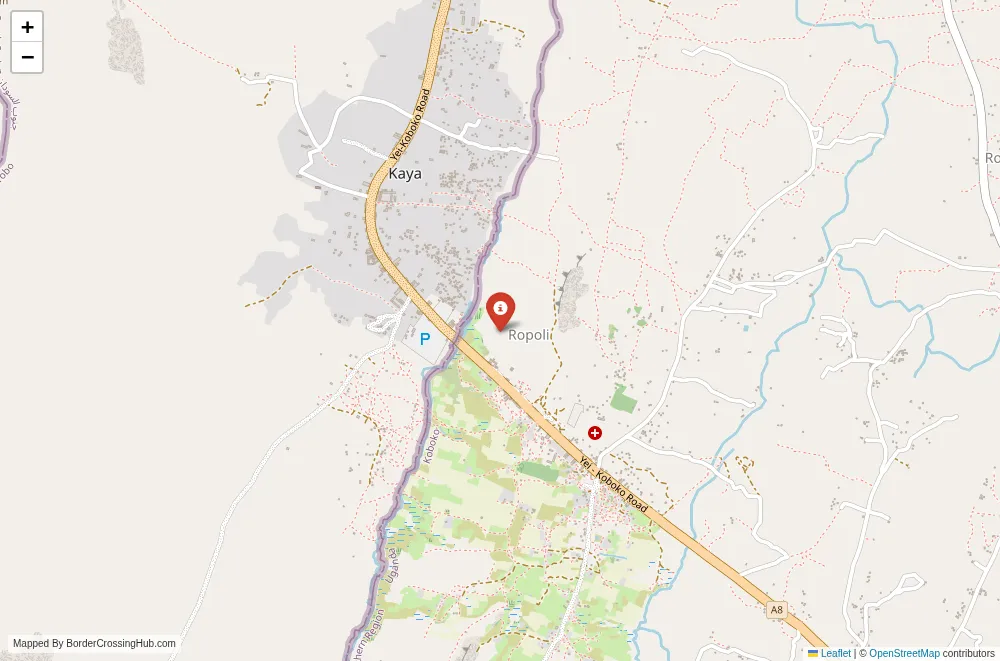
Approximate Border Location
Border Countries
- 🇸🇸South Sudan
- 🇺🇬Uganda
Border Cities
- 🇺🇬Kaya
- 🇸🇸Oraba
Wait Times
Cars 30-180m; peaks 240-600m
Just crossed? Tap to report:
Operating Hours
06:00 AM-06:00 PM
Crossing Types
Ped,cars,buses; border controls
Border Type
Land crossing via road (Sahel route)
Peak Times
07:00-10:00 AM; market days
Daily Crossings
2,000-12,000/day
Currency Exchange
SSP; UGX; USD common; exch in towns
Safety Information
Security presence; delays and checks
Languages Spoken
Arabic, English, Swahili
Accessibility Features
Basic step-free; uneven lanes
About Kaya & Oraba
Monthly Update (March 2026):
As of 03/2026, the Kaya & Oraba Border Crossing remains one of the more active routes between South Sudan and Uganda. Trucks and buses often stack up briefly before clearing inspections on the Ugandan side. Early mornings usually move faster. Trade convoys and market traffic shape the daily flow.
No Cell Service at the Border? No Problem.
Don’t get caught scrambling for paperwork when you lose signal. Download the complete Africa Transit Guide directly to your device and access every critical detail, fast-track strategy, and border rule – 100% offline.
The Kaya-Oraba border crossing connects South Sudan and Uganda along a key route in the West Nile region, serving as an important entry point for trade and movement between Morobo County in Central Equatoria State and Koboko District in northern Uganda. You select this crossing when heading overland from Arua or Kampala toward Yei or farther into South Sudan, though ongoing instability often deters casual travelers. Alternative names include Kaya-Oraba, Oraba-Kaya, or simply the Kaya border point.
Location and Basic Connection
Kaya sits in South Sudan directly across from Oraba in Uganda, near the tripoint with the Democratic Republic of Congo a few kilometers south. The crossing links paved Ugandan highways to South Sudan’s unpaved roads, creating a stark contrast visible right at the line. It handles passenger vehicles, trucks, and foot traffic, though volumes fluctuate with security. The route ties into broader networks: from Uganda via Arua to South Sudan’s Yei corridor.
Historical Background
The border follows colonial demarcations from the mid-20th century, with the area gaining prominence post-South Sudan independence in 2011. Kaya-Oraba once thrived as a busy trade hub before South Sudan’s 2013 civil war and 2016 escalations slowed activity sharply. Conflict displaced communities and restricted goods, leading to near-closure for years. Reopenings occurred sporadically, including in 2023 after six years dormant, and again in late 2024 when both countries agreed to resume trade after four years of restrictions. Geopolitically, it supports regional ties amid porous frontiers, with recent pacts allowing restricted items like fuel and food to flow.
Current Operating Status
As of early 2026, the crossing remains open but affected by South Sudan’s insecurity. Trade resumed in November 2024, permitting goods and people, yet by September 2025, business had dropped dramatically due to instability, with truck volumes falling from over 150 daily to around 10. Operations run daytime hours aligned to demand, with no 24-hour status. Uganda and South Sudan maintain immigration posts, but South Sudan’s volatility causes interruptions. Visa requirements apply: Uganda offers visa-on-arrival or e-visa for many nationalities; South Sudan needs pre-obtained visas (often from Juba or embassies, no reliable on-arrival here). Check official sources or recent reports for closures linked to conflict or health concerns.
Practical Crossing Procedures
You cross on foot or by vehicle. From Uganda at Oraba, complete exit formalities at immigration and customs for stamps and checks. Proceed across to Kaya in South Sudan for entry processing. South Sudan requires visas, possible registration, proof of onward travel, and funds. Officers scan documents, ask questions, and inspect luggage or vehicles. The process averages 30-90 minutes outside peaks, though delays occur from paperwork or security. Vehicle crossings need insurance, temporary imports, and fees.
Wait Times and Peak Periods
Waits stay shorter than at major hubs like Nimule-Elegu, but insecurity adds variability. Early mornings or quieter days move faster. Peaks tie to trade revivals or market days, with recent restrictions easing some flows. Conflict spikes cause sudden slowdowns or halts.
Transportation Options
Buses and shared taxis run from Arua or Kampala to Oraba on Uganda’s smooth tarmac. On the South Sudan side, vehicles or motorcycles connect Kaya to Yei (a few hours on rough roads). Private hires fill gaps; use licensed ones at official lots. The Ugandan road ends abruptly at the border, shifting to murram (gravel) tracks in South Sudan.
Scams and Safety Warnings
Touts may offer “fast” processing or currency deals at bad rates; ignore and use official counters. Petty overcharges happen for transport. South Sudan’s instability brings risks of armed groups, checkpoints, or violence beyond the immediate area. Travelers report business interruptions from insecurity. The remote setting limits support. Many governments advise against non-essential travel to South Sudan. Stay alert, avoid unofficial offers, and monitor advisories closely.
Road Conditions and Scenery
Uganda’s approach features well-paved highways through rolling hills and settlements. At the border, pavement stops, giving way to gravel and dirt in South Sudan, often steep and rough. Scenery mixes savanna, forests, and villages, with the tripoint proximity adding geographic interest.
Seasonal Variations and Weather Impacts
Dry season (November-April) offers better road access and higher trade. Wet months bring mud, potholes, and delays on South Sudan’s side. Insecurity overrides seasons, with flare-ups causing closures regardless of weather.
Nearby Attractions
Oraba provides basic markets and border-town life. Kaya offers local commerce and views of the transition. Yei, farther in, features markets and cultural sites, though access carries risks. The area suits those interested in cross-border dynamics over leisure spots.
Cultural and Economic Role
Trade in goods like fuel, food, and commodities drives activity, supporting jobs in transport and markets. It facilitates family visits and small-scale commerce among communities spanning the line. The crossing reinforces ties in this porous region, though conflict has curtailed potential.
Final Planning Tips
Secure visas early, bring USD or local currencies, printed documents, and translation apps. Cross early, prepare for rough roads, and have contingencies for disruptions. Track security news and consult embassies. With preparation, you manage formalities and navigate this transitional frontier.
Wrapping Up the Crossing
Kaya-Oraba offers a direct but challenging link between Uganda and South Sudan, marked by infrastructure contrasts and trade revival efforts. Time it wisely, prioritize caution amid instability, and it serves as a practical step in regional travel. Safe journeys.
No reviews yet.