
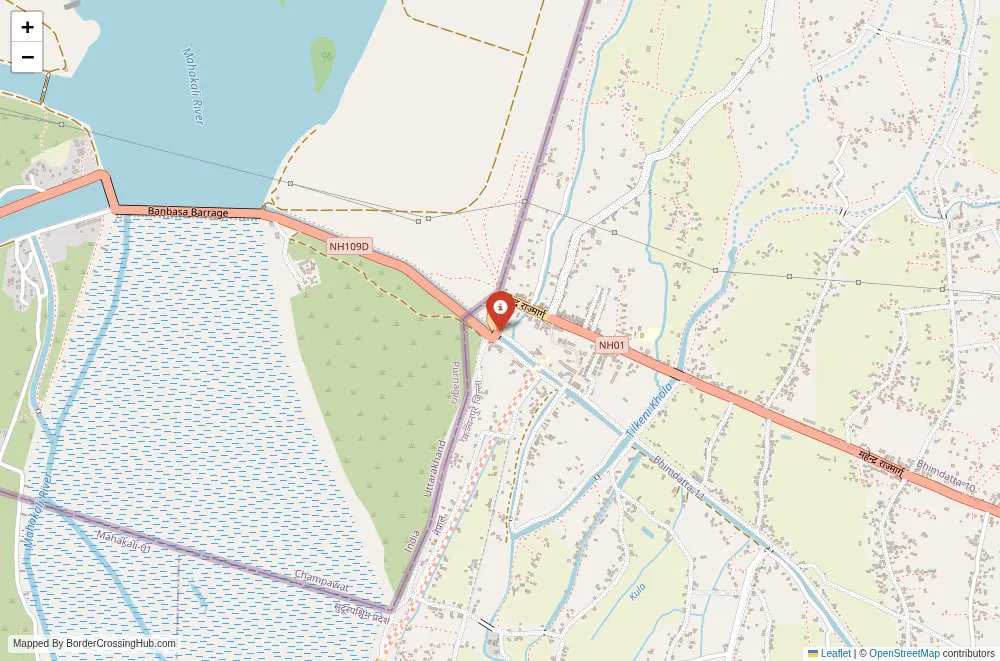
Approximate Border Location
Wait Times
Cars 10-45m; peaks 60-240m weekends
Just crossed? Tap to report:
Operating Hours
Open 24 hrs (12:00 AM-11:59 PM)
Crossing Types
Ped,cars,buses; border controls
Border Type
Land crossing via road (barrage/bridge)
Peak Times
07:00-10:00 AM; 04:00-08:00 PM
Daily Crossings
6,000-25,000/day
Currency Exchange
INR; NPR in Mahendranagar; ATMs
Safety Information
Crowding at market times; standard caution
Languages Spoken
Hindi, Nepali, English
Accessibility Features
Step-free varies; paved sidewalks
About Karimganj Steamer and Ferry Station & Zakiganj
Monthly Update (March 2026):
As of 03/2026, the Karimganj Steamer and Ferry Station & Zakiganj Border Crossing moves on a river rhythm. Boats and small ferries gather passengers and cargo before crossing the Kushiyara River. Traffic tends to cluster around departures rather than run continuously. River conditions and local trade influence the pace.
No Cell Service at the Border? No Problem.
Don’t get caught scrambling for paperwork when you lose signal. Download the complete Asia Transit Guide directly to your device and access every critical detail, fast-track strategy, and border rule – 100% offline.
The Karimganj Steamer and Ferry Station-Zakiganj border crossing (also known as Karimganj Ghat in India’s Assam state and Zakiganj or Zakigunj in Bangladesh’s Sylhet division) connects the town of Karimganj in Assam’s Karimganj district to Zakiganj upazila in Sylhet district across the Kushiyara River (a distributary of the Barak-Surma river system). You reach this riverine point when traveling overland or by water between southern Assam and northeastern Bangladesh, often as part of routes from Guwahati or Silchar toward Sylhet, Dhaka, or other parts of Bangladesh. The crossing relies on passenger ferries, small boats, and occasional steamer services rather than a permanent bridge, making it one of the few active river-based international border points between India and Bangladesh.
Location and Connections
Karimganj Steamer Ghat lies on the southern bank of the Kushiyara River in Karimganj town, about 55 kilometers south of Silchar and roughly 280 kilometers southeast of Guwahati. Zakiganj sits directly opposite on the northern bank in Sylhet division, with onward roads to Sylhet city (around 40 kilometers) and farther to Dhaka or Sunamganj. The crossing uses a cluster of small ferry terminals and ghats, with boats shuttling passengers, goods, and light vehicles (when water levels permit). The Kushiyara River, wide and navigable during the monsoon and post-monsoon seasons, forms the natural boundary here. No permanent road bridge exists; seasonal pontoon bridges or ferries handle traffic. The surrounding area features lush river plains, tea gardens, wetlands, and bustling river markets typical of the Barak-Surma basin.
Historical and Geopolitical Background
The India-Bangladesh border spans 4,096 kilometers, the world’s fifth-longest, largely defined by the 1947 Radcliffe Line and refined through later agreements. Karimganj-Zakiganj has served as a river crossing for centuries, used by traders, pilgrims, and migrants in the Surma-Barak valley. During British rule, steamer services linked Assam to eastern Bengal, with Karimganj as a key river port. Post-partition, the crossing continued informally until formalization in the 1970s-1980s under bilateral protocols. The 1974 Indira-Mujib agreement and subsequent land boundary accords (ratified in 2015) clarified much of the frontier, though riverine shifts occasionally create disputes. The point supports local trade in fish, jute, rice, and consumer goods, as well as family visits in a region where Bengali, Sylheti, and Manipuri communities live on both sides. Seasonal ferry services have declined with road improvements elsewhere, but the crossing remains active for passengers. Fun fact: the Kushiyara River’s shifting channels have historically altered village locations and border claims, a common feature in this dynamic deltaic landscape.
Current Status and Operating Hours
As of early 2026, Karimganj Steamer and Ferry Station-Zakiganj operates seasonally and weather-dependently for passengers and light goods. The crossing functions primarily from October through May when river levels allow reliable ferry service, with limited or no operations during peak monsoon flooding (June to September). Daily hours typically run from 7:00 a.m. to 6:00 p.m., though boat schedules vary with demand and daylight. Small motorized ferries or country boats carry passengers (and occasionally motorcycles or small cargo) for a short 10-15 minute trip across the river. Larger steamers or cargo vessels operate sporadically. Security remains present, with India’s Border Security Force (BSF) and Bangladesh’s Border Guard Bangladesh (BGB) conducting checks. Confirm current operations through local administration, BSF notices, or traveler forums, as flood levels, maintenance, or bilateral issues can suspend service.
Crossing Procedures Step by Step
You handle exit and entry on both sides. From India to Bangladesh: at the Karimganj Indian post near the ghat, present your passport for exit stamp (Indian citizens may use voter ID or other ID for local crossings; foreigners require visa). Board a ferry or boat, cross the river (10-15 minutes), then proceed to Zakiganj Bangladesh immigration for entry stamp (Bangladeshi citizens cross freely; foreigners use visa-on-arrival or pre-arranged visa). The reverse applies when returning: Bangladesh exit stamp followed by Indian entry (customs check for restricted items). Procedures include manual document verification, occasional bag scans, and questions about purpose. Wait times range from 20 minutes to over an hour, depending on boat schedules, queues, or immigration processing. Foreigners report relatively straightforward experiences, though expect added scrutiny for goods or extended stays.
Visa Requirements for Foreign Visitors
Indian and Bangladeshi citizens cross without visas under bilateral arrangements, using ID cards or voter IDs. Foreigners entering Bangladesh from India can obtain visa-on-arrival at land and river crossings (30 days for $51 USD for most nationalities; payable in cash, USD preferred). Bring passport photos and exact fees. Passports need at least six months validity. India requires no visa for Bangladeshi citizens but may check foreigners for onward permits if traveling to restricted areas in India. Rules remain stable, but confirm via embassies or official portals, as enforcement can vary at smaller river crossings.
Transportation Options and Road Details
From Guwahati or Silchar, trains or buses reach Karimganj town (6-10 hours from Guwahati), then shared auto-rickshaws or taxis cover the short distance to the ghat. From Zakiganj, buses or shared taxis head to Sylhet or Dhaka. Private vehicles rarely cross due to river logistics; most passengers walk onto ferries. Roads from Karimganj stay paved and in good condition; Bangladesh side includes highways with occasional rough patches. Monsoon flooding can submerge roads or halt ferries. The full Guwahati-Dhaka route takes 2-3 days with border time. Daylight travel recommended for safety and boat availability.
Scams and Safety Warnings
Minor issues include inflated boat fares or poor exchange rates near the ghat (use official counters or ATMs). Some travelers report touts offering “fast” crossing services. The area remains generally safe for transit, but petty theft occurs in crowds. River currents and overloaded boats pose risks during monsoon; choose reputable operators. Monitor news for flooding or local unrest. Avoid unofficial crossings or nighttime travel. Register with embassies if staying longer in Bangladesh.
Nearby Attractions and Practical Tips
Karimganj offers river views and proximity to Badarpur’s markets. Zakiganj leads to Sylhet’s tea gardens, shrines, and Jaflong’s scenic hills. Carry INR/BDT cash, bottled water, snacks, sunscreen, and multiple passport copies. Start early to catch morning boats; have Sunauli-Bhairahawa as a backup if needed. Translation apps aid local interactions.
Final Notes for Planning
Bhitthamore-Malibara provides a convenient and low-key crossing between India and Nepal’s Madhesh Province, benefiting from the open-border policy for citizens and straightforward visa-on-arrival for foreigners. Confirm current status, prepare visas and fees in advance, and time your travel for daylight hours. With basic preparation, it offers reliable passage across this fertile Terai frontier. Safe travels.
No reviews yet.