Monthly Update (October 2026):
Johor Bahru & Woodlands is entering October with the Singapore side introducing another electronic vehicle requirement. From October 6, Malaysian-registered vehicles need a valid Vehicle Entry Permit before the driver and passengers can submit Singapore's SG Arrival Card, adding another step for motorists using the crossing. The change is particularly relevant at Johor Bahru & Woodlands because of the exceptionally high volume of daily commuter and private-car traffic.
About this crossing
A History of a Colonial Link and a Symbiotic Relationship
The history of this crossing is the history of modern Singapore and Malaysia. The Causeway was built by the British colonial government to connect the island of Singapore with the Malay Peninsula, primarily to transport raw materials like tin and rubber from Malaya to the port of Singapore. It was a vital piece of economic infrastructure. After Singapore's separation from Malaysia in 1965, it became an international border. However, the deep economic and social ties remained. Singapore's booming economy created a huge demand for labor, which was met by Malaysians who could earn higher wages in Singapore while living in the more affordable city of Johor Bahru. This created the phenomenon of the daily commuter, the defining feature of The Causeway. The crossing is a physical manifestation of this symbiotic, if sometimes tense, relationship. It is a lifeline for the economy of Johor and a critical release valve for the labor market of Singapore. The immense, fortress-like checkpoint buildings on both sides are a testament to the scale and security challenges of managing this unprecedented flow of people.
The Border Crossing Procedure: A Multi-Modal Challenge
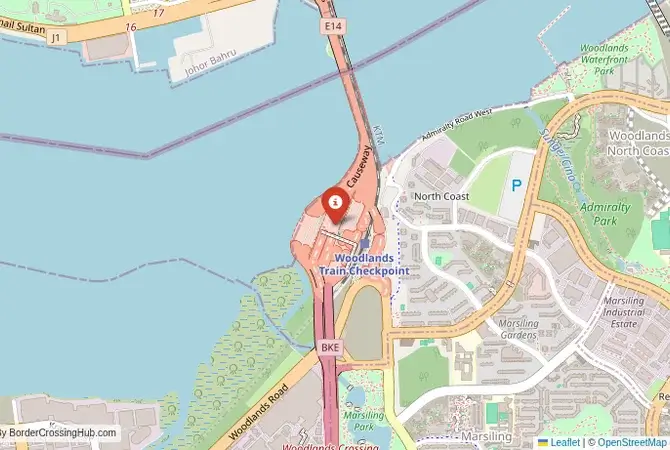
The border is open 24 hours. The process is highly organized but can be extremely time-consuming due to the sheer volume of people, especially during morning and evening rush hours and on weekends, with occasional longer delays from technical glitches at Malaysian checkpoints. You must have your passport ready and know the visa requirements (Singapore is visa-free for many nationalities).Crossing by Public Bus: This is the most common way for travelers. You will take a bus (e.g., SBS Transit bus 170 from Singapore or the Causeway Link bus from Johor Bahru). The process is two-staged. You will first arrive at the exit checkpoint of the country you are leaving. You must get off the bus with all your belongings, go through passport control to get your exit stamp, and then go back down to the bus bay to catch the next bus from the same company to cross The Causeway. You do not need to get on the same bus you came on. On the other side, you will again get off the bus with all your belongings, go up to the entry immigration hall of the country you are entering, get your passport stamped, put your bags through a customs X-ray, and then exit the terminal. Crossing by Train: A shuttle train service runs between the JB Sentral station in Johor Bahru and the Woodlands Train Checkpoint in Singapore. This is often the fastest way to cross. The unique advantage is that you clear both Malaysian exit immigration and Singaporean entry immigration in the same building at the Woodlands Train Checkpoint before you even get on the train to go to Malaysia, or vice versa at JB Sentral. This makes the process much more streamlined. (Note: A new Rapid Transit System Link is under construction and targeted to open in late 2026, promising even faster service.)Crossing by Car/Motorbike: You will drive to the checkpoint and queue in the vehicle lanes. You will hand your passports to the officer at the drive-through booth. You will also need the correct electronic payment cards for the tolls (a Touch 'n Go card for Malaysia, an Autopass card for Singapore).
Nearby Border Crossings



Logistics, Queues, and Planning
The key to crossing The Causeway is timing. Avoid the peak commuter rush hours (6-9 AM going into Singapore, 5-8 PM going into Malaysia) and weekend evenings if at all possible. The queues during these times can be monumental, with waiting times of several hours, and up to three hours reported for vehicles during holiday peaks or tailbacks. Recent system upgrades and occasional glitches at Malaysian immigration have caused additional delays for some travelers. The train is often the best bet for avoiding the worst of the road traffic. If taking the bus, be prepared for a crowded, sometimes confusing experience. Follow the signs carefully and be prepared to queue patiently. The entire process is a test of endurance. The city of Johor Bahru, right at the border, has been completely redeveloped with massive shopping malls and entertainment complexes, all directly connected to the immigration building, catering to the huge influx of Singaporean visitors.
Final Advice for the World's Busiest Border
The Johor Bahru-Woodlands crossing is an urban phenomenon unlike any other. It is a place of incredible human energy and a logistical marvel. For the traveler, the key is to be prepared for the crowds and to choose your mode of transport wisely. The train offers a faster, more civilized experience. The bus is cheaper but can be much slower. Have your passport easily accessible at all times. By being mentally prepared for the scale of the operation and avoiding peak hours, you can successfully navigate this vital artery and experience firsthand the unique, intense, and deeply intertwined relationship between these two great Southeast Asian nations. It is a crossing that will leave a lasting impression.
View all border crossings between Malaysia and SingaporePractical information
Fuel
Malaysia: <1 km - Singapore: <1 km
Currency
Exchange near Johor Bahru (MYR, SGD)
Safety information
Safe, traffic moderate
Connectivity
Wi-Fi at checkpoints, 4G
Have you crossed here?
Help other travelers by sharing your experience, wait times, and any updates.