
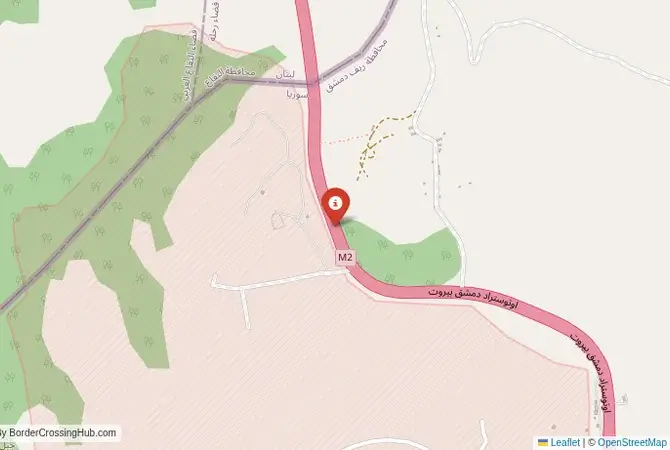
Approximate Border Location
Wait Times
30-90 min average
Just crossed? Tap to report:
Operating Hours
Open 12:00 AM-11:59 PM
Crossing Types
Pedestrians, vehicles, commercial
Border Type
Land crossing via road
Peak Times
7:00-10:00 AM, weekends
Daily Crossings
3500-4500 daily
Currency Exchange
Near Masnaa; LBP, SYP
Safety Information
Generally safe; controls
Languages Spoken
Arabic, English
Accessibility Features
Ramps, assisted access
About Jdeidat Yabous & Masnaa
Monthly Update (March 2026):
As of 03/2026, the Jdeidat Yabous & Masnaa Border Crossing remains a main route between Lebanon and Syria. Cars, buses, and trucks slow through passport and customs checks. The Lebanese side sometimes moves a bit slower during busy hours. Regional trade and family travel keep the crossing active.
No Cell Service at the Border? No Problem.
Don’t get caught scrambling for paperwork when you lose signal. Download the complete Asia Transit Guide directly to your device and access every critical detail, fast-track strategy, and border rule – 100% offline.
The Masnaa Crossing: A Lifeline on a Volatile Frontier
The Masnaa border crossing is the primary land route between Beirut, Lebanon, and Damascus, Syria. Known as Masnaa on the Lebanese side and Jdeidat Yabous on the Syrian side, it cuts through the high plains of the Beqaa Valley, a region with its own complex history and security landscape. Before the Syrian civil war, this was a bustling, almost casual border, with a constant flow of commerce, tourists, and families moving between the two deeply interconnected capitals. Today, it operates under the shadow of that conflict. While it remains a vital lifeline for trade and for those with no other way to travel, it is a frontier fraught with tension and uncertainty. The atmosphere is serious, and the process is scrutinized with a level of intensity born from years of regional instability.
A History of Intertwined Fates
The relationship between Lebanon and Syria is historically complex, and this border is at the heart of it. For decades, the frontier was porous, and during the Syrian military presence in Lebanon from 1976 to 2005, it was barely a border at all for Syrian personnel. It has always been a conduit for political influence, smuggling, and shared cultural ties. The outbreak of the Syrian civil war in 2011 transformed the crossing. It became a gateway for hundreds of thousands of Syrian refugees fleeing into Lebanon, creating an unprecedented humanitarian crisis that continues to strain Lebanese resources. It also became a strategic chokepoint, with various factions vying for influence in the region. The crossing today is a microcosm of the current state of affairs: officially open, but operating under immense security pressure from both Lebanese and Syrian authorities.
The Crossing Procedure: A Multi-Layered Process
Navigating the Masnaa-Jdeidat Yabous crossing is a meticulous process that requires patience and the correct documentation. It is not a simple stamp-and-go affair. Expect the process to take several hours, though recent simplifications have reduced times for some crossings to around 20 minutes for groups.Exiting Lebanon (Masnaa): The process begins at the Lebanese General Security post. You will park and go to the departures window. Your passport will be inspected, and you will receive a Lebanese exit stamp. Lebanese customs may also inspect your vehicle. This part is generally the most straightforward.Entering Syria (Jdeidat Yabous): After leaving the Lebanese post, you will drive a short distance to the Syrian complex. This is a much more involved process.1. Security Check: You will likely be stopped at an initial checkpoint for a preliminary look at your documents.2. Visa and Entry Form: You must have a valid Syrian visa obtained in advance from a Syrian embassy or consulate, though recent changes allow entry without visa or fees in some cases due to immigration department status; confirm current requirements. You will be required to fill out a detailed entry form.3. Immigration: You will present your passport and visa (if applicable) to the Syrian immigration officials. Your passport will be taken for inspection and processing, which can take a significant amount of time. You may be asked to wait in a designated area.4. Customs: If you are driving a vehicle, you will need to complete a temporary import process, which involves extensive paperwork and fees. All luggage and the vehicle itself are subject to a thorough search.5. Final Clearances: Multiple security branches may need to sign off on your entry before your passport is returned and you are allowed to proceed toward Damascus.
Travel Realities and Practical Advice
The road between Beirut and Damascus is a modern highway, but the security situation can change without warning. There are numerous checkpoints on both sides of the border, particularly in the Beqaa Valley and on the road to Damascus. You must comply with all instructions from officials. For a foreign traveler, attempting this crossing independently is highly inadvisable. The most common way for the few authorized foreigners (like journalists or aid workers) to cross is with a pre-arranged driver or “fixer” who is familiar with the procedures and the current security climate. This person can help navigate the complex bureaucracy on the Syrian side. You must have your visa and all supporting documents in perfect order. Any discrepancy can lead to long delays or denial of entry. Having US dollars in cash is often necessary for any fees on the Syrian side. Recent traveler reports indicate quicker processing at times, but restrictions and closures can occur suddenly due to political developments.
Concluding Thoughts on a High-Stakes Journey
The Masnaa-Jdeidat Yabous crossing remains a critical, functioning link between Lebanon and Syria, but it is not a place for the casual traveler. It is a frontier that demands a deep understanding of the current political and security situation, meticulous preparation, and a high tolerance for risk and uncertainty. The process reflects the gravity of the regional context, and anyone contemplating this route must prioritize official security guidance above all else.
No reviews yet.