
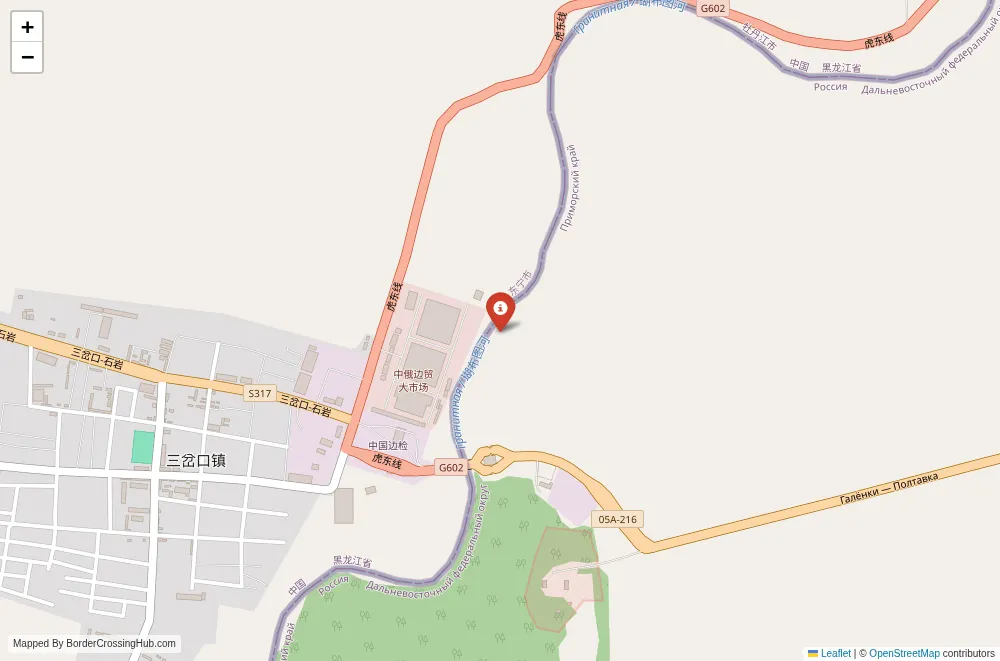
Approximate Border Location
Wait Times
Trucks 60-240m; peaks 240-720m
Just crossed? Tap to report:
Operating Hours
08:00 AM-08:00 PM
Crossing Types
Freight,cars limited; full controls
Border Type
Land crossing via road (border post)
Peak Times
Mon-Fri 02:00-07:00 PM
Daily Crossings
1,000-6,000/day
Currency Exchange
CNY; RUB in Suifenhe/Ussuriysk; ATMs
Safety Information
Queueing possible; strict customs
Languages Spoken
Mandarin, Russian, English
Accessibility Features
Basic; step-free varies
About Hunchun & Kraskino
Monthly Update (March 2026):
As of 03/2026, the Hunchun & Kraskino Border Crossing remains active with steady freight and passenger traffic. Trucks often stack up briefly before clearing inspections on the Russian side. Passenger cars usually pass faster once lanes open. Trade demand and logistics schedules keep the crossing moving.
No Cell Service at the Border? No Problem.
Don’t get caught scrambling for paperwork when you lose signal. Download the complete Asia Transit Guide directly to your device and access every critical detail, fast-track strategy, and border rule – 100% offline.
The Hunchun-Kraskino border crossing stands out as a key northeastern land link between China and Russia, sitting at the edge of Jilin Province where the borders of China, Russia, and North Korea come close together. You often pick this route when heading from Yanji or farther in China toward Vladivostok or other spots in Primorsky Krai. Alternative names include Hunchun Port, Kraskino checkpoint, or simply the Hunchun-Kraskino crossing.
Location and Basic Connection
Hunchun lies in the Yanbian Korean Autonomous Prefecture, Jilin Province, while Kraskino sits in Khasansky District, Primorsky Krai, Russia. This road-based crossing handles passenger vehicles, buses, and freight, connecting Chinese routes to Russian roads leading north toward Vladivostok. It serves as one of the southernmost land points along the China-Russia border, with proximity to the Sea of Japan adding geographic interest. Daily traffic includes traders, tourists, and locals, boosted by recent cross-border policies.
Historical Background
The border line here follows agreements from the mid-2000s that finalized eastern demarcations after decades of negotiations. Earlier Soviet-Chinese tensions shaped the region, but this section avoided major incidents. Infrastructure upgrades, including road improvements between 2020 and 2024, supported growing trade. Geopolitically, Hunchun functions as a crossroads in Northeast Asia, near the tripoint with North Korea, making it relevant for regional connectivity and economic ties between China and Russia.
Current Operating Status
As of early 2026, the crossing operates daily, typically around 10 hours from morning to evening (often 8:00 AM to 6:00 PM or similar, aligned with local times: UTC+8 China, UTC+10 Russia). It closes temporarily for Chinese Lunar New Year, such as February 17-21 in 2026. Visa-free policies for short stays (up to 30 days for qualifying Chinese and Russian citizens until September 2026) drive higher passenger numbers. The point remains open to international travelers with proper visas or e-visas where applicable. Check official sources for any adjustments due to holidays or weather.
Practical Crossing Procedures
You cross mainly by bus, private car, or on foot if arrangements allow. From the Chinese side in Hunchun, handle exit at immigration and customs. Proceed to the Russian side in Kraskino for entry. Russia offers e-visas for many nationalities at this checkpoint, or visa-free for certain groups under current rules. Bring passport, supporting docs like onward tickets, and cash. Officers check documents, ask standard questions, and inspect vehicles if needed. The process generally takes 30-90 minutes, though bus groups or freight can extend it slightly.
Wait Times and Peak Periods
Lines remain manageable compared to bigger crossings, with quicker passage early or late in the day. Midday or warmer months see more activity from tourists and trade. Visa relaxations since 2025 have increased flows, especially Russians heading to China for short trips or shopping. Holidays push volumes higher, but this spot avoids extreme backups.
Transportation Options
Buses run from Hunchun to Kraskino and onward to Vladivostok (a few hours total). From Yanji or Changchun, trains or coaches reach Hunchun, then connect across. Shared taxis or private cars work well; use official areas for hires. On the Russian side, transport links to Vladivostok or nearby towns. Direct services sometimes manage the border stop while you clear paperwork. Roads connect smoothly to highways.
Scams and Safety Warnings
Scam reports stay low at this crossing, but watch for unofficial helpers pushing “faster” processing or bad-rate currency exchanges. Ignore them and head to official counters. Language gaps exist, so translation apps help. The area feels remote with basic services, so secure belongings in crowds. No major risks for foreigners during open hours, but stick to marked zones and avoid unsolicited deals. Recent surges in tourism haven’t brought widespread issues here.
Road Conditions and Scenery
Approaches feature paved roads through hilly, forested northeast China, with Korean and Russian influences visible. Crossing into Russia, expect rural Primorsky terrain: taiga, small villages, and coastal proximity. Roads perform decently but watch for winter ice or rain damage. Views mix mountains, rivers, and open land.
Seasonal Variations and Weather Impacts
Winter cold and snow shorten effective hours or slow travel; ice demands caution. Summer and fall offer easier conditions, though rain affects low spots. Peak tourism hits warmer months with visa-driven spikes. Lunar New Year closures add planning needs.
Nearby Attractions
Hunchun hosts the Fangchuan Scenic Area, where you view the tripoint with North Korea and Russia from a tower (entrance fee applies). Nearby spots include Lingbao Temple or local markets with Korean-Russian goods. On the Russian side, Kraskino stays small, but Vladivostok (hours away) offers ports, history, and cuisine. The region suits border enthusiasts and nature seekers.
Cultural and Economic Role
Trade fuels the crossing: e-commerce parcels, goods, and timber move both ways. Digital frontier trade has boomed in Hunchun, with bonded zones handling massive volumes. Tourism grows with visa-free options, drawing Russians for shopping and Chinese for short trips. It supports local jobs in logistics, retail, and services in this tri-border zone.
Final Planning Tips
Arrive early with yuan/rubles cash, printed docs, and translation tools. Monitor for holiday closures or policy shifts. Prepare for weather and queues. With prep, you clear formalities and continue exploring this unique Northeast Asian frontier.
Summing Up the Crossing
Hunchun-Kraskino offers a convenient, increasingly active option for China-Russia land travel. Time your trip around policies and seasons, handle the usual border steps, and it opens access to remote yet connected regions. Safe journeys.
No reviews yet.