
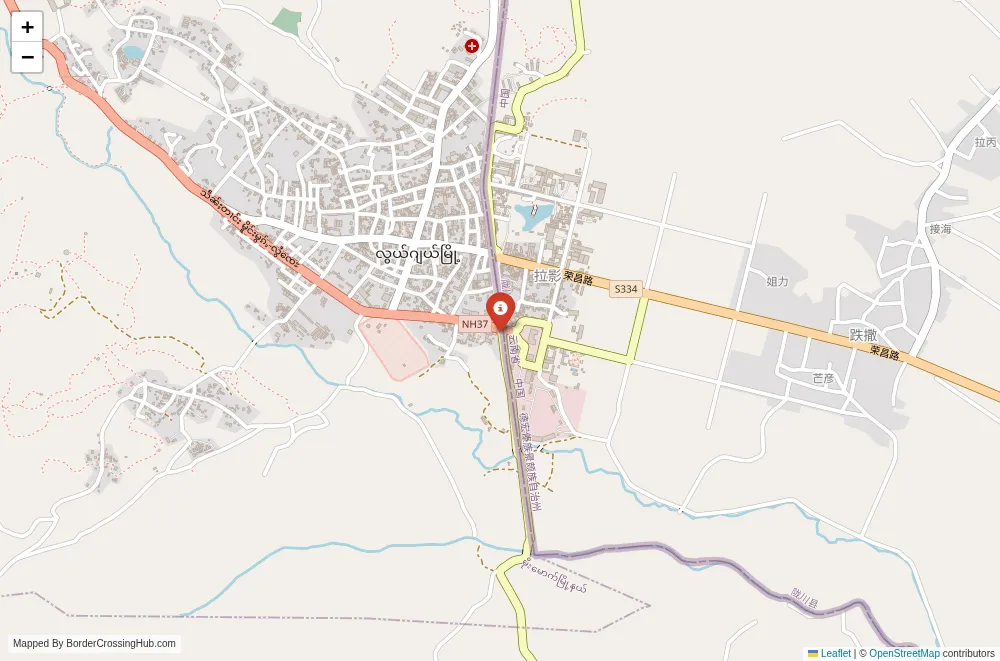
Approximate Border Location
Wait Times
Trucks 60-240m; peaks 240-720m
Just crossed? Tap to report:
Operating Hours
Hours variable; restrictions possible
Crossing Types
Freight typical; permit travel limited
Border Type
Land crossing via road (regional port)
Peak Times
Weekdays 09:00 AM-01:00 PM
Daily Crossings
300-2,500/day
Currency Exchange
CNY; MMK; USD common; ATMs scarce
Safety Information
Security-sensitive; closures may occur
Languages Spoken
Mandarin, Burmese, English
Accessibility Features
Basic; uneven lanes
About Hulin & Markovo
Monthly Update (March 2026):
As of 03/2026, the Hulin & Markovo Border Crossing stays relatively quiet with limited cross-border traffic. Cars appear occasionally, but freight vehicles make up most of the movement. Inspections can slow things on the Russian side when trucks arrive. Seasonal trade and weather sometimes change the rhythm.
No Cell Service at the Border? No Problem.
Don’t get caught scrambling for paperwork when you lose signal. Download the complete Asia Transit Guide directly to your device and access every critical detail, fast-track strategy, and border rule – 100% offline.
The Hulin-Markovo border crossing provides a low-profile road link across the China-Russia frontier, joining the city of Hulin in Heilongjiang Province directly to the village of Markovo in Primorsky Krai. You typically use this point for regional overland travel in the Russian Far East or northeastern China, often as part of routes avoiding the more crowded southern Primorye crossings. Alternative names include the Hulin Port or Markovo checkpoint.
Location and Basic Connection
Hulin sits in eastern Heilongjiang, close to the Ussuri River that forms much of this stretch of the border, while Markovo lies in the Lesozavodsk area of Primorsky Krai. The crossing focuses on road traffic for passengers, vehicles, and freight, tying into Chinese highways like G331 indirectly and local Russian roads. It remains one of the quieter options along the 4,209-kilometer China-Russia border, handling steady but not overwhelming flows compared to busier spots farther south.
Historical Background
The frontier here stems from Soviet-era agreements and final demarcations in the early 2000s that settled long-standing disputes along the Ussuri River. Earlier tensions, including the 1969 clashes elsewhere on the river, shaped the region’s guarded atmosphere, but this section saw less direct conflict. Post-1991 border treaties opened it gradually for trade, with infrastructure evolving slowly. Recent years brought upgrades, mostly on the Russian side, as bilateral ties strengthened and trade volumes rose. Geopolitically, the crossing supports practical economic links in a remote area, reflecting broader China-Russia cooperation without the spotlight of major hubs.
Current Operating Status
In early 2026, the crossing functions daily, generally aligning with standard hours around 8:00 AM to 6:00 PM or extended periods depending on local rules (Chinese time UTC+8, Russian UTC+10). Recent infrastructure additions in Primorsky Krai, including plans for new checkpoint facilities in Markovo announced for 2025, suggest ongoing improvements. No major closures reported lately, though seasonal weather or policy adjustments can influence openings. Visa-free arrangements for certain nationalities, including short stays for Chinese and Russian citizens, have increased activity at regional points, but confirm specifics via official channels as changes occur.
Practical Crossing Procedures
You cross primarily by road, either in private vehicles, buses, or on foot if needed. From the Chinese side in Hulin, complete exit formalities at customs and immigration counters. Proceed across to the Russian side in Markovo for entry processing. Russia provides e-visas for many nationalities at this point, or visa-free entry for qualifying short stays (up to 30 days in some cases under recent trials). Prepare your passport, any required documents like hotel bookings or onward proof, and cash for minor fees. Procedures involve document checks, possible vehicle inspections for cars, and questions from officers. The full process usually runs 30-90 minutes, though freight lanes can cause minor backups if shared.
Wait Times and Peak Periods
Queues stay modest here, shorter than at high-volume crossings. Early mornings or late afternoons often mean quicker passage. Busier periods hit midday with commercial traffic or during warmer months when tourism picks up. Recent visa relaxations have added modest increases in passenger flows regionally, but this spot avoids extreme crowds. Holidays or trade surges can extend waits slightly.
Transportation Options
Buses connect Hulin to nearby Chinese cities like Jixi or farther to Harbin. On the Russian side, transport links Markovo to Lesozavodsk and onward to places like Khabarovsk. Shared vans or taxis fill in, but use official stands to avoid issues. Private cars cross directly with proper paperwork. Roads tie into broader networks, making it viable for those exploring the Far East without relying on major rail lines.
Scams and Safety Warnings
Reports of scams remain limited at this quieter crossing, but standard precautions apply. Avoid unofficial helpers offering “faster” processing or currency deals at unfavorable rates. Language differences can complicate things if problems arise, so use translation apps. The area feels isolated, with sparse services, so watch belongings in waiting zones. No widespread safety concerns for foreigners during operating hours, but remote location means limited support if delays occur. Stick to official areas and ignore unsolicited offers.
Road Conditions and Scenery
Approaches feature paved roads through northeastern China’s agricultural plains and forested edges near the Ussuri. On the Russian side, expect similar rural terrain with taiga influences and small settlements. Roads hold generally well but face winter ice or spring thaw issues. Views include river valleys and open fields, giving a sense of the vast frontier.
Seasonal Variations and Weather Impacts
Winter cold and snow can shorten hours or slow vehicles, with icy conditions common. Summer brings better access but occasional heavy rain affecting low areas. Peak activity aligns with warmer seasons and trade periods. Recent infrastructure work helps mitigate some weather-related delays.
Nearby Attractions
Hulin offers local history tied to the Ussuri region, including river views and small markets. Nearby Mishan or Raohe provide more border-town feels. On the Russian side, Markovo stays modest, but Lesozavodsk has basic amenities and access to nature reserves or timber areas. The region appeals to those drawn to remote border landscapes over tourist crowds.
Cultural and Economic Role
Timber, agriculture, and goods drive crossings here, sustaining local economies on both sides. It supports cross-border family ties and small-scale trade in a sparsely populated zone. Growing bilateral cooperation has boosted capacity, with upgrades reflecting deeper ties.
Final Planning Tips
Show up early with local currencies (yuan and rubles), printed documents, and offline tools for translation. Track news for any frontier updates, as relations influence operations. Prepare for weather and potential waits. With solid prep, you handle the formalities and move on to explore this understated section of the China-Russia border.
Summing Up the Crossing
Hulin-Markovo delivers a straightforward, under-the-radar option for land travel between China and Russia. Focus on timing and basics, stay alert to the usual border realities, and it fits neatly into regional itineraries. Safe travels ahead.
No reviews yet.