
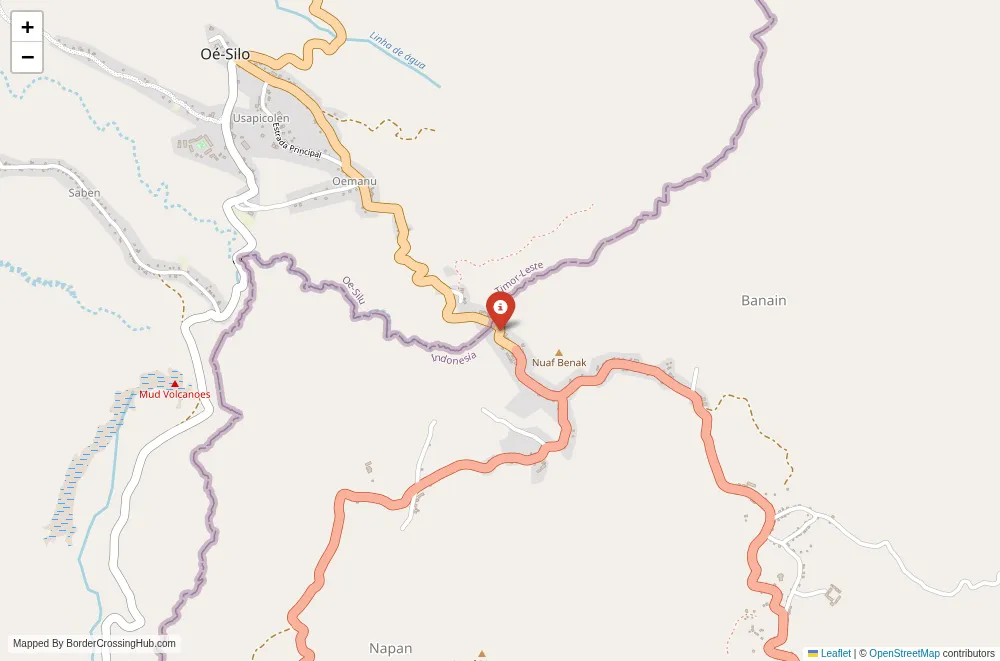
Approximate Border Location
Border Countries
- 🇮🇩Indonesia
- 🇹🇱Timor-Leste
Border Cities
- 🇮🇩Napan
- 🇹🇱Bobometo
Wait Times
Cars 10-45m; peaks 60-180m
Just crossed? Tap to report:
Operating Hours
06:00 AM-06:00 PM
Crossing Types
Ped,cars,bikes; border controls
Border Type
Land crossing via road (local)
Peak Times
08:00-10:00 AM; 03:00-05:30 PM
Daily Crossings
1,000-6,000/day
Currency Exchange
IDR; USD/AUD in towns; cash only
Safety Information
Rural post; delays possible
Languages Spoken
Indonesian, Tetum, English
Accessibility Features
Minimal ramps; uneven ground
About Huanggang & Lok Ma Chau
Monthly Update (March 2026):
As of 03/2026, the Huanggang & Lok Ma Chau Border Crossing runs around the clock with steady vehicle and bus traffic. Lines often stack up heading into Hong Kong late in the evening. Early mornings tend to move faster through inspections. Weekend travel and freight schedules can stretch waits.
No Cell Service at the Border? No Problem.
Don’t get caught scrambling for paperwork when you lose signal. Download the complete Asia Transit Guide directly to your device and access every critical detail, fast-track strategy, and border rule – 100% offline.
The Huanggang-Lok Ma Chau border crossing stands as one of the busiest and most strategically important land connections between mainland China and Hong Kong, serving as the primary 24-hour vehicular gateway linking Shenzhen’s Futian District directly to Hong Kong’s Lok Ma Chau Control Point in the New Territories. You typically use this crossing when traveling by private car, cross-border coach, or shuttle bus from Shenzhen or farther in Guangdong Province toward Hong Kong’s urban areas, particularly when timing demands round-the-clock access rather than the limited-hour Luohu-Lo Wu pedestrian post. Alternative names include Huanggang Port (China side), Lok Ma Chau Control Point (Hong Kong side), or simply the Huanggang-Lok Ma Chau crossing.
Location and Basic Connection
Huanggang Port occupies a compact site in Futian District, Shenzhen, immediately adjacent to the Shenzhen River, while Lok Ma Chau Control Point sits on the Hong Kong side in the North District, near the village of Lok Ma Chau and the San Tin area. The crossing features separate lanes for private vehicles, cross-border coaches, goods vehicles, and a dedicated public transport interchange. It connects Shenzhen’s extensive road network (including direct access from the Futian CBD and high-speed rail hub) to Hong Kong’s Route 9 and the Lok Ma Chau Spur Line (MTR East Rail). Unlike pedestrian-only Luohu, this post handles all vehicle types, making it the main artery for freight, business commuters, and private cars.
Historical Background
The border traces the 1898 Second Convention of Peking, which leased the New Territories to Britain while ceding Kowloon and Hong Kong Island. Huanggang-Lok Ma Chau developed as a secondary crossing after the 1980s economic opening of Shenzhen, with the first vehicle facilities opening in 1989. It grew rapidly as Shenzhen became a manufacturing powerhouse and Hong Kong a financial hub, necessitating 24-hour operations by 2003. The crossing played a key role during the 1997 handover preparations and post-handover integration under “one country, two systems.” Major upgrades in the 2010s added modern terminals, electronic clearance systems, and expanded lanes to handle surging cross-border traffic.
Current Operating Status
As of early 2026, Huanggang-Lok Ma Chau operates 24 hours daily, making it the only round-the-clock vehicle crossing between mainland China and Hong Kong. Both sides maintain full immigration, customs, and quarantine facilities. China requires valid entry permits or visas for most foreigners; Hong Kong offers visa-free entry for many nationalities (90 days for most). The post processes tens of thousands of vehicles and passengers daily, with peak flows during holidays, weekends, and business hours. No major closures reported recently, though occasional maintenance or typhoon conditions can affect operations. Confirm real-time status via official immigration websites or apps.
Practical Crossing Procedures
You cross by vehicle (private car, cross-border coach, or shuttle bus); pedestrians cannot use this post. From China at Huanggang, complete exit formalities at the modern terminal (passport/e-channel scans, stamps, customs declaration for goods). Vehicles proceed through automated gates or manual lanes. On the Hong Kong side at Lok Ma Chau, entry involves immigration counters (e-channels for eligible travelers), questions, and possible vehicle or luggage checks. Bring passport, any required documents, proof of onward travel or accommodation, and declare goods exceeding duty-free allowances. The process averages 20-60 minutes during normal periods, though peaks can extend waits. Coaches often handle clearance while passengers remain aboard.
Wait Times and Peak Periods
Weekday daytime waits typically range from 15-45 minutes. Evening rush hours (after work) and weekends push times to 1-2 hours. Major holidays (Chinese New Year, National Day Golden Week, Hong Kong festivals) can see waits of 3-6 hours or more, with vehicles queued for kilometers. Late-night and early-morning periods offer the shortest delays. Electronic systems and dedicated e-channels have reduced average times significantly since the 2020s.
Transportation Options
Cross-border coaches run frequently from Shenzhen Bay Port, Futian, or various Shenzhen districts to Hong Kong destinations (Kowloon, Hong Kong Island, New Territories). Private vehicles cross with valid permits and insurance. No direct public buses or trains cross here; pedestrians must use Luohu-Lo Wu. On the Hong Kong side, minibuses, taxis, or the KMB B1 bus connect to Yuen Long or further MTR stations. Arrange coach tickets online or at terminals for reliability.
Scams and Safety Warnings
Scam attempts concentrate on the Shenzhen side: touts offering “fast lane” help, fake currency exchange, or overpriced private cars; ignore them and use official lanes or licensed coaches. Pickpocketing risks rise in crowded queues. The crossing itself remains safe and heavily policed, with clear signage and security. Exercise standard caution with valuables, especially during peak crowds. No major safety incidents reported recently, though traffic congestion can frustrate drivers.
Road Conditions and Scenery
No scenic views dominate; the crossing occurs within urbanized terminals and elevated roadways. Shenzhen’s approach features modern expressways and high-rise skyline. Hong Kong’s side connects to Route 9 with views of Shenzhen Bay and New Territories hills. Both sides maintain excellent paved roads, with congestion the main issue during peaks.
Seasonal Variations and Weather Impacts
Year-round 24-hour operation continues, but typhoon season (June-September) can cause temporary closures or delays on the Hong Kong side. Extreme heat in summer increases indoor crowding. Holiday surges (Chinese New Year, National Day) dramatically increase waits regardless of season.
Nearby Attractions
Huanggang Port connects directly to Futian CBD with shopping malls and electronics markets. On the Hong Kong side, Lok Ma Chau links to Yuen Long wet markets, Ping Shan Heritage Trail, and Hong Kong Wetland Park. The crossing suits cross-border business, shopping, or quick access to Hong Kong’s New Territories more than nature tourism.
Cultural and Economic Role
The crossing drives massive daily economic integration: Shenzhen residents shop in Hong Kong, Hong Kong businesses operate in Shenzhen, and cross-border commuters sustain both economies. It supports the “one country, two systems” framework, facilitating millions of crossings annually and symbolizing the close interdependence of Shenzhen and Hong Kong.
Final Planning Tips
Book cross-border coach tickets in advance during holidays, carry HKD and RMB cash, downloaded translation apps, and Octopus card for Hong Kong transport. Check real-time wait times via official apps or websites. Arrive early or late to avoid peaks. With preparation, you navigate the crowds and experience one of Asia’s most efficient 24-hour urban border crossings.
Wrapping Up the Crossing
Huanggang-Lok Ma Chau delivers round-the-clock vehicular access between mainland China and Hong Kong, blending high-volume efficiency with modern facilities. Time your crossing carefully, stay alert in queues, and it opens seamless movement between Shenzhen’s energy and Hong Kong’s distinct world. Safe travels.
No reviews yet.