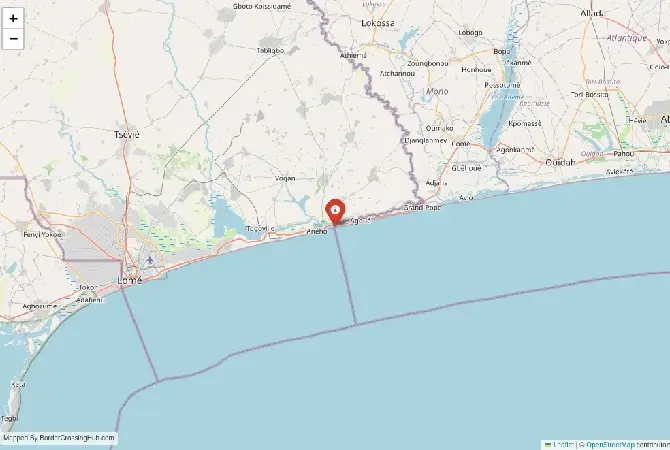
Monthly Update (September 2026):
Hilacondji & Sanvee Condji remains the principal coastal Benin-Togo crossing and continues to handle substantial passenger and commercial movement. A notable August development is stronger cooperation between Beninese and Togolese customs officials at Hilacondji-Sanvee Condji to identify and control refrigerant gases and other substances covered by the Kigali Amendment to the Montreal Protocol. The initiative concerns cargo inspections rather than a closure, so ordinary travelers should still be able to cross normally. Commercial traffic carrying refrigeration or air-conditioning equipment may face closer scrutiny.
About this crossing
Major coastal border between Cotonou and Lomé
You arrive at one of West Africa’s busiest southern land borders, where the main coastal road links Cotonou in Benin directly with Lomé in Togo. Known as Hilacondji on the Benin side and Sanvee Condji (or Sanveekondji) on the Togolese side, this crossing handles heavy daily traffic of people, taxis, trucks, and traders moving between the two capitals just about 150 km apart. It stands out as the primary overland route along the Gulf of Guinea for foreign visitors exploring both countries in one trip.
Where it sits and its role
Hilacondji lies in Benin’s coastal area near Grand-Popo, while Sanvee Condji sits just across in Togo toward Aného. The border follows the Atlantic shoreline before turning inland. It connects the busy N1 highway on both sides, making it convenient for travel between Benin’s economic hub and Togo’s capital. Trade flows steadily with goods from the ports of Cotonou and Lomé, and many locals commute daily for work or family. For outsiders it offers a straightforward way to combine visits without flying.
Background and developments
The area has long served as a crossing point between former French and German colonial territories. In recent years both countries have worked on improvements, including a one-stop border post setup and connected customs systems since 2022. These changes aim to cut paperwork duplication for goods and travelers. Joint efforts also address health campaigns and trade facilitation in the zone.
Nearby Border Crossings




Operating schedule
The post generally stays open from early morning until evening, often around 6 AM to 8 PM or later, though times can vary with staffing. Most travelers clear it during daylight hours. No time zone difference exists between Benin and Togo, which keeps things simple. Still, confirm locally near your travel date as smaller adjustments happen.
Crossing from Benin into Togo
You begin at Hilacondji on the Benin side for exit formalities. Officials check your passport, visa, and yellow fever certificate. Then you walk the short distance across to Sanvee Condji for Togolese entry. Togo offers visas on arrival or short-term options at the border for many nationalities, often 7 or 8 days. Have cash in CFA francs ready for fees. The process involves several counters, including health and immigration checks.
Going the other way from Togo to Benin
Start with exit stamps at Sanvee Condji. Walk over and handle Benin entry at Hilacondji. Benin requires a visa for most visitors, best obtained as an e-visa ahead of time since land borders do not issue them on arrival. Present your yellow fever card and any onward details. Checks cover documents, health, and sometimes luggage.
Wait times and daily flow
Foot travelers and shared taxis often move through in 30 to 90 minutes total during quieter periods. Peak hours, especially mornings and late afternoons, push waits longer due to truck traffic and groups. The one-stop efforts have helped, but multiple checkpoints still exist. Rainy season from June to October can slow things with heavier coastal downpours and occasional flooding on approach roads.
Transport options
Shared taxis and bush taxis run frequently between Cotonou, Grand-Popo, and Lomé. Drivers often wait for passengers during processing. Motorbikes and private cars work too. From either side you reach major cities within two to three hours on the main paved road. No large formal bus station sits right at the post, so arrange onward rides nearby.
Roads and scenery
The coastal highway stays mostly paved and busy on both sides. You pass through palm groves, fishing villages, and lagoon views along the Atlantic. Traffic mixes cars, trucks, motorcycles, and pedestrians near the border. Conditions feel better than many inland routes, though potholes appear after heavy rains. The short no-man’s-land stretch is easy to walk.
Common problems and traveler reports
This crossing sees occasional unofficial fees or extra checks. Some drivers or helpers push unnecessary services or claim extra visa costs. Travelers have described losing taxis temporarily or facing confusion with multiple counters. Others mention minor delays from repeated document reviews. Stick to official offices, carry exact change, and decline unsolicited assistance. Politely insist on standard procedures if something feels off.
Nearby attractions
Hilacondji and Sanvee Condji sit close to coastal spots. On the Benin side Grand-Popo offers beaches and quiet vibes. In Togo Aného provides historical charm and lagoon access. Both directions lead quickly to Cotonou’s markets or Lomé’s busy streets and beaches. The area mixes everyday border life with Gulf of Guinea scenery.
Preparation tips
Get your Benin e-visa before travel and print confirmations. Carry yellow fever certificate, passport copies, and enough CFA francs. Download offline maps and have backup contacts. Dress simply and travel during daylight. Check current border updates, as ECOWAS initiatives sometimes affect procedures. If driving, prepare vehicle documents for temporary import.
Economic and cultural importance
The post supports strong trade ties and daily movement between two nations with shared histories and cultures. Ports in Cotonou and Lomé benefit from the link, while locals cross for markets, family, and work. It reflects practical cooperation in the region despite occasional bureaucratic hurdles.
Planning your move
Allow extra time, double-check documents, and stay patient. With solid prep you handle Hilacondji-Sanvee Condji without major issues and continue along the coast. (Word count: 1046)
View all border crossings between Benin and TogoPractical information
Fuel
Benin: <1 km - Togo: <1 km
Currency
XOF,CFA offices
Safety information
Busy but controlled
Connectivity
3G/4G mobile coverage
Have you crossed here?
Help other travelers by sharing your experience, wait times, and any updates.