
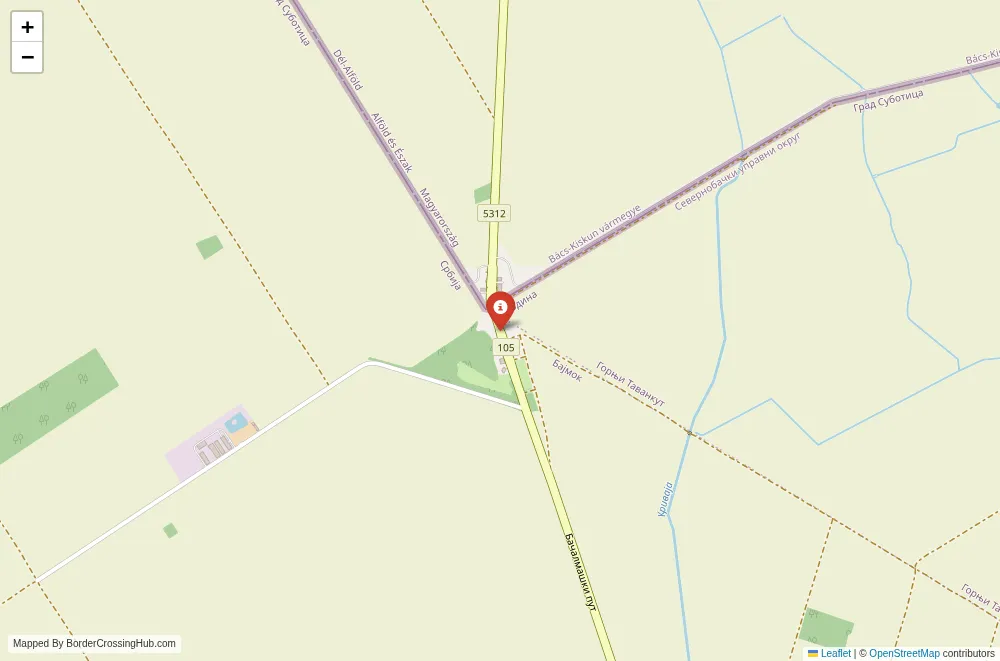
Approximate Border Location
Wait Times
Cars 10-45m; peaks 60-240m weekends
Just crossed? Tap to report:
Operating Hours
06:00 AM-10:00 PM
Crossing Types
Ped,cars,buses; border controls
Border Type
Land crossing via road (regional)
Peak Times
08:00-10:00 AM; 04:00-07:00 PM
Daily Crossings
2,000-10,000/day
Currency Exchange
HUF; RSD, EUR in Subotica; ATMs
Safety Information
Queues at times; keep papers secure
Languages Spoken
Hungarian/Serbian
Accessibility Features
Paved lanes; step-free varies
About Hercegszántó & Bački Breg
Monthly Update (March 2026):
As of 03/2026, the Hercegszántó & Bački Breg Border Crossing remains fairly calm but a little variable. Cars move steadily through, though document checks can add a few extra minutes on the Serbian side. Early mornings are often the easiest time to pass. Weekend travel toward nearby towns can bring a short line.
No Cell Service at the Border? No Problem.
Don’t get caught scrambling for paperwork when you lose signal. Download the complete Europe Transit Guide directly to your device and access every critical detail, fast-track strategy, and border rule – 100% offline.
The Hercegszántó-Bački Breg crossing offers a 24-hour road link across the Hungary-Serbia border, positioned in the southern Hungarian plains near the Tisza River area.
Alternative Names
You might come across it as Hercegszántó-Béreg, Hercegszántó-Backi Breg, or simply the Hercegszántó border point. On the Serbian side, it connects to Bački Breg (sometimes spelled Béreg in Hungarian contexts).
Location and Connections
This point sits along main road 51 in Hungary, linking the town of Hercegszántó directly to Bački Breg in Serbia’s Vojvodina region. From Budapest, you take the M6 motorway south toward Baja, then continue on route 51 for about three hours total to reach the border. In Serbia, the road becomes federal route 15, heading toward Sombor, Vrbas, or further to Novi Sad and Belgrade via connections to the A1 motorway. It’s a straightforward drive through flat farmland, with the crossing handling both passenger cars and light freight up to 3.5 tons.
Historical Background
The border line here stems from post-World War I adjustments following the Treaty of Trianon, which reshaped territories in the multi-ethnic Bačka region. A railway once ran nearby from Baja to Bački Breg but closed after World War II and was fully lifted. The current road crossing has served local and international traffic for decades, with recent upgrades tied to EU cross-border programs aimed at improving infrastructure in this peripheral area.
Geopolitical and Economic Role
It functions as a secondary but reliable option compared to busier points like Röszke-Horgoš or Tompa-Kelebija. Traffic includes personal vehicles, some light commercial transport, and cross-border residents from Hungarian and Serbian communities in Vojvodina. Ongoing modernization efforts, including announced renovations starting around 2025, aim to expand facilities for better freight handling and overall flow. The crossing supports everyday economic ties in agriculture-heavy surroundings.
Operating Hours and Current Status
It operates 24 hours a day year-round for international passenger traffic and cargo vehicles up to 3.5 tons gross weight. No seasonal reductions apply here, unlike some smaller nearby points. Recent official listings from Hungarian customs and police confirm this round-the-clock schedule. Check police.hu or Serbian border sources close to your trip for any temporary adjustments due to construction or events.
Visa Requirements for Foreign Visitors
Hungary, as an EU member, follows Schengen rules for many nationalities, offering visa-free entry or short-stay exemptions. Serbia provides visa-free access for citizens of numerous countries, including the US, Canada, Australia, and most EU passports, typically up to 90 days. Confirm your nationality’s status with embassies, since you need to satisfy entry rules for both sides when crossing. No visa-on-arrival applies at this point for most travelers.
Crossing Procedures Step by Step
Approach from the Hungarian side (Hercegszántó) for exit checks: present your passport and vehicle documents. Officers may ask basic questions about your destination. Drive through the short border zone to the Serbian side (Bački Breg). There, submit your passport for entry processing and stamping. For light freight or personal vehicles, customs checks are usually minimal unless carrying goods to declare. You stay in your car throughout; the process often takes 10-40 minutes depending on traffic.
Wait Times and Peak Periods
This remains a relatively quiet crossing, with waits typically under 15-30 minutes even during busier times. No long queues build up like at major motorway points. Peaks occur during weekends, holidays, or summer travel seasons, but reports show minimal delays most days. Apps like BorderWatcher provide real-time user updates if you want to gauge conditions.
Transportation Options After Crossing
On the Serbian side, continue by car along route 15 toward Sombor (about 30-40 minutes) or further south. Public buses are sparse in this rural area, so driving or arranging a taxi works best. From Hercegszántó in Hungary, route 51 connects back to Baja and the M6 for Budapest. Private vehicles offer the main flexibility here.
Road Conditions and Scenery
Route 51 and its Serbian continuation feature good pavement through open agricultural land: vast fields of corn, wheat, and sunflowers, dotted with small villages. No steep sections or complex turns; it’s flat and direct. Recent infrastructure talks suggest improvements to handle more traffic post-renovation.
Weather and Seasonal Impacts
The region experiences hot summers (often over 30°C) and cold winters with fog, frost, or occasional snow. Flat terrain means visibility drops in fog or heavy rain. Summer brings dry, clear days ideal for travel, while winter requires caution on potentially icy roads. No major seasonal closures occur.
Nearby Attractions
Hercegszántó has a small-town character with local markets. Bački Breg offers a quiet village setting. Nearby Sombor features historic architecture and museums, while the broader Vojvodina area includes Subotica’s Art Nouveau highlights or nature spots along the Danube. On the Hungarian side, Baja provides river views and regional cuisine.
Practical Travel Tips
Cross anytime since it’s 24/7, but daytime avoids any night-time fog issues. Carry euros or local currencies for minor needs, though most payments go digital. Keep your vignette valid for Hungarian motorways if approaching via M6. Use real-time border apps for updates. Fuel up where prices suit you better.
Common Scams and Warnings
Reports of issues stay low at this low-traffic point. Avoid unofficial money changers near the border who offer poor rates. Stick to official lanes and ignore any “assistance” offers. Travelers describe it as calm, with straightforward checks if documents are in order. No widespread scam stories surface compared to busier crossings.
Cultural and Economic Notes
The area reflects mixed Hungarian-Serbian heritage, with bilingual signage and shared traditions in food and customs. Local economies rely on farming and cross-border family visits rather than heavy tourism.
Final Planning Advice
Opt for this crossing when seeking a less crowded alternative to main routes. Verify current conditions via official police or customs sites before departure, especially with any renovation work. Prepare your documents, drive carefully through the plains, and use the round-the-clock access to fit your schedule. Safe travels.
No reviews yet.