
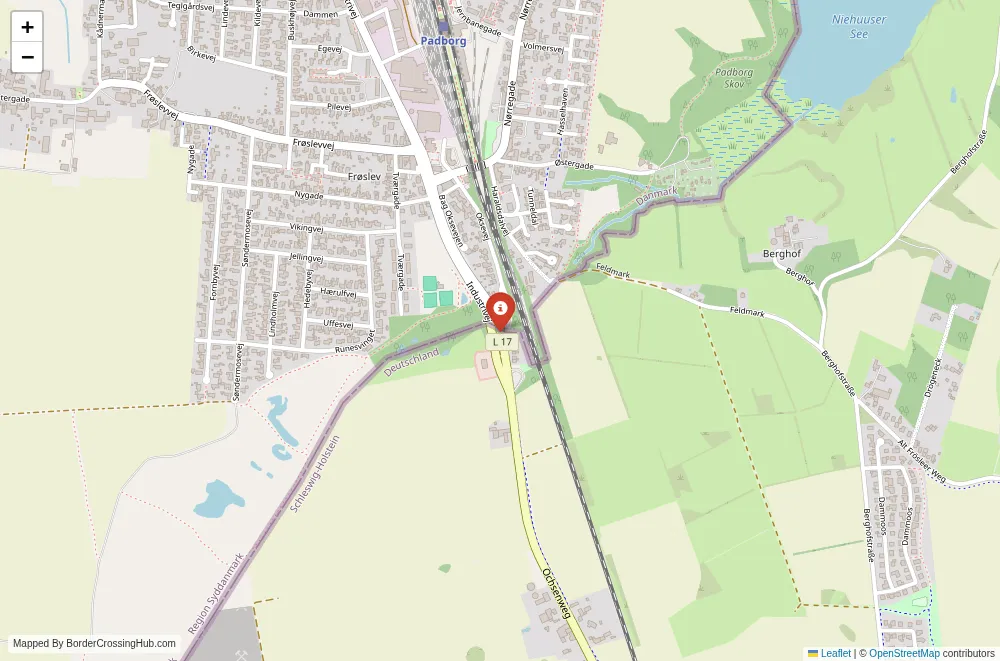
Approximate Border Location
Wait Times
0-10m; peaks 15-45m at checks
Just crossed? Tap to report:
Operating Hours
Open 24 hrs (12:00 AM-11:59 PM)
Crossing Types
Ped,bikes; local crossing
Border Type
Land crossing via foot/cycle route
Peak Times
07:00-09:00 AM; 04:00-06:30 PM
Daily Crossings
1,000-6,000/day
Currency Exchange
EUR; DKK in Flensburg; ATMs
Safety Information
Urban edges; occasional police checks
Languages Spoken
German/Danish
Accessibility Features
Sidewalks present; curb cuts common
About Haraldsdalvej & Harrislee pedestrian/cycle crossing
The Haraldsdalvej crossing near Padborg offers one of the quietest and most low-key ways to step between Denmark and Germany on foot or by bike.
Alternative Names
Locals and travelers often call it the Padborg-Harrislee crossing, the Haraldsdalvej grænseovergang, or simply the Padborg pedestrian border. On maps you might see it listed as Harrislee-Padborg border crossing.
Current Status and Safety Note
This crossing remains open for pedestrians and cyclists with no regular controls in normal times. Denmark and Germany belong to the Schengen Area, so you usually walk or ride straight through without stopping for passport checks. Random spot checks can happen, but they are rare. The area feels calm and residential, with almost no reports of scams or issues. Still, keep your belongings close like anywhere near a border, especially if you carry valuables.
Historical Background
The current Denmark-Germany border was fixed in 1920 after a plebiscite following World War I. Before that, the region changed hands several times. This small path at Haraldsdalvej follows the 1920 line almost exactly. Nearby, the Padborg railway embankment juts about 500 meters into German territory as a result of the treaty drawing. The crossing itself ties into older paths used by locals long before cars dominated travel. It forms part of the historic Gendarmstien trail, once patrolled by border gendarmes.
Geopolitical and Economic Role
Since both countries are in Schengen and the EU, this point sees almost no formal border activity. It mainly serves local residents, walkers, and cyclists who live on one side and shop, work, or visit friends on the other. The border here runs through quiet farmland and backyards, showing how integrated the region has become. Larger trade and car traffic use nearby crossings like Kruså or the E45 highway at Padborg.
Visa Requirements for Foreign Visitors
As Schengen countries, Denmark and Germany share the same entry rules. If you are from a visa-exempt country, you can cross freely. Most non-EU visitors get 90 days within any 180-day period. No special visa is needed just for this crossing. Carry your passport or ID at all times, since random police checks can occur anywhere in the border region.
Crossing Procedures Step by Step
Approach from the Danish side along Haraldsdalvej in Padborg. You reach a simple rural path with a gate and border marker in the hedge. Walk or cycle through; no building or booth stands here. On the German side you emerge in Harrislee onto a quiet residential street or path. The whole process takes seconds. Going the other way works the same. No forms, no queues, no officials waiting.
Typical Wait Times and Peak Periods
Wait times are zero most days. You walk right across. On weekends or summer holidays you might see more families out walking dogs or cycling, but it never gets crowded. Early mornings and evenings stay especially empty.
Operating Hours
The crossing has no official hours. It stays open 24 hours for pedestrians and cyclists. Gates might be closed at night in theory, but in practice they remain accessible.
Transportation Options to and From the Border
From Flensburg (Germany), take a local bus to Harrislee and walk the short distance to the path. In Denmark, Padborg has a train station on the main Copenhagen-Aarhus line. From there a quick walk or local bus gets you close. Many people arrive by bike along the Gendarmstien or other regional trails. No direct taxis target this exact spot since it is so small.
Road Conditions and Scenery
The Danish approach follows a paved residential road that turns into a rural gated path. On the German side you continue on calm streets or field tracks. The surrounding landscape shows flat farmland, hedgerows, and scattered houses. In spring and summer fields turn green with crops; autumn brings harvest colors. The railway embankment nearby adds an interesting industrial touch.
Seasonal Variations and Weather Impacts
Winter can bring ice or snow on the unpaved sections, making cycling trickier. Rain turns paths muddy in any season. Summer offers long daylight and pleasant temperatures for walking. No major seasonal closures occur.
Nearby Attractions
In Denmark, Padborg sits close to shopping areas popular with Germans for lower taxes on certain goods. The Gendarmstien trail follows the coast and offers beautiful fjord views if you continue north or south. On the German side, Harrislee lies right next to Flensburg, where you find a historic harbor, museums, and cafes. The nearby nature park at Schäferhaus provides trails and open spaces.
Common Scams and Warnings
Reports of problems here are very rare. No touts or fake helpers operate at this tiny path. The biggest annoyance might be occasional curious dogs from nearby houses. Keep an eye on bikes if you lock them briefly.
Travel Tips and Preparation
Wear comfortable shoes for walking or check your bike tires for the rural path. Bring water in summer since no shops sit right at the crossing. Download offline maps because cell signal can dip in the fields. If you plan longer hikes along the Gendarmstien or Border Route, pack layers for changeable coastal weather.
Cultural and Economic Significance
This crossing shows daily life along one of Europe’s most open borders. Families cross for school, work, or groceries without thinking twice. It reminds you how the 1920 border decision created a region where Danish and German cultures mix closely. Local shops and services benefit from cross-border routines.
Final Planning Advice
Confirm Schengen entry rules for your nationality before travel. Pick a clear day if you want photos of the marker and path. Combine the crossing with a walk along the Gendarmstien for a fuller experience of the border landscape. Enjoy the simplicity of moving between two countries with just a few steps. Safe journeys.
No reviews yet.