
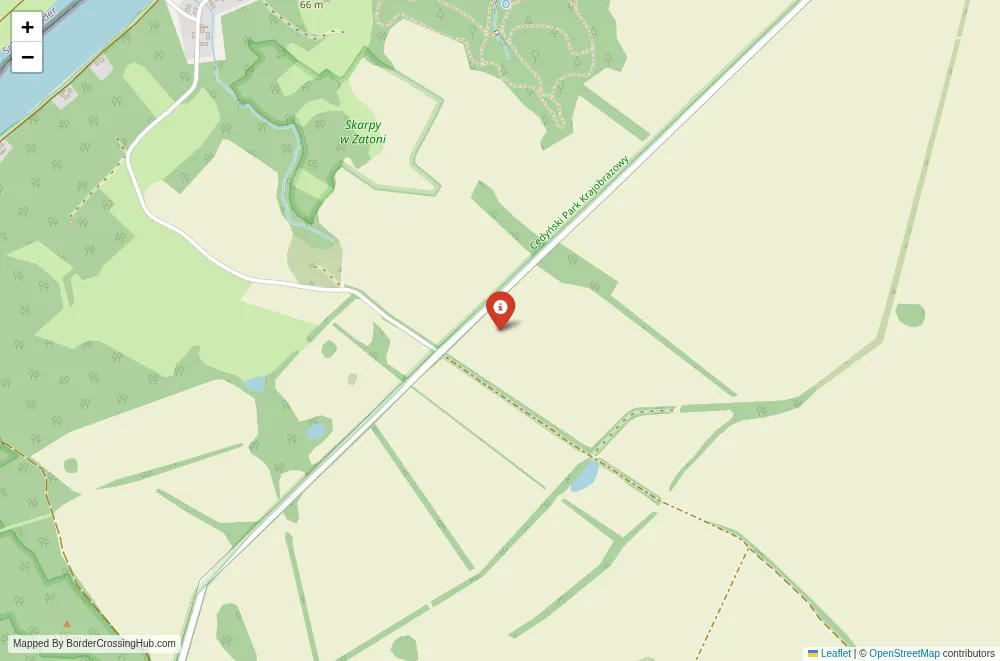
Approximate Border Location
Wait Times
Cars 0-15m; spot-check peaks 20-90m
Just crossed? Tap to report:
Operating Hours
Open 24 hrs (12:00 AM-11:59 PM)
Crossing Types
Ped,cars,bikes; light local traffic
Border Type
Land crossing via rural road bridge
Peak Times
Fri-Sun 11:00 AM-06:00 PM; summer
Daily Crossings
500-3,000/day
Currency Exchange
EUR; PLN in Schwedt/Chojna; ATMs
Safety Information
Bridge traffic; occasional ID checks
Languages Spoken
German/Polish
Accessibility Features
Paved bridge; curb cuts limited
About Gubin & Guben
Monthly Update (March 2026):
As of 03/2026, the Gubin & Guben Border Crossing stays lively with constant local traffic across the town bridge. Cars, cyclists, and pedestrians cross steadily throughout the day. Weekday mornings can feel a bit busier. Cross-border shopping and commuting keep the crossing active.
No Cell Service at the Border? No Problem.
Don’t get caught scrambling for paperwork when you lose signal. Download the complete Europe Transit Guide directly to your device and access every critical detail, fast-track strategy, and border rule – 100% offline.
Gubin connects Poland to Germany across the Lusatian Neisse River, dividing what was once a single town into two halves in a region shaped by post-war shifts and ongoing cross-border daily life.
Location and Basic Connections
You reach this crossing where the Polish town of Gubin in Lubusz Voivodeship meets the German town of Guben in Brandenburg. It lies along the Neisse River, with the main road bridge carrying local traffic between the two centers. Foreign visitors cross here when traveling between western Poland (near Zielona Góra or further east) and eastern Germany (Cottbus or Berlin areas), or for local shopping, fuel runs, or exploring the split town’s history. Alternative names include the Gubin Guben border or Neisse River crossing at Guben/Gubin. As a Schengen internal point, it normally features no fixed controls, but temporary measures persist as of February 10 2026 on both sides.
Historical Background and Geopolitical Role
The border traces the Oder-Neisse line set in 1945 at the Potsdam Conference, which placed the historic center of pre-war Guben (known for hats, orchards, and industry) on the Polish side as Gubin, while the western part remained German as Guben. The town suffered heavy destruction in the final months of World War II from fighting and bombings, with much of the old center left in ruins and later cleared or rebuilt modestly. The division split families, infrastructure, and economy, creating a tale of two towns with shared roots but separate paths under communist rule until 1989. After German reunification and Poland’s Schengen entry in 2007, the bridge reopened fully, fostering cooperation in utilities, tourism, and daily exchanges. It symbolizes post-war reconciliation in Lusatia, though temporary controls have periodically reappeared amid migration debates.
Current Status and Safety Considerations
Germany upholds temporary checks at all land borders with Poland until at least March 15 2026, citing irregular migration volumes, smuggling networks, asylum system strains, and global security influences from conflicts like Ukraine and the Middle East. Poland maintains controls on its German border until April 4 2026, due to migratory spillover from Belarus routes, increased illegal crossings on the Polish-German side, and public security concerns. At this town bridge crossing, police perform random stops for ID verification on the bridge or approaches rather than permanent booths. Travelers describe these as occasional and brief, often involving quick document checks for vehicles or pedestrians. The area remains safe with low crime typical of small border towns, and no widespread scams or aggressive touts reported. Carry your passport or national ID at all times to manage any verification without delay.
Operating Hours and Wait Times
The bridge and connecting roads stay open around the clock with no routine barriers under Schengen norms. Temporary controls add sporadic variability: most crossings happen without stop, while a random check extends time by 5 to 20 minutes for ID review or questions. This mid-sized point sees moderate local traffic from commuters and shoppers, avoiding long queues common at larger motorway crossings. Peak hours during mornings, evenings, or weekends might see slightly more police activity near the bridge. Weather rarely disrupts access, though winter fog from the river or heavy rain can slow driving.
Visa Requirements for Foreign Visitors
Schengen rules cover entry: EU/EEA/Swiss citizens proceed freely with valid ID or passport. Non-EU nationals qualify for visa exemptions up to 90 days in any 180-day period if eligible, or need a Schengen visa. The Entry/Exit System registers non-EU travelers at external borders but not routinely here; spot checks may verify your documents or stay details. Present your passport during any control, plus proof of accommodation, funds, or onward travel if requested. No fees apply at this crossing.
Crossing Procedures Step by Step
You approach on local roads from Gubin or Guben, reaching the bridge where the Neisse marks the line and signs switch from Polish to German. Normally, drive, cycle, or walk across as the river views continue and town streets resume on the other side. If police run a control, expect a bridge or roadside stop for passport presentation and basic travel questions. Provide documents calmly; the process resolves quickly amid everyday flow. Pedestrians use sidewalks on the bridge without separate facilities. The transition feels immediate, with urban fabric blending across the water.
Transportation Options and Road Details
Local buses connect Gubin to nearby Polish towns and Guben to Cottbus or Frankfurt an der Oder for rail links. Regional trains serve Guben station with connections deeper into Germany. Driving uses paved secondary roads leading to the bridge, passing residential areas, small shops, and riverbanks. Scenery includes the Neisse’s flow, modest buildings, and flat Lusatian plains. Traffic stays manageable for a town crossing. Cycling suits the flat terrain with some paths along the river.
Nearby Attractions and Practical Tips
Gubin preserves remnants of its pre-war past, including fortifications and a rebuilt town center; Guben offers local history sites and proximity to the Spree-Neisse nature area. Carry ID consistently due to controls. Euros work on both sides, zloty useful in Poland; cards see broad acceptance. Pack for variable weather near the river. Shoppers cross for price differences in fuel or goods. Visit early to avoid any commuter peaks.
Cultural and Economic Significance
The crossing sustains intertwined life in this divided Lusatian town, where people commute, shop, and share services daily. Joint projects in infrastructure and tourism reflect cooperation despite historical scars. Bilingual signs and similar regional traditions highlight shared heritage amid Polish-German ties.
Final Planning Notes
Check official EU or national sources for updates on temporary controls before travel, keep ID ready, and allow flexibility for random checks. This river bridge route provides a direct glimpse into a border shaped by division and reconnection when you arrive prepared.
No reviews yet.