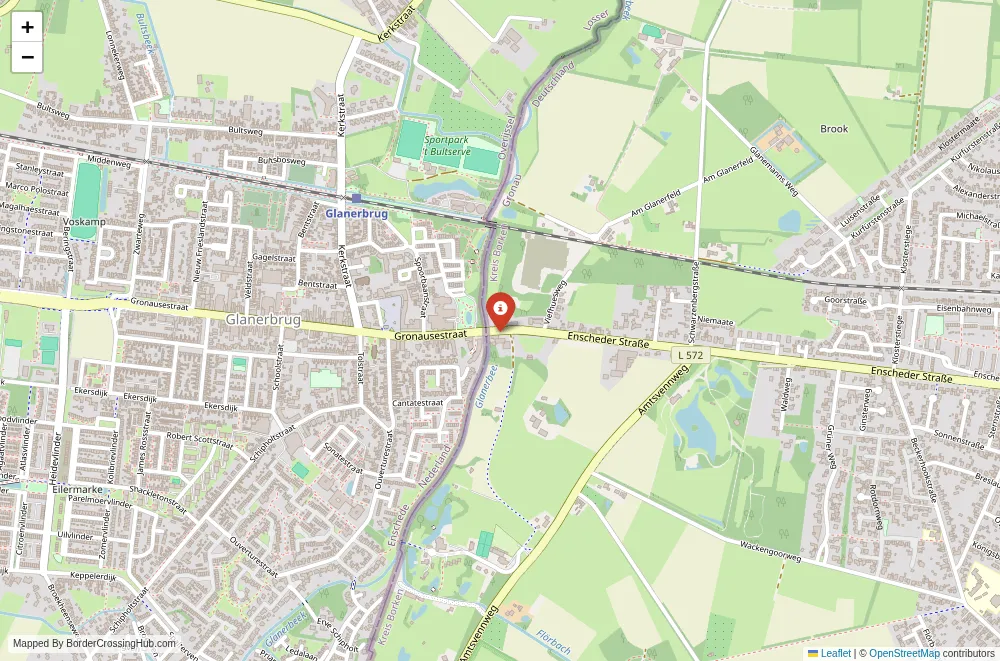
Approximate Border Location
Border Countries
- 🇩🇪Germany
- 🇳🇱Netherlands
Border Cities
- 🇩🇪Gronau
- 🇳🇱Enschede
Wait Times
Cars 0-10m; peaks 15-60m weekends
Just crossed? Tap to report:
Operating Hours
Open 24 hrs (12:00 AM-11:59 PM)
Crossing Types
Ped,cars,bikes,buses; no routine checks
Border Type
Land crossing via urban roads
Peak Times
Sat 10:00 AM-06:00 PM; events
Daily Crossings
25,000-90,000/day
Currency Exchange
EUR only; ATMs widely available
Safety Information
Busy retail traffic; watch cyclists
Languages Spoken
Dutch/German
Accessibility Features
Step-free sidewalks; crossings marked
About Gronau & Enschede
The Gronau-Enschede border provides a seamless and frequently used connection between Germany and the Netherlands in the eastern Twente region, linking the German town of Gronau directly to the Dutch city of Enschede.
Alternative Names
This crossing is commonly known as the Gronau (Westf) – Glanerbrug border (rail), the Gronau-Enschede grensovergang, or simply the Gronau-Enschede border. The main road link often appears as the B54-N35 crossing.
Current Status and Safety Note
Germany and the Netherlands are Schengen members, so the border normally has no fixed checkpoints or routine passport controls. You cross freely by car, train, bike, or foot. Both countries have temporary random spot checks in place due to migration and security concerns: Germany at various Dutch borders since September 2025 (extended into 2026), and the Netherlands at German borders since December 2024 (extended to June 2026). These are selective, intelligence-based, and infrequent on this corridor, but they can cause brief delays or document requests. The area feels integrated and safe for daily use, with no widespread reports of scams or serious issues for ordinary travelers.
Historical Background
The border line was established through 19th-century Dutch-Prussian agreements. Gronau and Enschede developed close ties over time, especially after World War II when cross-border cooperation grew in the textile industry and later in services and retail. The rail link has operated for decades, with Gronau serving as a key German station for services into the Netherlands. The area around Glanerbrug (the Dutch border village) became well-known in Dutch culture through humorous sketches referencing the tiny, almost invisible transition.
Geopolitical and Economic Role
This point supports strong cross-border life in the Euregio region, where people commute, shop, and visit family without noticing the line. Gronau attracts Dutch shoppers for lower prices on fuel, groceries, and services, while Enschede draws Germans for urban amenities and events. Rail and road links connect the Twente region to Münster and the Ruhr, facilitating regional mobility and trade.
Visa Requirements for Foreign Visitors
Schengen rules apply on both sides. If your nationality qualifies for visa-free entry, you need only a valid passport or national ID. Most non-EU visitors receive 90 days in any 180-day period across the area. Carry your travel document at all times, as random spot checks can occur anywhere in the border zone.
Crossing Procedures Step by Step
By car, follow the B54 (Germany) from Gronau; it becomes the N35 (Netherlands) toward Enschede with no stop or booth. The transition happens smoothly on the road. For rail, regional trains (such as RB 51 or similar) stop at Gronau (Germany) and then Glanerbrug or Enschede (Netherlands); no border formalities occur on board. Long-distance services also pass through. Pedestrians and cyclists use local roads or paths, crossing unmarked. No barriers or officials are present under routine conditions. The reverse direction is identical.
Typical Wait Times and Peak Periods
Road crossings take seconds with no wait. Rail follows timetable stops. Morning and evening commuter times see busier trains and some road traffic. Shopping weekends and holidays increase flows, especially Dutch visitors heading to Gronau. Random spot checks add only minor pauses if they happen.
Operating Hours
Roads remain open 24 hours a day. Regional trains run from early morning to late evening (roughly hourly). The area stays accessible year-round.
Transportation Options to and From the Border
Drive the B54 from Gronau or the N35 from Enschede. Regional trains connect Gronau to Enschede (and onward to Hengelo, Münster, or Dortmund). Buses serve both towns. Cycling follows quiet parallel roads or regional paths. Enschede station offers good onward Dutch rail links.
Road Conditions and Scenery
The main road is paved and in good condition, with smooth transitions. Smaller parallel routes pass through flat farmland, the Aamsveen nature reserve (with peat bogs and rare flamingos), and light suburban areas. The landscape stays open and green, with occasional woods and farms.
Seasonal Variations and Weather Impacts
Summer brings more leisure traffic and pleasant conditions for walking or cycling. Winter can add fog, rain, or light snow, but roads stay reliable. No seasonal closures occur.
Nearby Attractions
Gronau offers shopping centers, parks, and a relaxed town atmosphere popular with Dutch day-trippers. Enschede features a lively city center with museums, a university, markets, and cultural events. The Aamsveen nature reserve straddles the border and provides trails where you can spot the northernmost flamingo colony in Europe. The nearby Flamingoroute cycling path combines nature and cross-border scenery.
Common Scams and Warnings
Serious scams are uncommon. Some shoppers note variable prices or crowded parking at Gronau outlets. Random spot checks focus on vehicles and rarely affect tourists. Heavy traffic on shopping days requires patience.
Travel Tips and Preparation
Use navigation apps for the B54/N35 route or rail timetables via NS or DB. Carry your passport/ID and vehicle papers. Bring cash or card for shopping. Check train times on NS International or DB sites. If cycling or walking, the quiet paths around Glanerbrug and Aamsveen offer enjoyable routes.
Cultural and Economic Significance
This border sustains deep integration between Twente and Westmünsterland, with shared shopping habits, commuter patterns, and regional tourism. Gronau and Enschede function almost as extended neighbors, showing how open frontiers support everyday cross-border life.
Final Planning Advice
Check for any current spot-check updates via official Dutch Marechaussee or German police sources if driving. Bring your documents, choose your transport (car, train, or bike), and enjoy the quick hop from German town to Dutch city. This easy crossing makes exploring both sides effortless. Safe travels.
No reviews yet.