
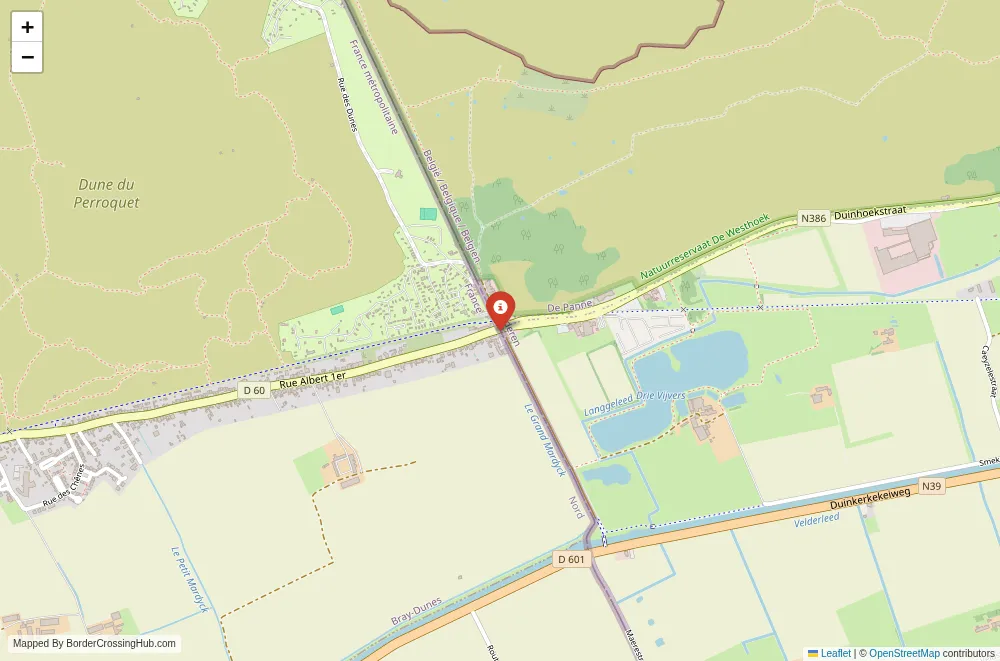
Approximate Border Location
Wait Times
Cars 0-10m; peaks 15-45m beach days
Just crossed? Tap to report:
Operating Hours
Open 24 hrs (12:00 AM-11:59 PM)
Crossing Types
Ped,cars,bikes; no routine checks
Border Type
Land crossing via coastal road
Peak Times
Sat-Sun 11:00 AM-06:00 PM; Jul-Aug
Daily Crossings
8,000-30,000/day
Currency Exchange
EUR only; ATMs in both towns
Safety Information
Heavy traffic in season; police patrols
Languages Spoken
French/Dutch
Accessibility Features
Good sidewalks; step-free crossings
About Ghyvelde & De Panne
Monthly Update (March 2026):
As of 03/2026, the Ghyvelde & De Panne Border Crossing moves along calmly and stays mostly stable. Cars pass freely along the coastal road with little delay, though weekends bring a few more visitors heading toward the Belgian coast. Morning traffic tends to be lighter than late afternoon. Holiday weekends and beach tourism sometimes add short bursts of activity.
No Cell Service at the Border? No Problem.
Don’t get caught scrambling for paperwork when you lose signal. Download the complete Europe Transit Guide directly to your device and access every critical detail, fast-track strategy, and border rule – 100% offline.
Ghyvelde connects France to Belgium near the North Sea coast, sitting in a low-lying coastal plain that once formed part of the broader Flemish landscape before national boundaries divided it.
Location and Basic Connections
You arrive at this crossing where the French commune of Ghyvelde meets the Belgian town of De Panne in West Flanders province. Positioned close to the English Channel, it lies along secondary roads parallel to the E40 motorway, which handles most long-distance traffic between northern France and Belgium. Foreign visitors frequently pass through when heading from Dunkirk or Calais toward Belgian coastal resorts like Oostende or Knokke, or when exploring the nearby dunes and beaches. Alternative names include the Ghyvelde-De Panne border or sometimes simply the coastal France-Belgium point. As a Schengen internal crossing, it usually allows free movement, but temporary controls remain in effect as of February 2026 due to ongoing security measures.
Historical Background and Geopolitical Role
The border here traces roots to the 1713 Treaty of Utrecht, which redrew lines after the War of the Spanish Succession, though local adjustments continued into the 19th century. This stretch gained notoriety during World War I as part of the Western Front’s northern sector, with nearby Ypres just inland seeing intense fighting. In World War II, the area around Dunkirk and De Panne witnessed the 1940 evacuations, where Allied troops retreated to beaches farther west but used coastal routes. Post-war, Benelux cooperation and Schengen integration in 1995 turned it into an open passage. It now supports tourism to seaside areas, commuter travel for workers in the Lille-Dunkirk metro region, and cross-border shopping, reflecting the intertwined economies of northern France and Flanders.
Current Status and Safety Considerations
France continues temporary internal border controls with Belgium until at least April 30, 2026, citing persistent threats from jihadist activities, rising antisemitic incidents, criminal networks involved in smuggling, and migration pressures near the Channel coast. These measures lead to spot checks rather than permanent booths, often on major roads or at random points near the border. Belgium conducts targeted internal checks on motorways, buses, trains, and some flights until July 31, 2026, focusing on migration and security. Travelers report occasional police stops for ID verification, with most passing quickly but some facing vehicle searches or questions about travel purpose. The area itself has low crime rates, typical for rural-coastal zones, but stay aware of traffic and follow signs during controls. No widespread scams occur here, unlike busier external borders, but keep documents ready to avoid minor delays.
Operating Hours and Wait Times
The crossing operates 24 hours as an open road link, with no fixed immigration infrastructure under normal Schengen rules. Temporary controls add variability: many crossings take seconds if not stopped, while selected checks last 5-15 minutes for ID review or brief questioning. During peak summer tourism or weekends, spot checks increase slightly near the E40 or coastal roads, potentially adding 10-30 minutes if traffic builds. Holiday periods around Easter or summer see more activity, though nothing like external border queues. Winter weather, with strong coastal winds or occasional flooding in low areas, rarely closes the road but can slow driving. Early mornings or late evenings tend to have fewer checks.
Visa Requirements for Foreign Visitors
Schengen rules govern entry: EU/EEA/Swiss citizens travel freely with ID. Non-EU nationals use visa exemptions for up to 90 days in any 180-day period if eligible, or hold a valid Schengen visa. As of April 2026, the Entry/Exit System (EES) fully applies at external borders, but internal points like this see no routine registration—only spot checks verify status. Carry your passport or national ID at all times, plus proof of accommodation, funds, or onward travel if questioned during a stop. No fees apply at the crossing itself.
Crossing Procedures Step by Step
You drive, cycle, or walk across unmarked roads where language signs shift from French to Dutch/Flemish. Under normal conditions, no stop occurs. During controls, police may signal you to pull over at a temporary point or on the roadside for passport presentation and basic questions. Provide documents calmly; most interactions end quickly. Vehicle occupants sometimes face luggage glances or queries about items. The transition feels abrupt yet routine, with immediate access to Belgian or French services on either side. Cyclists and pedestrians use the same paths without separate lanes.
Transportation Options and Road Details
The E40 motorway runs nearby, connecting Calais to Bruges in under an hour under clear conditions. Local roads through Ghyvelde lead directly to De Panne’s center. Public buses link Dunkirk to De Panne via coastal routes, while trains from Dunkirk stop at nearby stations with onward Belgian connections to Veurne or Oostende. Roads stay well-paved and flat, offering views of polders, dunes, and wind farms along the coast. Traffic remains moderate except during peak beach season. Cycling paths parallel parts of the route, popular for touring the coastal plain.
Nearby Attractions and Practical Tips
De Panne boasts wide sandy beaches, the Zwin nature reserve farther along, and Plopsaland amusement park for families. In France, explore Dunkirk’s port museum or nearby WWII bunkers. Carry your passport/ID always due to controls. Bring euros for both sides, though cards work widely. Pack layers for changeable coastal weather—winds can turn chilly even in summer. Fuel up in France if prices differ favorably. For cyclists, note dedicated paths but watch for traffic near the border.
Cultural and Economic Significance
The crossing underpins daily life in this Franco-Flemish zone, where people shop across for cheaper goods, work in cross-border jobs, and share dialects blending French and Dutch influences. Tourism thrives on beaches and nature, with seasonal influxes supporting local economies. It exemplifies Schengen’s goal of seamless movement while adapting to security realities through targeted checks.
Final Planning Notes
Check the latest on temporary controls via official EU or national sites before travel, carry ID religiously, and allow buffer time for possible stops. This coastal route offers easy access to relaxing seaside areas when conditions align—plan around weather and enjoy the understated shift from one country to the next.
No reviews yet.