
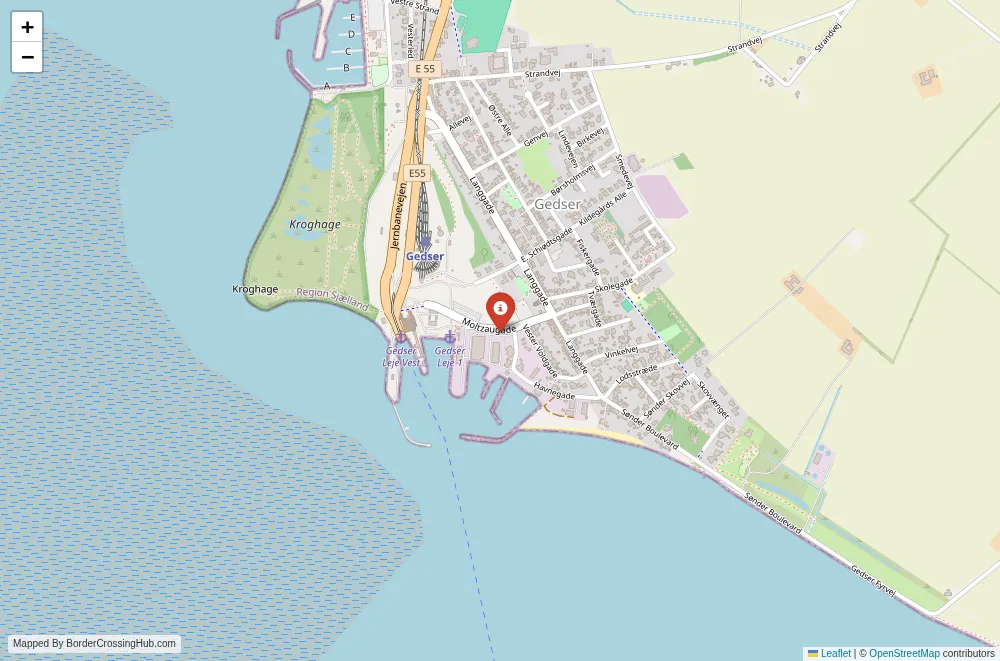
Approximate Border Location
Wait Times
Ferry check-in 20-60m; peaks 60-180m
Just crossed? Tap to report:
Operating Hours
Sailings 06:00 AM-11:00 PM (typical)
Crossing Types
Cars,buses,trucks; ped limited
Border Type
Border crossing via passenger ferry
Peak Times
Morning 07:00-10:00 AM; summer peaks
Daily Crossings
1,500-7,000/day
Currency Exchange
EUR; DKK at ports; ATMs
Safety Information
Port queues; keep documents ready
Languages Spoken
German/Danish
Accessibility Features
Accessible terminals; lifts on ferry
About Gedser & Rostock
The Gedser-Rostock ferry takes you across the Baltic Sea on a two-hour voyage, connecting the southern tip of Denmark’s Falster island directly to the major German port city of Rostock.
Alternative Names
You will find this route listed as the Gedser-Rostock ferry, Rostock-Gedser crossing, or the Scandlines Gedser-Rostock service. It sometimes appears under the names Rostock-Gedser line or simply the Baltic Sea ferry between Denmark and Germany.
Current Status
The ferry operates normally throughout the year with no long-term disruptions noted. Scandlines runs the service using hybrid vessels like M/F Berlin and M/F Copenhagen, some fitted with rotor sails for better fuel use. Departures happen multiple times daily, though severe weather such as storms or high winds can cancel or delay sailings, as seen in early January 2026. Always check the official Scandlines departures page or traffic information right before travel for real-time updates.
Historical Background
This route forms part of the historic Vogelfluglinie or Bird Flight Line, one of the shortest paths linking Scandinavia to continental Europe. Ferry services across this stretch have existed for decades, with Scandlines building on earlier connections after World War II. The modern service started gaining importance as trade and tourism grew between Denmark and eastern Germany. Hybrid ferries entered the route around 2016-2017, marking a shift toward greener operations, and rotor sails were added in the early 2020s to cut emissions further.
Geopolitical and Economic Role
Both Denmark and Germany belong to the Schengen Area and EU, so this crossing handles freight, passenger cars, and tourists without regular border inspections. It serves as a key link for travel from Denmark toward Berlin, Poland, or southern Europe, and the reverse direction. Rostock’s port handles substantial cargo alongside passengers, while Gedser remains a smaller terminal focused on the ferry. Duty-free shopping on board draws many travelers.
Visa Requirements for Foreign Visitors
Schengen rules apply on both sides. If your nationality allows visa-free entry, you cross with just a valid passport or ID. Most non-EU visitors receive 90 days within any 180-day period across the area. Carry your passport at all times, since random police or customs checks can occur in the port areas or on the mainland, even without fixed controls on the ferry itself.
Crossing Procedures Step by Step
You travel by car, motorbike, camper, bus, bicycle, or as a foot passenger. Arrive at the terminal at least 15-30 minutes before departure for check-in. Present your ticket (booked online or bought on site), then drive or walk to the boarding lanes. No immigration desks exist due to Schengen, though customs may ask questions about goods or duty-free limits. Board the ferry, park if driving or take a seat if on foot, and settle in for the two-hour crossing. Disembarkation follows quickly on the other side. The process works the same in both directions.
Typical Wait Times and Peak Periods
With up to 10 departures per day in each direction, waits stay short if you arrive on time. Summer holidays, weekends, and major travel seasons see higher demand, so lines form at check-in and sailings fill up. Booking ahead avoids issues during busy periods. Off-peak times, especially early morning or late night, move quickly.
Operating Hours
The route runs around the clock with departures from roughly 00:00 or 00:45 up to 22:30 or later, depending on the day and season. Night sailings cover quieter hours, and the schedule includes early-morning and late-evening options. Timetables adjust slightly by season, but service continues daily year-round.
Transportation Options to and From the Border
Gedser sits at the end of the E47 motorway from Copenhagen (about two hours by car) or via train/bus connections to Nykøbing Falster then local transport. In Germany, Rostock port links directly to the A19 and A20 motorways toward Berlin or Hamburg. Trains reach Rostock Hauptbahnhof, with buses or taxis covering the short distance to the ferry terminal. Many use through-tickets that combine train and ferry.
Road Conditions and Scenery
Approach roads on both sides use modern highways with good surfaces. The ferry ride crosses open Baltic waters, often with views of distant coastlines, passing ships, wind farms, and sometimes seabirds or porpoises. On clear days the horizon feels wide and open; overcast weather makes it moody and atmospheric.
Seasonal Variations and Weather Impacts
Summer provides the calmest crossings and highest passenger numbers. Winter brings shorter days, colder temperatures, and stronger winds that can extend travel times or cancel sailings. Storms in the Baltic cause the most disruptions, so monitor forecasts. The route operates reliably all year despite occasional weather-related changes.
Nearby Attractions
Gedser offers a quiet coastal feel with beaches, a small museum on local history, and access to Falster’s nature areas. Rostock provides a historic old town, university vibe, beaches at Warnemünde nearby, and easy onward travel to Mecklenburg lakes or Berlin. The port area has shops and cafes for a quick stop.
Common Scams and Warnings
Serious scams remain rare on this route. Some passengers note higher prices for on-board food or duty-free compared to land shops. Overpaying for last-minute tickets or extras can happen if not booked ahead. Weather delays occur, so build flexibility into plans. Customs may check duty-free allowances strictly; exceeding limits leads to fines.
Travel Tips and Preparation
Book tickets online through Scandlines for better rates and to secure space on busy sailings. Arrive early for check-in. Carry passport/ID, vehicle papers if driving, and payment for extras. Bring snacks or use on-board options (cafeteria and shop available). Check the departures page before leaving, especially in winter. Pack layers for the open deck or outdoor areas.
Cultural and Economic Significance
This ferry sustains connections across the Baltic, supporting trade, tourism, and family visits in a region where Danish and German influences meet. It moves large volumes of freight and passengers, keeping supply chains active between northern and central Europe. The hybrid vessels show a push toward sustainable sea travel.
Final Planning Advice
Check the Scandlines departures and traffic info site just before your trip for any weather or schedule shifts. Book in advance during peak times, prepare your documents, and allow buffer for check-in. This two-hour Baltic crossing offers a straightforward way to link Denmark and Germany. Enjoy the sea journey. Safe travels.
No reviews yet.