Monthly Update (September 2026):
Gaya and Malanville remains unavailable for normal cross-border road travel. The main Benin-Niger border has remained closed since late 2023, and recent reporting indicates that Niger has continued to maintain the road blockade despite discussions about a possible reopening. The situation is particularly relevant to travelers because the Malanville-Gaya bridge is the key Cotonou-Niamey road corridor. There is therefore no September reopening to report, and travelers should plan a different route rather than simply expecting delays at the bridge.
About this crossing
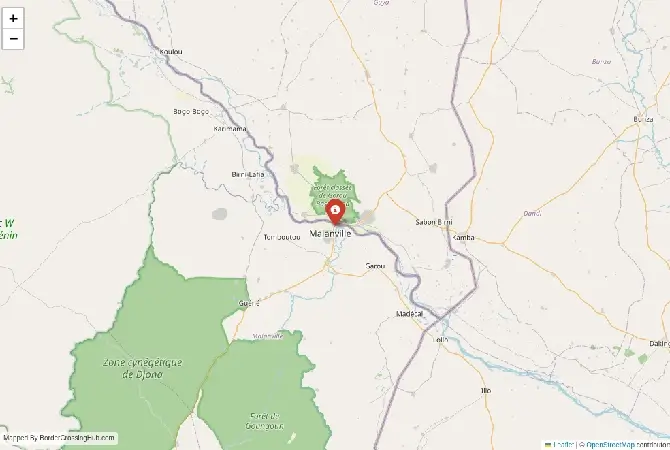
You might hear it called the Gaya–Malanville border or simply the Niger–Benin crossing at Gaya. Unlike quieter rural crossings in the region, this one sees steady movement of trucks, buses, and individual travelers.
Historical Importance and Trade Role
This crossing has long been tied to regional trade routes. The Niger River has historically served as both a transport corridor and a natural boundary, shaping how goods and people move across West Africa.
Nearby Border Crossings





Malanville developed as a commercial town due to its position on the Benin side, linking inland Niger to coastal ports. For landlocked Niger, crossings like this are essential for access to imports and exports. You will notice this immediately in the number of cargo trucks waiting to cross, often forming long lines.
Over time, the crossing has grown in importance, becoming one of the main transit points for goods traveling between Niger and ports in southern Benin.
Border Layout and Facilities
Compared to smaller crossings in the region, facilities here are more developed, though still far from modern by global standards. You will find separate areas for immigration, customs, and vehicle inspections on both sides.
The crossing includes a bridge over the Niger River, connecting Gaya and Malanville directly. This bridge is central to all movement, and traffic can build up quickly, especially when trucks are queued.
Despite its importance, infrastructure can feel stretched. Offices may be crowded, and signage is not always clear. You should be prepared to ask for directions during the process.
Operating Hours and Timing
The border is generally open during daytime hours, often from early morning until evening. However, exact hours can vary, and enforcement is not always strict.
Arriving early in the day is a good strategy. Truck traffic tends to increase as the day progresses, which can slow down processing times. If you arrive late in the afternoon, you risk encountering reduced staffing or longer queues.
Visa Requirements and Entry Rules
You should prepare your documents in advance, as this crossing handles a mix of local and international travelers.
For Niger, most foreign nationals require a visa obtained before arrival. Visa-on-arrival is not a reliable option here.
For Benin, an eVisa is required for most travelers. You should apply online ahead of time and carry a printed copy of your approval.
A yellow fever vaccination certificate is mandatory for both countries. Border officials frequently check this, especially given the volume of cross-border movement.
Crossing Process and Wait Times
The process involves exiting one country before entering the other, with immigration and customs checks on both sides. Expect a structured but sometimes slow system.
On a typical day, you might spend 30 minutes to an hour completing the crossing on foot. However, delays can increase significantly during peak periods, especially when truck traffic is heavy.
If you are traveling by bus, the process may take longer, as passengers often wait for the entire group to be processed. Private vehicles can sometimes move faster, but customs checks may add time.
Truck Traffic and Congestion
One of the defining features of this crossing is the volume of cargo trucks. Lines of trucks waiting to cross can stretch for considerable distances, particularly on the Niger side.
These trucks are transporting goods such as food, fuel, and construction materials. Their presence can slow down overall movement, including pedestrian crossings.
You should be prepared for a busy environment, especially during weekdays when commercial activity is at its peak.
Road Conditions and Transport Connections
Road access to the crossing is relatively good compared to more remote borders. Malanville is connected to southern Benin by paved roads, making it accessible from cities like Cotonou.
On the Niger side, Gaya links to the broader road network, though conditions can vary depending on the route and season.
Public transport options are widely available. Shared taxis, minibuses, and long-distance buses regularly serve both towns. This makes the crossing accessible even if you are not traveling with your own vehicle.
Seasonal Factors and Weather Impact
Weather can influence travel conditions, particularly during the rainy season from June to September. Heavy rains can affect road quality and slow down traffic.
The Niger River itself may rise during this period, but the bridge remains operational. However, surrounding areas can become muddy, which may impact access roads.
In the dry season, heat becomes the main challenge. Temperatures can be high, and waiting in queues without shade can be uncomfortable. You should carry water and plan accordingly.
Scams & Warnings
As a busy crossing, this location has its share of common border issues. Unofficial “helpers” may approach you offering assistance with paperwork or faster processing for a fee.
You should approach these offers with caution. In most cases, they are unnecessary. Following official procedures is usually sufficient.
Requests for unofficial payments can also occur. You should remain polite but firm, asking for receipts when fees are requested. Keeping small amounts of local currency can help you handle legitimate charges without difficulty.
Another issue is confusion during the process. With multiple offices and steps, it is easy to miss a stamp or skip a checkpoint. Taking your time and confirming each step helps avoid problems.
Local Atmosphere and Daily Movement
This crossing reflects the daily interaction between Niger and Benin. You will see traders carrying goods, families crossing for visits, and transport operators moving passengers across the border.
The mix of local and international travelers creates a dynamic environment. While it can feel busy, it also provides insight into how interconnected these regions are.
Practical Travel Tips
You should keep your documents organized and easily accessible. Having printed copies of visas and vaccination certificates will save time.
Carrying water, snacks, and some patience will make the experience more manageable, especially if you encounter delays.
French is widely spoken on both sides, so basic knowledge of the language is very helpful for communication with officials and locals.
Final Thoughts
The Gaya–Malanville crossing is one of the more active land borders between Niger and Benin, shaped by trade, geography, and regional movement.
Closing Advice
You should approach this crossing with preparation and realistic expectations. It is a practical and commonly used route, but it requires patience, attention to detail, and flexibility to handle the conditions you may encounter.
View all border crossings between Benin and NigerPractical information
Fuel
Benin: <1 km - Niger: <1 km
Currency
XOF,NGN exchangers
Safety information
Busy corridor, monitored
Connectivity
Highway, buses,taxis
Have you crossed here?
Help other travelers by sharing your experience, wait times, and any updates.