
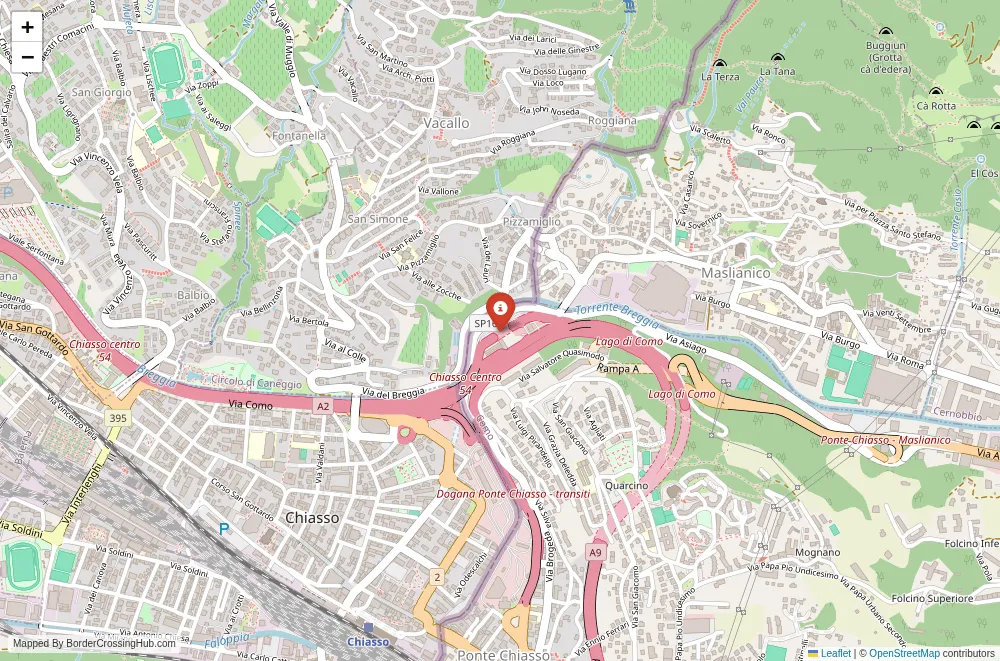
Approximate Border Location
Border Countries
- 🇨🇭Switzerland
- 🇮🇹Italy
Border Cities
- 🇨🇭Maslianico
- 🇮🇹Como
Wait Times
Cars 0-20m; peaks 30-120m rush
Just crossed? Tap to report:
Operating Hours
Open 24 hrs (12:00 AM-11:59 PM)
Crossing Types
Ped,cars,bikes,buses; customs goods
Border Type
Land crossing via urban road
Peak Times
07:00-09:30 AM; 04:30-07:30 PM
Daily Crossings
25,000-90,000/day
Currency Exchange
EUR; CHF in Como/Chiasso; ATMs
Safety Information
Urban congestion; occasional controls
Languages Spoken
Italian/German
Accessibility Features
Step-free sidewalks; accessible transit
About Gaggiolo & Cremenaga
Monthly Update (March 2026):
As of 03/2026, the Gaggiolo & Cremenaga Border Crossing sees steady local traffic and feels mostly stable. Cars move along the regional road without long waits, though the Swiss side can slow briefly during morning commuting hours. Afternoons tend to spread traffic out again. Weekend outings around Lake Lugano sometimes bring a few extra vehicles.
No Cell Service at the Border? No Problem.
Don’t get caught scrambling for paperwork when you lose signal. Download the complete Europe Transit Guide directly to your device and access every critical detail, fast-track strategy, and border rule – 100% offline.
The Maslianico-Cremenaga border provides a low-key, residential crossing between Italy and Switzerland along the western shore of Lake Como, where the Italian town of Maslianico meets the Swiss locality of Cremenaga (part of the municipality of Croglio in Ticino).
Alternative Names
This point is commonly referred to as the Valico di Maslianico-Cremenaga, the Cremenaga border crossing, the Ponte di Cremenaga (Cremenaga Bridge), or simply the Maslianico-Cremenaga frontier. It is sometimes listed alongside nearby Chiasso crossings due to the shared Lake Lugano / Lake Como basin area.
Current Status and Safety Note
Switzerland and Italy belong to the Schengen Area, so this border has no permanent fixed checkpoints or routine passport controls for most travelers. You drive, walk, or cycle across without any formal stop under normal conditions. Switzerland maintains temporary random spot checks at various Italian border points (including smaller ones like this) for migration and security reasons; these are selective, intelligence-based, and infrequent here. Italian customs may conduct occasional checks, especially on goods or commercial traffic. The crossing feels safe, quiet, and everyday-normal, with locals crossing constantly for work, shopping, or errands. No widespread scams or significant safety concerns are reported for ordinary visitors.
Historical Background
The border line runs through the densely built-up lakefront area and follows 19th-century agreements between the Kingdom of Italy and the Swiss Confederation. Cremenaga developed as a small border hamlet tied to the nearby Ponte Tresa and Lugano region, while Maslianico grew as an extension of the Como urban zone. The crossing has long supported local cross-border life, including historic smuggling paths (sentieri dei contrabbandieri) that still exist as trails above the towns. During World War II and the postwar era, nearby Chiasso-area crossings saw heavy refugee movement, though this smaller point remained more local in character.
Geopolitical and Economic Role
This minor crossing links the Italian province of Varese (Lombardy) with the Swiss canton of Ticino, facilitating daily commuter routines, shopping, and family ties. Italians often cross into Switzerland for higher wages or services, while Swiss residents head to Italy for lower prices on fuel, groceries, dining, or goods. The point handles mainly local traffic rather than heavy freight or international tourism, which uses larger routes like Brogeda-Chiasso or Ponte Chiasso.
Visa Requirements for Foreign Visitors
Schengen rules apply equally to Switzerland and Italy. If your nationality qualifies for visa-free entry, you cross with only a valid passport or national ID card. Most non-EU visitors receive 90 days in any 180-day period across the area. Carry your travel document at all times, as random Swiss spot checks can occur anywhere in the border zone.
Crossing Procedures Step by Step
By car or motorbike, follow the SP 18 or local lakefront road from Como or the southern end of Lugano toward Maslianico. You reach the border without barriers; the road crosses a small bridge over the Tresa River outflow or continues directly into Cremenaga (Switzerland) with no interruption. For pedestrians and cyclists, use the sidewalk or paths along the road; the transition is short and unmarked beyond basic signs or markers. No booths, forms, or officials are present routinely. The reverse direction follows the identical seamless pattern.
Typical Wait Times and Peak Periods
Wait times are essentially zero most days. You cross instantly. Morning and evening commuter hours or weekends may see slightly more local traffic, but no queues form at the border itself. Random spot checks add only brief pauses if they occur.
Operating Hours
The road crossing remains open 24 hours a day, every day of the year, as a public route. Some official customs references note limited formal hours (such as 6:00–21:00 or similar), but in practice the public road stays accessible around the clock.
Transportation Options to and From the Border
Drive the SP 18 from Como (about 10–15 minutes) or from Ponte Tresa / Lugano directions to Maslianico, then cross. Local buses connect Maslianico to Como and Cremenaga to Lugano or Ponte Tresa (often requiring a short walk or change). Trains reach Chiasso station (Switzerland) or Como Nord station (Italy), with onward local transport. Cycling and walking are straightforward along the lakefront roads and paths.
Road Conditions and Scenery
The connecting roads are narrow but paved urban/suburban streets along the lake shore, with good surfaces overall. The border zone features residential buildings, small shops, and direct views of Lake Lugano’s western arm (or the Tresa outflow). The crossing itself is understated, with the road passing through built-up areas and offering glimpses of the lake, mountains, and the urban transition from Italian to Swiss signage and architecture.
Seasonal Variations and Weather Impacts
Summer brings more tourist traffic along the lake roads and pleasant conditions. Winter rain, fog, or occasional snow can slow narrow sections, but the route stays open year-round. No major seasonal closures occur.
Nearby Attractions
Maslianico offers quiet lakefront charm and access to historic smuggler paths above town for short hikes with lake views. On the Swiss side, Cremenaga sits close to Ponte Tresa (with its own lake and river setting) and easy reach of Lugano (about 15–20 minutes by car or train) for shopping, promenades, and cultural sites. Nearby Como city features its historic center, Duomo, and famous lake ferries.
Common Scams and Warnings
Serious scams remain rare in this everyday area. Occasional reports mention higher prices or pushy vendors in border shopping zones. Random Swiss spot checks focus on vehicles and rarely affect tourists. Normal urban precautions apply when parking or walking in busier spots.
Travel Tips and Preparation
Use navigation apps to follow the lakefront road or SP 18. Carry your passport/ID and vehicle papers. Bring euros or Swiss francs (both accepted, though francs preferred on the Swiss side) and a card for small purchases. If walking, the short distance makes it easy. Combine the crossing with a visit to Lugano or Como for a fuller lake experience.
Cultural and Economic Significance
This crossing reflects the deep integration between southern Ticino and the Como region. Daily commutes, shopping, and social ties cross the line without notice, showing how Schengen has made the frontier practically invisible in local life along Lake Lugano.
Final Planning Advice
Check for any temporary spot-check notices via official Swiss or Italian border sources if driving. Bring your documents, cross the short road or path, and enjoy the smooth shift between Italian lakefront and Swiss Ticino. This understated urban border offers a simple, scenic way to hop between two countries along Lake Lugano. Safe travels.
No reviews yet.