
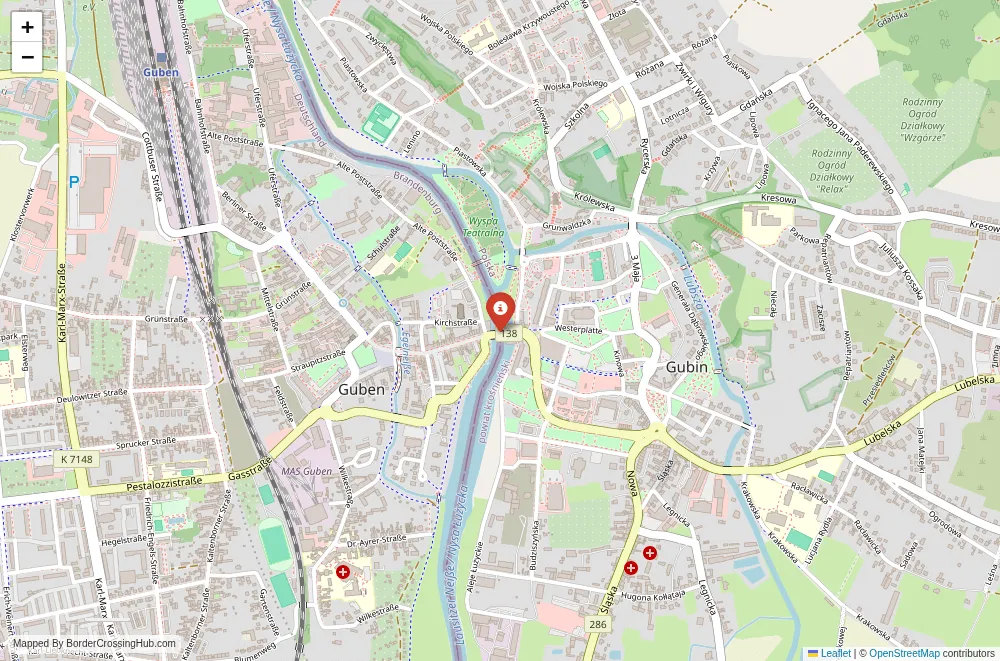
Approximate Border Location
Wait Times
Cars 0-15m; checks can raise to 20-120m
Just crossed? Tap to report:
Operating Hours
Open 24 hrs (12:00 AM-11:59 PM)
Crossing Types
Ped,cars,bikes; local bridge
Border Type
Land crossing via road bridge (Neisse)
Peak Times
07:00-09:00 AM; 04:00-06:30 PM
Daily Crossings
10,000-40,000/day
Currency Exchange
EUR; PLN on both sides; ATMs
Safety Information
Urban crowding; pickpocket risk in queues
Languages Spoken
German/Polish
Accessibility Features
Step-free sidewalks; crossings well marked
About Forst (Lausitz) & Olszyna
Monthly Update (March 2026):
As of 03/2026, the Forst (Lausitz) & Olszyna Border Crossing sees regular vehicle movement but rarely any delays. Cars roll across the river bridge without stopping. Afternoons sometimes bring more drivers returning toward Poland. Local work travel and shopping shape the pace.
No Cell Service at the Border? No Problem.
Don’t get caught scrambling for paperwork when you lose signal. Download the complete Europe Transit Guide directly to your device and access every critical detail, fast-track strategy, and border rule – 100% offline.
Forst (Lausitz) connects Germany to Poland along the Lusatian Neisse River, where the border divides a former industrial town with a major motorway link in this southeastern corner of Brandenburg.
Location and Basic Connections
You come to this crossing where the German town of Forst (Lausitz) in Brandenburg meets the Polish town of Olszyna in Lubusz Voivodeship. It lies on the Neisse River, with the primary link via the A15 autobahn (Polish A18 continuation) and a dedicated road border point. Foreign visitors often use it when driving from Berlin or Cottbus toward Wrocław or further into Poland, or the reverse for trips to Saxony or Lusatia. Alternative names include the Forst (Lausitz) Olszyna border or Neisse motorway crossing. As a Schengen internal point, it normally has no fixed infrastructure, but temporary controls remain active as of February 10 2026 on both the German and Polish sides.
Historical Background and Geopolitical Role
The border follows the Oder-Neisse line established in 1945 after World War II, which redrew territories and placed much of pre-war Lower Lusatia’s industrial zone under division. Forst (Lausitz) developed as a textile and manufacturing center in the 19th and 20th centuries, with rail and road links crossing what became the frontier. The crossing handled significant traffic during the Cold War era under East German and Polish controls. After reunification and Schengen in 2007, the autobahn extension smoothed movement, supporting trade, commuting, and tourism in this Lusatian borderland. It has served as one of the busier road points for goods and people between Saxony/Brandenburg and Lower Silesia, reflecting economic ties despite historical separations.
Current Status and Safety Considerations
Germany continues temporary checks at all land borders with Poland until at least March 15 2026, prompted by irregular migration levels, smuggling networks, asylum system pressures, and global security issues including the Ukraine conflict and Middle East tensions. Poland maintains controls on its German border until April 4 2026, due to migratory spillover from Belarus routes, increased illegal crossings on the Polish-German side, and threats to public order. At this motorway crossing, expect random police stops for ID verification on approaches or the bridge rather than permanent booths. Travelers report these as variable but often quick at this point, with occasional longer waits during peak traffic or targeted operations. The area has standard low crime for a transit zone, with no frequent scams or aggressive touts noted. Carry your passport or national ID at all times to address any check efficiently.
Operating Hours and Wait Times
The autobahn and crossing operate 24 hours with no routine barriers under Schengen guidelines. Temporary controls introduce occasional variability: many vehicles pass without intervention, while a random stop adds 5 to 20 minutes for document inspection or questions. This major route sees heavier traffic than rural crossings, so waits can build during holiday periods, weekends, or rush hours, though rarely extreme here. Early mornings or off-peak times often move faster. Weather impacts minimally, but winter snow or summer heat can affect flow on the highway.
Visa Requirements for Foreign Visitors
Schengen regulations govern entry: EU/EEA/Swiss citizens travel freely with valid ID or passport. Non-EU nationals receive visa exemptions for up to 90 days within any 180-day period when eligible, or must hold a Schengen visa. The Entry/Exit System registers non-EU travelers at external borders but not routinely at internal points; spot checks might confirm compliance. During a control, present your passport and provide details on accommodation, financial means, or travel plans if requested. No entry or exit fees apply here.
Crossing Procedures Step by Step
You approach on the A15 from Germany or A18 from Poland, reaching the river where the border line sits and signs change languages. Normally, drive straight across as the highway continues seamlessly. If police conduct a control, expect a lane pull-over or bridge area stop for ID submission and simple inquiries. Respond promptly; the process concludes rapidly amid highway traffic. Pedestrians and cyclists have limited options here due to the motorway focus, often using parallel local paths if available. The shift appears abrupt yet routine, with industrial and rural views on both sides.
Transportation Options and Road Details
The A15/A18 autobahn provides fast access from Berlin (about 1.5 hours) or Cottbus to Wrocław (around 2 hours). Regional buses connect Forst to nearby towns, with some cross-border services. Rail links exist nearby but not directly at this point. Roads stay well-paved and high-capacity, passing through flat Lusatian plains, occasional forests, and small settlements. Scenery includes the Neisse River, fields, and distant hills. Traffic flows steadily but can thicken during peaks. Cycling is possible on side roads but less ideal on the main highway.
Nearby Attractions and Practical Tips
Forst (Lausitz) features the East German Rose Garden with extensive plant collections and walking paths. Olszyna offers basic services and proximity to Lower Silesian sites. Carry ID always because of controls. Euros work on both sides, zloty helpful in Poland; cards widely accepted. Pack for northern weather with layers for wind or chill. Fuel or shop across if prices differ favorably. Drive carefully on the autobahn with speed limits shifting slightly. Cross during daylight for safer highway conditions.
Cultural and Economic Significance
The crossing underpins regional ties in Lusatia, where people commute for jobs, shop for bargains, or visit family across the line. Shared industrial heritage from textiles and manufacturing lingers in local economy and traditions. It facilitates trade in goods and tourism to natural areas, exemplifying Schengen’s practical integration amid temporary security adaptations.
Final Planning Notes
Confirm the latest on temporary controls via official EU or national sites before departure, keep ID handy, and factor in extra time for possible random checks. This motorway route offers efficient movement between Germany and Poland when you prepare for current conditions.
No reviews yet.