
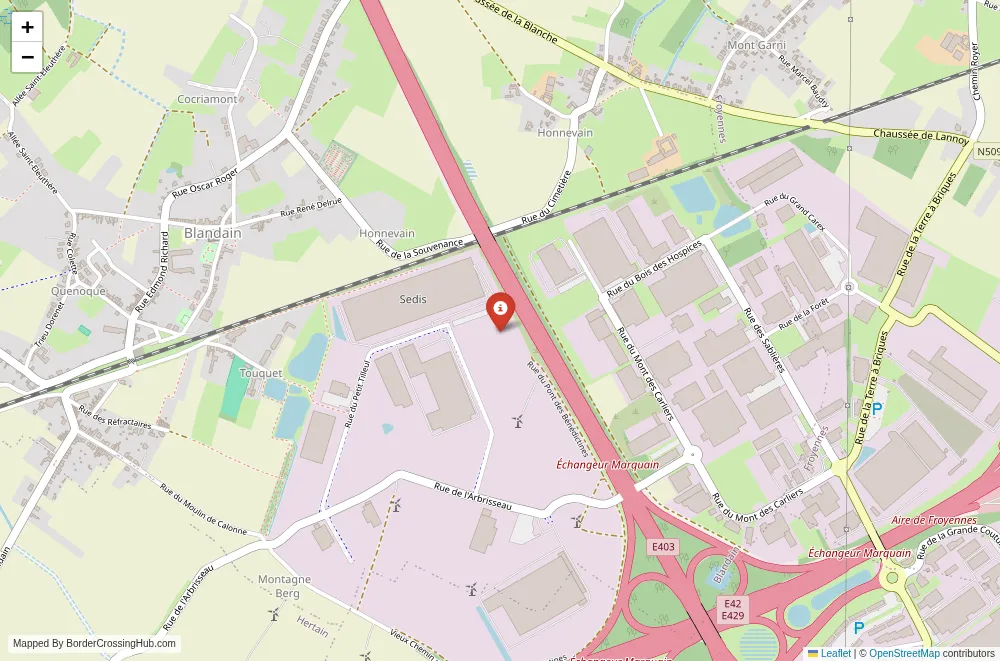
Approximate Border Location
Wait Times
Cars 0-10m; peaks 15-40m commute
Just crossed? Tap to report:
Operating Hours
Open 24 hrs (12:00 AM-11:59 PM)
Crossing Types
Ped,cars,bikes; local road
Border Type
Land crossing via road (local)
Peak Times
06:30-09:00 AM; 04:30-06:30 PM
Daily Crossings
5,000-20,000/day
Currency Exchange
EUR only; ATMs in nearby towns
Safety Information
Low risk; watch speeding on rural lanes
Languages Spoken
French/Dutch
Accessibility Features
Paved shoulders; limited marked crossings
About Erquelinnes & Jeumont
Monthly Update (March 2026):
As of 03/2026, the Erquelinnes & Jeumont Border Crossing runs smoothly and stays mostly stable. Cars and pedestrians cross the bridge steadily, with a small bump in traffic during morning and evening commutes. The Belgian side can slow slightly when local streets get busy. Outside those hours, the crossing tends to tick along without much delay.
No Cell Service at the Border? No Problem.
Don’t get caught scrambling for paperwork when you lose signal. Download the complete Europe Transit Guide directly to your device and access every critical detail, fast-track strategy, and border rule – 100% offline.
Erquelinnes connects Belgium to France along the Sambre River valley, where the border traces the waterway and adjacent roads in a calm pocket of industry and countryside between Charleroi and Maubeuge.
Location and Basic Connections
You find this crossing where the Belgian municipality of Erquelinnes in Hainaut province joins the French commune of Jeumont in the Nord department. It occupies a spot on the Sambre River banks, with the border frequently defined by the river channel or modest markers along parallel streets. Foreign visitors cross here when moving from southern Belgium toward Maubeuge, Valenciennes, or Paris, or from northern France into Wallonia for regional trips. Alternative names include the Erquelinnes Jeumont border or Sambre valley crossing. As a Schengen internal point, it has no permanent controls, although temporary spot checks continue as of February 2026 because of extended security policies in both countries.
Historical Background and Geopolitical Role
The border in this section comes from the 1839 Treaty of London following Belgium’s independence, with the Sambre acting as a convenient natural line in several places. The zone grew during the 19th century around coal mining, steel production, and rail infrastructure that linked Erquelinnes to Jeumont. Belgian railway line 130A, finished in 1852, runs from Charleroi to the border at Erquelinnes and continues to Jeumont and Aulnoye on the French side, marking one of the continent’s earliest international rail connections. This development spurred trade in raw materials and manufactured items while enabling worker movement. The region felt the effects of both world wars through nearby combat and occupation, but post war cooperation via Benelux and Schengen from 1995 removed everyday barriers. A brief 2021 episode involved a farmer who moved a 200 year old border stone during fieldwork, shifting a small parcel of land until officials corrected it. The crossing now handles commuter trains, local traffic, and occasional freight in this Walloon French border area.
Current Status and Safety Considerations
France upholds temporary internal border controls with Belgium until at least April 30 2026, prompted by continued jihadist risks, growing antisemitic events, organized smuggling groups, irregular migration flows, and concerns over potential radicalized transit near northern frontiers. Belgium applies targeted internal checks on highways, buses, certain trains, and select flights until July 31 2026, centered on security and migration enforcement. At this rural low volume crossing, authorities carry out random roadside or station area stops for ID verification instead of fixed installations. Reports from travelers indicate these occur infrequently here and resolve quickly. The surroundings offer standard low crime levels typical of small towns and river valleys, with no recurring scams or aggressive approaches documented. Keep your passport or national ID with you at all times to address any check efficiently.
Operating Hours and Wait Times
The crossing functions without interruption on public roads, pedestrian paths, and the rail corridor, free of routine restrictions under Schengen guidelines. Temporary controls create sporadic variations: the majority of passages proceed unnoticed, while a random intervention extends time by 5 to 20 minutes for document inspection or brief questioning. This less traveled location prevents buildup of lines or extended delays even when checks take place. Commuter peaks or weekends bring marginally higher possibilities of activity near main approaches. Weather seldom halts access, although autumn fog from the river or occasional winter frost may reduce visibility on narrow lanes.
Visa Requirements for Foreign Visitors
Schengen regulations control entry: EU EEA Swiss citizens proceed freely with valid identification or passport. Non EU nationals receive visa exemptions for stays up to 90 days within any 180 day period when eligible, or must possess a Schengen visa. The Entry Exit System EES, operational at external borders by 2026, has no routine application at internal crossings; spot verifications might confirm compliance. During a control, show your passport and supply details on accommodation, financial means, or travel intentions if requested. This point charges no entry or exit fees.
Crossing Procedures Step by Step
You approach via local roads such as the N40 or riverside tracks along the Sambre, where the border appears subtly through signage, river bends, or small boundary posts. Under ordinary circumstances, continue driving, cycling, or walking without pause as the terrain flows onward. Should police initiate a control, expect a roadside halt or signal near rail infrastructure for ID submission and simple inquiries about your journey. Respond directly and the exchange concludes rapidly in this sparse setting. Train passengers on the Charleroi Jeumont service cross without standard interruptions, though infrequent onboard or platform checks arise. Pedestrians utilize towpaths or sidewalks that span the line effortlessly.
Transportation Options and Road Details
Regional trains operate on line 130A from Charleroi through Erquelinnes to Jeumont and beyond to Maubeuge or Aulnoye, providing several daily round trips suited to local commuters and visitors. Bus services connect surrounding villages though cross border options remain limited. Drivers use secondary paved roads that wind past old industrial remnants, farmland, and river edges, with some sections narrow and speed restricted. The landscape displays the Sambre’s steady flow, disused factory buildings, scattered hamlets, and rail sidings. Cycling follows flat towpaths incorporated into EuroVelo networks, offering peaceful travel along the water. Vehicle traffic remains moderate outside morning and evening rushes.
Nearby Attractions and Practical Tips
Jeumont preserves traces of its rail and industrial legacy alongside riverfront spots; Erquelinnes provides quiet walks and proximity to the Sambre for fishing or casual boating. Venture to Maubeuge for its Vauban designed fortifications and parks, or farther to Valenciennes for art collections. Always have your ID accessible because of possible controls. Euros circulate freely on both sides with card payments common even in smaller locales. Prepare for shifting weather along the river with waterproof layers or sun protection depending on season. Exercise caution around rail tracks and slow moving farm vehicles on country roads. Rail travelers benefit from checking schedules in advance for any seasonal tweaks.
Cultural and Economic Significance
The crossing maintains longstanding connections rooted in shared industrial and rail history that once powered both sides. Daily commuters rely on it for jobs, while local exchanges involve produce, services, and everyday goods. Bilingual signage reflects Walloon and French linguistic overlap, with regional dishes like carbonnade flamande or local beers appearing on menus across the line. Transfrontalière initiatives focus on river valley projects in the Sambre Avesnois territory, promoting joint environmental or tourism efforts. Summer months bring increased river based recreation.
Final Planning Notes
Review current details on temporary controls from reliable EU or government sources prior to departure, ensure ID remains handy, and incorporate a small buffer for any unexpected verification. This serene river corridor route delivers a straightforward passage between Belgium and France for those who prepare accordingly.
No reviews yet.