
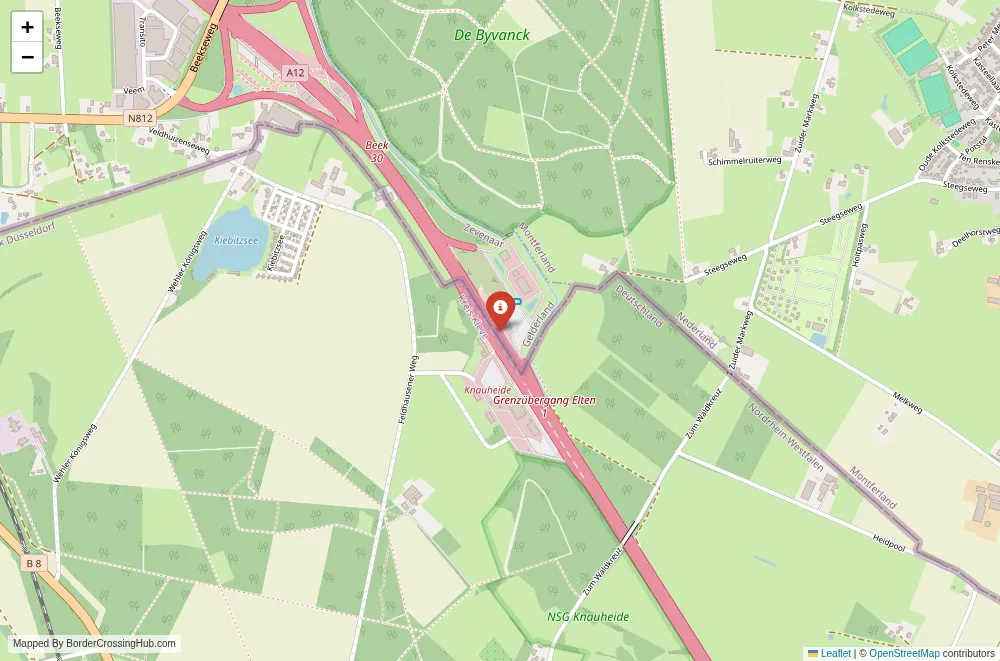
Approximate Border Location
Border Countries
- 🇩🇪Germany
- 🇳🇱Netherlands
Border Cities
- 🇩🇪Emmerich am Rhein
- 🇳🇱Zevenaar
Wait Times
Cars 0-15m; peaks 20-90m rush
Just crossed? Tap to report:
Operating Hours
Open 24 hrs (12:00 AM-11:59 PM)
Crossing Types
Ped,cars,bikes; bridge routes
Border Type
Land crossing via motorway (A3/A12)
Peak Times
07:00-09:00 AM; 04:00-06:30 PM
Daily Crossings
20,000-70,000/day
Currency Exchange
EUR only; ATMs on both sides
Safety Information
Bridge traffic; occasional police checks
Languages Spoken
Dutch/German
Accessibility Features
Good sidewalks; curb cuts common
About Emmerich am Rhein & Zevenaar
The Emmerich am Rhein-Zevenaar border lets you cross from Germany into the Netherlands along a busy corridor that combines road, rail, and river elements right where the Rhine flows north into Dutch territory.
Alternative Names
This crossing is often called the Emmerich-Zevenaar grensovergang, the Zevenaar-Emmerich border, or the A12/A3 border point. The rail segment is known as the Emmerich DB – Zevenaar NS crossing, and nearby local roads sometimes appear as the Bergh Autoweg or similar routes.
Current Status and Safety Note
Germany and the Netherlands share Schengen membership, so this border remains open with no permanent controls or booths for routine travel. You drive, cycle, walk, or ride the train across without stopping under normal conditions. Germany continues temporary random spot checks at various Dutch border points for migration, security, and crime reasons; these can occur on the A12/A3 or nearby roads but are selective and infrequent here. The area handles significant traffic and feels well-integrated and safe for everyday use, with no widespread reports of scams targeting ordinary travelers.
Historical Background
The border line follows 19th-century Dutch-Prussian agreements, with Emmerich marking the last German town on the Rhine before it enters the Netherlands. The modern road crossing gained importance after World War II as trade grew between the Ruhr and the Randstad. The A12 motorway link opened in the 1960s, tying into the Rhine’s role as a natural divider. Rail services across this segment have long connected Arnhem to Oberhausen and beyond, with upgrades over time to handle high-speed and freight flows.
Geopolitical and Economic Role
This point sits on the A12 (Netherlands) which becomes the A3 (Germany), forming part of a major European route between the Randstad, the Ruhr, and farther east. It carries heavy commuter, tourist, and freight traffic, including trucks heading to/from Rotterdam and German industrial areas. The rail line supports both regional trains and long-distance ICE services, making it a key link for passengers and goods. Local cross-border routines thrive, with people shopping or working on either side daily.
Visa Requirements for Foreign Visitors
Schengen rules apply equally. If your nationality qualifies for visa-free entry, you need only a valid passport or national ID. Most non-EU visitors receive 90 days in any 180-day period across the area. Carry your travel document at all times, as random German checks can take place anywhere in the border zone.
Crossing Procedures Step by Step
By car, follow the A12 east from Zevenaar; it seamlessly becomes the A3 at the border with no interruption or booth. Smaller roads (such as B8 to N336/N812 routes) also cross nearby without formalities. For rail, regional trains (such as RB 61 or similar) stop at Zevenaar (Netherlands) and Emmerich (Germany); long-distance ICE services pass non-stop. No immigration or customs desks exist due to Schengen. Pedestrians and cyclists use parallel local roads or paths, crossing the line unmarked. The reverse direction works identically.
Typical Wait Times and Peak Periods
Motorway and road crossings take seconds with no wait. Rail connections follow timetable stops. Rush hours and weekends see heavier traffic on the A12/A3, especially with freight or holiday flows. Random spot checks add only brief pauses if they occur.
Operating Hours
Roads and rail operate 24 hours a day. Regional trains run from early morning to late evening, with long-distance services covering broader hours.
Transportation Options to and From the Border
Drive the A12 from Arnhem or Nijmegen to Zevenaar, then cross to the A3 toward Oberhausen or Duisburg. Regional trains connect Zevenaar to Emmerich (and onward to Arnhem or Düsseldorf directions). Buses serve both towns. Cycling follows quiet parallel roads or regional paths. The Rhine itself is crossed by the nearby Emmerich Rhine Bridge (on B220), though it stays within Germany before the actual border.
Road Conditions and Scenery
The A12/A3 offers wide, modern lanes with good surfaces and multiple lanes. Smaller roads wind through flat farmland, the Rhine floodplain, and light industrial zones. The landscape features open fields, the wide Rhine river views (especially near Emmerich), and distant industrial outlines. The area feels functional and river-dominated.
Seasonal Variations and Weather Impacts
Summer brings more leisure traffic and pleasant conditions. Winter can add fog, rain, or occasional ice, but the motorway stays reliable. No major seasonal closures affect the crossing.
Nearby Attractions
Emmerich am Rhein provides a Rhine promenade, historic town center, museums on local history and shipping, and access to the Rhine dike paths. Zevenaar offers a small market town feel with shops and cafes. The nearby Rhine Bridge (Germany’s longest suspension bridge) gives impressive river views, though renovation work may continue in places. Both sides suit short walks along the river or quick visits to local markets.
Common Scams and Warnings
Serious scams remain rare. Occasional higher prices appear at roadside services or shops near the border. Random German spot checks target specific vehicles and rarely impact tourists. Heavy truck traffic on the A3/A12 requires careful driving and distance.
Travel Tips and Preparation
Use navigation apps to follow the A12/A3 or smaller routes. Carry your passport/ID and vehicle documents. For rail, check NS International or DB for timetables and tickets. Bring cash or card for any quick stops. Monitor traffic apps during peak times or holidays.
Cultural and Economic Significance
This crossing keeps the Lower Rhine region tightly connected, supporting trade between Dutch ports and German industry. Daily commuter patterns and tourism along the Rhine show how open borders sustain shared economic and social life in this river-border zone.
Final Planning Advice
Check for any temporary German spot-check notices if driving the motorway. Bring your documents, choose your route (highway, rail, or local road), and enjoy the quick shift from German Rhine town to Dutch Gelderland. This busy yet simple crossing makes moving between the two countries straightforward. Safe travels.
No reviews yet.