
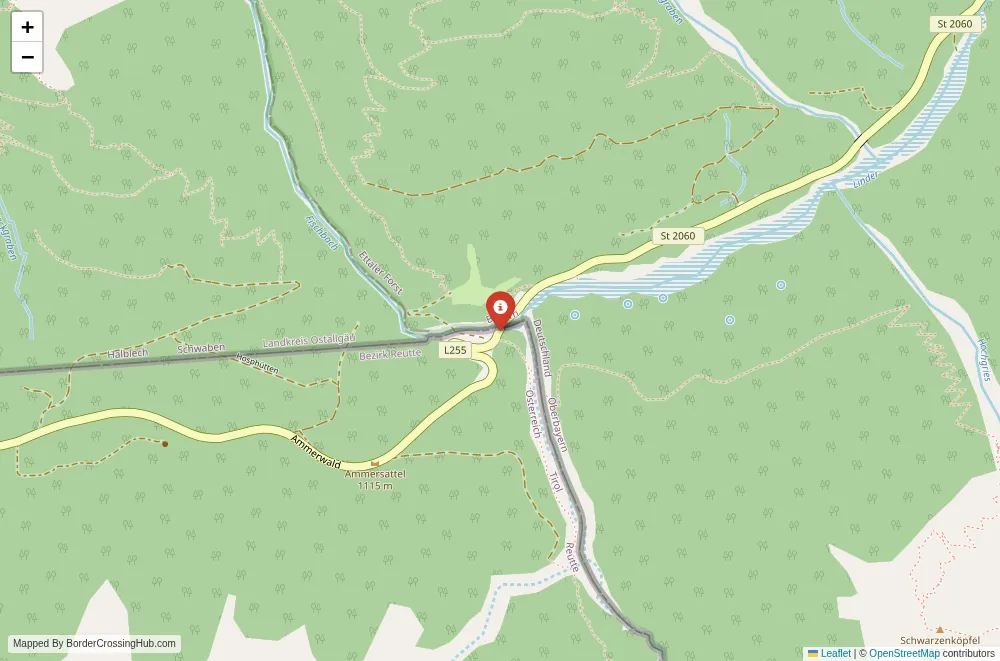
Approximate Border Location
Wait Times
Cars 0-10m; peaks 15-45m tourist days
Just crossed? Tap to report:
Operating Hours
Open 24 hrs (12:00 AM-11:59 PM)
Crossing Types
Ped,cars,bikes,buses; alpine road
Border Type
Land crossing via alpine road pass
Peak Times
10:00 AM-04:00 PM; weekends; summer
Daily Crossings
1,000-5,000/day
Currency Exchange
EUR only; ATMs in Ettal/Grainau
Safety Information
Mountain driving risk; snow restrictions possible
Languages Spoken
German
Accessibility Features
Paved pullouts; step-free varies
About Dürrnberg & Bayern
Monthly Update (March 2026):
As of 03/2026, the Dürrnberg & Bayern Border Crossing ticks along steadily with light local traffic. Vehicles move easily between the Salzburg area and Bavaria, and delays are rare. Afternoon commuting can add a few more cars heading into Germany. Weekend sightseeing around the mountains sometimes brings small bursts of activity.
No Cell Service at the Border? No Problem.
Don’t get caught scrambling for paperwork when you lose signal. Download the complete Europe Transit Guide directly to your device and access every critical detail, fast-track strategy, and border rule – 100% offline.
The Dürrnberg crossing stands out as one of the more unusual points along the Austria-Germany border, where the line slices through the historic salt mining plateau above Hallein, with both a surface road link and an underground tunnel in the old mine that literally crosses from Austria into Bavaria.
Location and Connections
You reach this crossing on the Dürrnberg plateau, where Bad Dürrnberg (part of Hallein in Salzburg state, Austria) meets the Bavarian side near Oberau or Rossfeld in Berchtesgadener Land. The main surface road follows local routes from Hallein up to Bad Dürrnberg and across into Germany, often via signs to Oberau or the Rossfeld Panoramastraße. From Hallein or Salzburg, it’s about 15 to 20 minutes drive uphill. On the German side, the nearest village is Oberau, a few kilometers after the line, with links to Berchtesgaden or Bad Reichenhall. Cars, local buses, cyclists, and pedestrians use the road; it’s popular for those exploring the Salzkammergut or heading into the Bavarian Alps. The underground part runs through the Salzbergwerk Dürrnberg (Hallein Salt Mine), a tourist attraction where the tunnel crosses the border deep below ground.
Alternative Names
It goes by Dürrnberg border crossing, Bad Dürrnberg Grenzübergang, Hallein-Dürrnberg crossing, or sometimes Neuhäusl from older customs references. The underground feature is often called the Salzbergwerk Dürrnberg border or the tunnel under the border.
Historical Background
Salt mining here dates back over 2,600 years to Celtic times around 800 B.C., making Dürrnberg one of Europe’s oldest continuously worked salt sites. The border formalized in the 19th century amid Austrian-Bavarian agreements, including the 1829 Bavarian-Austrian salt treaty that acknowledged the mine extending under both territories. The Iron Curtain never applied here since Austria stayed neutral, but customs checks existed until Schengen in the late 1990s. The mine closed for production in 1989 and reopened as a visitor site, where tours now cross the border underground (no guards, just a marker). The surface road saw similar easing post-Schengen.
Geopolitical Context
Schengen since the late 1990s normally means no routine passport or customs stops for EU citizens or visa-exempt travelers. Germany and Austria occasionally apply temporary controls for security or migration, but as of February 10, 2026, no active widespread restrictions exist on this Austria-Bavaria border segment. Random spot checks can happen on roads like this one, though the quiet Dürrnberg point sees them infrequently. The underground mine crossing remains symbolic with no formalities. Always verify via official police or foreign ministry sites for any short-term changes.
Practical Crossing Procedures
On the surface road, you drive straight across with a border sign or marker. Rare spot checks might involve police asking for ID or basic questions. EU citizens show passport or national ID. Non-EU nationals carry valid passports, visas/residence permits if required, and proof like onward travel. Vehicles need insurance; no vignette required for this non-motorway route. In the salt mine tour (booked as a visitor), you walk or slide through tunnels crossing the border underground—no separate procedure, just part of the experience with a fun border marker. Pedestrians and cyclists use the road easily.
Typical Wait Times
You usually cross in seconds on the road with no delay. Any random checks add 5 to 15 minutes at most. Mine tours have no wait for border purposes since it’s all one attraction. Traffic stays light, even in summer tourist season.
Operating Hours
The road runs 24/7 year-round. The salt mine tours operate on set schedules (typically daily with seasonal variations, often 9 AM to 5 PM), but the border itself has no hours. Winter snow can slow the uphill road temporarily.
Transportation Options and Road Conditions
Drive your car up the winding local road from Hallein for the best access; buses serve Bad Dürrnberg from Hallein or Salzburg. The route climbs steadily with good pavement but sharp curves, elevation gains to around 1,000 meters, and alpine views. Watch for cyclists or hikers sharing the road. The mine tour involves walking, slides, and a short train ride underground.
Scams and Warnings
Scams remain rare at this low-key spot. No touts or fake services plague the area. Mine tickets sell at official counters; avoid unofficial sellers. The road has steep drops in places—drive carefully, especially in wet or icy conditions. The mine stays cool and damp; wear warm layers and closed shoes.
Nearby Attractions
Bad Dürrnberg centers on the Salzbergwerk Dürrnberg with underground tours, slides, and salt history exhibits. Hallein offers the Celtic museum and old town. On the German side, Oberau leads to Berchtesgaden with Königssee lake, Watzmann mountain, and Obersalzberg sites. The Rossfeld Panoramastraße provides stunning alpine drives. The area suits salt heritage fans, hikers, or those combining Salzburg visits with Bavarian Alps.
Seasonal Variations and Weather Impacts
Winter snow December to March requires winter tires on the road; mine tours run year-round but can feel colder underground. Summer brings more visitors with clear roads and outdoor trails. Autumn offers foliage views with fewer crowds. Rain slicks curves occasionally, but closures stay uncommon.
Travel Tips and Preparation
Carry passport or ID for any spot checks. Book mine tours in advance during peak season. Pack warm clothes for the underground part (constant 8-10°C). Refuel in Hallein or Berchtesgaden. Check weather for the mountain road. Use marked paths if hiking nearby to stay safe in alpine terrain.
Cultural and Economic Significance
The crossing highlights shared salt mining heritage that shaped both regions economically for millennia, from Celtic trade to modern tourism. The mine tour crossing underground symbolizes seamless Schengen ties, while surface traffic supports cross-border day trips and local economies in Hallein and Berchtesgaden.
Before You Cross
Check road conditions and mine tour availability from official sites before heading out. With simple prep for alpine driving and rare checks, you manage this unique high-plateau crossing—whether by car or deep underground—and explore the salt-rich borderlands. Safe travels.
No reviews yet.