
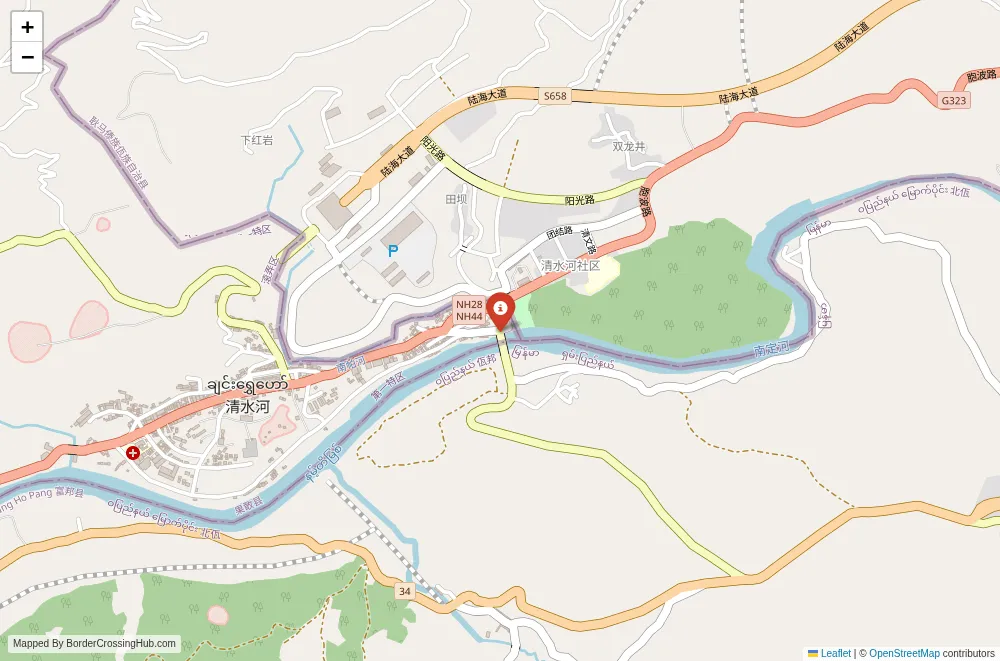
Approximate Border Location
Wait Times
Trucks 60-240m; peaks 240-720m
Just crossed? Tap to report:
Operating Hours
Hours variable; restrictions possible
Crossing Types
Freight/ped by permit; controls
Border Type
Land crossing via road (border trade post)
Peak Times
Weekdays 09:00 AM-01:00 PM
Daily Crossings
200-2,000/day
Currency Exchange
CNY; MMK; USD common; ATMs scarce
Safety Information
High security; access can change quickly
Languages Spoken
Mandarin, Burmese, English
Accessibility Features
Minimal; uneven approaches
About Dongning & Poltavka
Monthly Update (March 2026):
As of 03/2026, the Dongning & Poltavka Border Crossing moves steadily with a mix of freight trucks and passenger cars. Vehicles gather in short lines before clearing Russian customs. Midday crossings usually pass quicker. Trade schedules and inspection procedures influence the pace.
No Cell Service at the Border? No Problem.
Don’t get caught scrambling for paperwork when you lose signal. Download the complete Asia Transit Guide directly to your device and access every critical detail, fast-track strategy, and border rule – 100% offline.
The Dongning-Poltavka border crossing serves as a quieter but functional land link between northeastern China and Russia’s Far East, connecting the town of Dongning in Heilongjiang Province to Poltavka in Primorsky Krai. You often encounter this point when traveling overland through lesser-visited routes in the region, perhaps en route from Mudanjiang or farther afield toward Vladivostok. Alternative names include the Dongning Port or Poltavka checkpoint.
Location and Basic Connection
Dongning lies in Heilongjiang Province, near the Suifen River area, while Poltavka sits in Oktyabrsky District on the Russian side. This road crossing handles passenger and freight traffic, linking Chinese national highways like G331 indirectly to Russian roads. It remains one of several active points along the extensive China-Russia border, the world’s fifth-longest at over 4,200 kilometers. The crossing sees regular use for trade and tourism, though it carries less volume than bigger neighbors like Suifenhe-Pogranichny.
Historical Background
The border here traces back to agreements from the late Soviet era and post-1991 demarcations that resolved lingering disputes from earlier centuries of mapping and conflict. The 1991 Sino-Soviet Border Agreement and the 2004 complementary treaty finalized much of the eastern section, reducing tensions that once flared in the 1960s elsewhere along the frontier. This area avoided major clashes but benefited from gradual opening in the late 1980s, shifting from restricted zones to active trade. Geopolitically, it supports growing economic ties between China and Russia, especially as bilateral relations have deepened in recent years amid global shifts. The crossing has seen infrastructure tweaks, like bridge repairs after weather events, but stayed relatively stable compared to flashier ports.
Current Operating Status
As of early 2026, the border operates daily for passengers and cargo, typically from around 8:00 AM to 6:00 PM or similar standard hours aligned with local time (UTC+8 on Chinese side, UTC+10 on Russian). Hours can adjust for holidays or maintenance, and recent mutual visa-free trials have boosted flows at nearby crossings without major reported changes here. Always verify with official immigration sites or recent reports, as weather or policy tweaks occasionally affect openings. No widespread closures noted recently, unlike some temporary holiday shutdowns at other borders.
Practical Crossing Procedures
You cross on foot, by vehicle, or bus; most foreign visitors arrive by shared transport or private car. From the Chinese side (Dongning), complete exit formalities at customs and immigration. Walk or drive across to the Russian side (Poltavka) for entry checks. Russia offers e-visas for many nationalities, valid at this point, or visa-free entry for short stays if your country qualifies under current rules (check specifics, as policies evolve). Have your passport, any supporting documents, and proof of onward travel ready. Chinese side procedures usually involve standard passport scans and questions; Russian officers may review details more thoroughly. The whole process often takes 30-60 minutes outside peaks, though freight traffic can slow things if lanes overlap.
Wait Times and Peak Periods
Lines stay shorter here than at major ports, especially early morning or late afternoon. Midday sees more activity from buses and traders, pushing waits toward an hour during busier seasons. Recent increases in cross-border tourism from visa relaxations (like 30-day mutual visa-free trials starting late 2025) have added volume at regional points, so expect occasional buildup. Weekends or holidays around Chinese New Year or Russian events can extend processing.
Transportation Options
Buses run frequently between Dongning and nearby Russian towns, with up to dozens of daily routes handling hundreds of passengers. From Mudanjiang or Harbin, take trains or coaches to Dongning, then connect across. On the Russian side, options link to Ussuriysk or Vladivostok via local transport. Private taxis or shared vans fill gaps, but stick to licensed ones at official lots. Through services sometimes handle the border stop while you process paperwork. Roads connect well to highways on both sides.
Scams and Safety Warnings
This crossing draws fewer reports of tourist-targeted scams compared to high-traffic spots, but general caution applies. Touts may approach offering “fast” visa help or currency exchange at bad rates; ignore them and head straight to official counters. Petty theft risks rise in crowded bus areas, so keep valuables secure. The region feels remote, with limited English, so prepare translations or apps. No major safety red flags for foreigners during open hours, but stay aware amid truck traffic and variable weather. Recent traveler notes mention straightforward experiences, though language barriers slow things if issues arise.
Road Conditions and Scenery
The approach from Dongning features paved roads through rural Heilongjiang landscapes: fields, small settlements, and forested hills. Crossing into Russia, expect similar flat-to-rolling terrain with taiga elements. Roads hold up decently but can get icy in winter or muddy after heavy rain. Summer offers greener views; winter demands caution with snow.
Seasonal Variations and Weather Impacts
Winter brings cold snaps and potential snow delays, shortening effective hours or slowing vehicles. Summer and fall provide clearer travel, though rain can affect unpaved sections nearby. Peak tourism aligns with warmer months and holiday periods, increasing crowds. Visa-free tourism surges since late 2025 have added seasonal spikes.
Nearby Attractions
In Dongning, check out the Japanese Invasion Fortress ruins for historical insight, or Shen Xian Dong caves. Nearby Suifenhe offers more shopping and parks. On the Russian side, Poltavka remains small, but head toward Ussuriysk for markets or nature reserves. The area suits those interested in border life over big sights.
Cultural and Economic Role
Trade drives activity: timber, agriculture, and goods move both ways, supporting local jobs. Tourism has grown with easier entry rules, bringing Russians for shopping and Chinese for short trips. It reinforces practical ties in a strategically important frontier zone.
Final Planning Tips
Arrive early with cash in local currencies (yuan/ruble), printed docs, and offline translation tools. Monitor news for any bilateral updates, as relations influence flows. Pack for weather extremes and patience during checks. With basics covered, you manage the crossing and explore this under-the-radar part of the China-Russia frontier.
Summing Up the Border
Dongning-Poltavka offers a low-key way to cross between China and Russia, rewarding careful prep over flash. Time it right, stay sharp on basics, and it becomes a straightforward step in your regional travels. Safe journeys.
No reviews yet.