
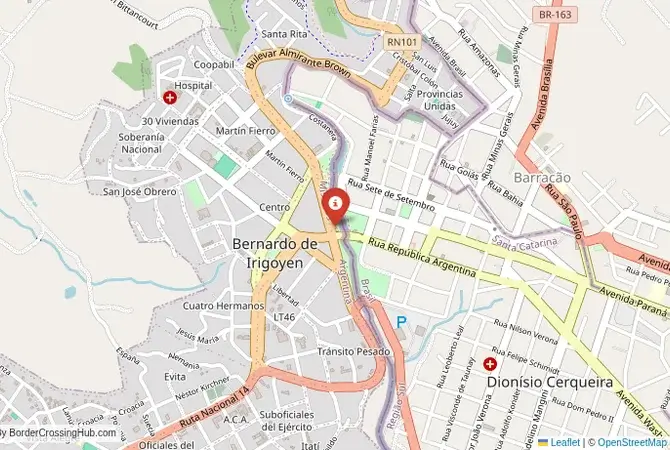
Approximate Border Location
Wait Times
30–60 min typical
Just crossed? Tap to report:
Operating Hours
08:00 AM–06:00 PM
Crossing Types
Pedestrians; vehicles
Border Type
Land crossing via road
Peak Times
07–10 AM; weekends
Daily Crossings
3k–5k/day
Currency Exchange
Nearby exchanges BRL/ARS
Safety Information
Low risk; occasional touts
Languages Spoken
Portuguese, Spanish, English
Accessibility Features
Ramps; assistance
About Bernardo de Irigoyen & Dionísio Cerqueira
Monthly Update (February 2026):
A short pause on the Argentine side is still the most noticeable part of the Bernardo de Irigoyen & Dionísio Cerqueira Border Crossing, especially when a few cars arrive together. Through February 2026 it’s felt mostly stable, with pedestrians moving through more smoothly than vehicles most mornings. Weekends and local shopping traffic can stack things up a bit in the afternoon, and rain tends to slow inspections just enough to be felt.
General Overview
Straddling the lush borderlands of southern Brazil and northern Argentina, the Dionísio Cerqueira-Bernardo de Irigoyen border crossing connects Dionísio Cerqueira in Brazil’s Santa Catarina state with Bernardo de Irigoyen in Argentina’s Misiones province. Known as the Fronteira Dionísio Cerqueira or Dry Border crossing, it’s a vibrant hub for locals, traders, and tourists exploring the region’s subtropical forests and cultural blend. As Mercosur members, Brazil and Argentina facilitate movement for their citizens, but immigration checks are mandatory. You’ll find Brazilian hospitality mingling with Argentine passion, set against a backdrop of rolling hills and mate plantations. Stay vigilant for customs checks, as patrols monitor goods like electronics, alcohol, or tobacco due to tax differences.
Historical and Geopolitical Context
The border was established by the 1895 Treaty of Limits, resolving disputes between Brazil and Argentina over the Misiones region, with the Peperi-Guaçu River as a partial divider. In the 19th century, this area was a frontier for Gaucho settlers and Jesuit influences, with lingering cultural ties to indigenous Guarani communities. The 1991 Mercosur agreement transformed the crossing into a trade corridor, supporting approximately 6,000 daily crossings (latest available data) for agriculture, timber, and tourism. Unlike Schengen, Mercosur requires immigration checks, with passports or IDs processed at the border post. Integrated control on the Argentine side continues to facilitate trade, though occasional delays occur due to customs inspections on agricultural goods or regional trade matters. Verify border status before traveling to avoid unexpected waits.
Crossing Procedures and Wait Times
Brazilian and Argentine citizens can use national IDs, while other nationalities need passports and possibly visas (check your country’s requirements). Immigration processing at the border post takes 10-20 minutes, with longer queues during holidays. Customs inspections focus on electronics (one personal device), alcohol (1L spirits), or tobacco (400 cigarettes), with Argentine officers vigilant for tax evasion. Pedestrians cross in 15-25 minutes, while vehicles wait 30-45 minutes during peak hours (8-10 AM, 4-6 PM). The border operates 24/7, but summer holidays (December-February) or local festivals like Dionísio Cerqueira’s Festa do Colono can extend delays to 60 minutes or more due to increased traffic. Early mornings or weekdays minimize congestion for travelers on foot or by car.
Routes and Transportation
From Dionísio Cerqueira, local buses (20 minutes, R$8-12) or taxis (R$40) reach Bernardo de Irigoyen via the border road. By car, the BR-282 crosses in 10 minutes (5km). No trains serve this route, but long-distance buses like Pluma connect to Florianópolis (10 hours, R$120) or Posadas (3 hours, ARS$3000). Cyclists can use rural roads, a 12km route with views of mate fields and forests. From Bernardo de Irigoyen, buses reach Iguazú (4 hours, ARS$4000). Roads are paved but narrow, and summer rains may cause delays or muddy shoulders. Avoid unofficial taxis at Dionísio Cerqueira’s terminal, as travelers report overcharges up to R$70 for short trips across the border.
Travel Tips and Scam Warnings
Always carry your passport or ID for immigration checks, as officers enforce strict protocols. Bernardo de Irigoyen’s shops advertise “deals” on mate, leather goods, or local crafts, but prices are often inflated for tourists; compare at Dionísio Cerqueira’s markets or supermarkets. Use ATMs in either town for BRL or ARS to avoid poor exchange rates at roadside kiosks. Pickpocketing is rare but reported at bus terminals during festivals like Festa do Colono. Some travelers have encountered fake “customs agents” charging R$50 for unnecessary paperwork; deal only with uniformed officials at the border post. Declare goods when entering Brazil to avoid fines up to R$500 for undeclared electronics or alcohol.
Cultural and Economic Significance
With approximately 6,000 daily crossings (latest available), the region thrives on agriculture, timber, and tourism. Portuguese and Spanish blend with Guarani influences, heard in markets and cafes. Dionísio Cerqueira’s churrasco restaurants serve hearty grilled meats, while Bernardo de Irigoyen’s eateries offer empanadas and dulce de leche. The region’s shared Jesuit heritage, tied to nearby mission ruins, draws visitors, fostering cross-border cultural exchange. Economic differences drive shopping, with Brazilians seeking Argentine wines and mate, and Argentines purchasing Brazilian electronics or clothing, boosting local economies and small businesses.
Nearby Attractions
Dionísio Cerqueira’s Peperi-Guaçu River walks and local museums highlight Jesuit history. Bernardo de Irigoyen’s Plaza San Martín and nearby mate plantations offer scenic charm. The Iguazú Falls, a 4-hour drive, are a must-see. For a local experience, visit Bernardo de Irigoyen’s markets for artisanal mate gourds or Dionísio Cerqueira’s churrascarias for authentic Brazilian barbecue.
Seasonal and Weather Considerations
Summer (December-February) brings 25-35°C weather, ideal for exploring but crowded during Carnival or Argentine holidays. Winter (June-August) sees 10-20°C with fewer tourists, though occasional rain may muddy rural roads. Spring and fall offer mild 15-25°C weather, but subtropical humidity or fog can reduce visibility for drivers or cyclists. Check forecasts for flooding risks, which may delay crossings, especially on secondary routes.
Planning Recommendations
Cross early to avoid peak delays and carry BRL or ARS for convenience. Book bus tickets via Pluma or local operators for savings, and check schedules for real-time updates. Verify visa requirements and border status for customs patrols, particularly during summer or festivals. Visit Dionísio Cerqueira’s tourist office for maps of local trails or festival schedules. Pack sunscreen and hats for summer or rain gear for winter to stay comfortable. With preparation, this crossing connects you to the region’s subtropical beauty and cultural richness seamlessly.
No reviews yet.