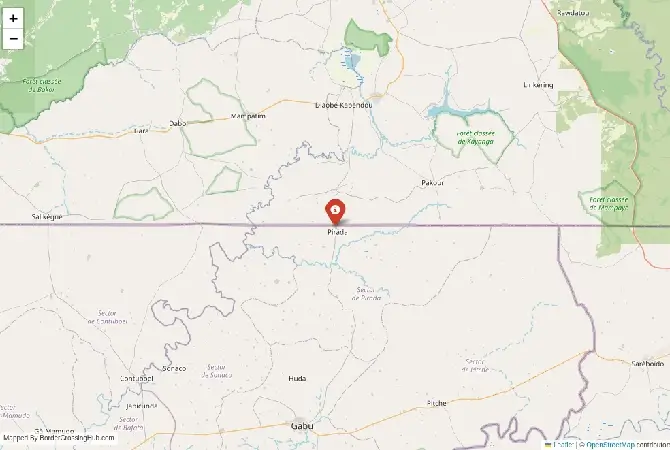
Monthly Update (September 2026):
Diaobé & Guinea remains a regional Senegal-Guinea crossing with no significant September closure identified. Guinea continues to face political and social tensions, with current travel guidance warning that movement restrictions or border closures can occur with little notice. For travelers, the main practical issue is therefore confirming that this smaller frontier route is functioning rather than expecting reliable published queue information. The route is more relevant to local and regional movement than to long-distance international traffic.
About this crossing
Unlike fixed checkpoints with steady daily flow, this crossing changes character depending on the day. On market day, the area transforms into one of West Africa’s largest open-air trading zones, with thousands of people moving between Senegal and Guinea, along with visitors from Mali and Guinea-Bissau.
A border shaped by trade rather than infrastructure
Diaobé developed around commerce rather than administration. The border here cuts through communities that have traded with each other for generations. As a result, movement has historically been fluid, especially for locals.
Nearby Border Crossings



The weekly market, known regionally for its scale, has made this crossing economically important despite limited formal development. Goods ranging from livestock and grains to textiles and electronics pass through in large quantities.
Because of this, the crossing is sometimes referred to informally as the Diaobé Market Border or simply Diaobé Crossing.
What you will encounter at the crossing
Facilities at Diaobé are minimal compared to major border posts. On the Senegalese side, you will find small immigration offices, often set slightly away from the busiest market areas. On the Guinean side, infrastructure is similarly basic.
On non-market days, the crossing is relatively quiet. You may pass through with little delay, and the atmosphere feels more like a rural checkpoint.
Market day is a completely different situation. Crowds swell dramatically, vehicles line up along dusty roads, and the distinction between border and marketplace becomes less clear.
Border procedures and how they work here
You still need to complete exit and entry formalities, even if the environment feels informal. Starting in Senegal, you stamp out in Diaobé before proceeding to the Guinean side for entry.
Visa requirements for Guinea depend on your nationality, and you should arrange your visa in advance unless you have confirmed entry options at land borders. Do not assume that the market setting means relaxed enforcement for foreign travelers.
Processing times vary widely. On quiet days, it may take 10 to 20 minutes. On market day, delays can extend beyond an hour due to sheer volume and occasional disorganization.
Transport and getting there
Diaobé is connected by road to Kolda, a regional center in Senegal. The road is mostly paved but can become rough in sections, particularly closer to the border.
Shared taxis and minibuses operate regularly, especially on market days when demand increases sharply. From the Guinean side, transport continues toward towns like Koundara, though services may be less predictable.
Motorcycle taxis are widely used for short distances and can be useful if traffic becomes congested.
Seasonal conditions and timing your visit
The rainy season, typically from June to October, has a strong impact on this crossing. Roads can become muddy, and the market area may turn into a mix of wet ground and standing water, slowing movement significantly.
In the dry season, dust dominates, especially with the large number of vehicles and people on market days.
If you want to cross quickly, avoid market day. If you are curious about regional trade, arriving on market day offers a rare look at cross-border commerce, but you should be prepared for delays and confusion.
Scams & Warnings
While Diaobé is not as notorious as some West African crossings, the chaotic environment on market day creates opportunities for petty scams. You may encounter individuals offering to guide you through the process or claiming to speed things up.
As with other borders, these services are unofficial. Politely decline and proceed on your own. Keep your passport secure and only hand it to uniformed officials inside offices.
Pickpocketing can also be a concern in dense crowds. Keep your belongings close and avoid displaying valuables.
Currency exchange is informal here, and rates can vary widely. If possible, exchange money in larger towns before arriving.
Nearby experiences and regional context
Diaobé itself is defined by its market. Outside of that, it is a small town with limited accommodation and services. Kolda, about an hour away, provides better options for lodging and supplies.
On the Guinean side, the landscape becomes greener and more forested, especially as you travel further south. The region is less visited by international travelers, offering a quieter and less commercial experience.
The crossing also reflects the broader cultural connections across this part of West Africa. Languages such as Fulani and Mandinka are spoken on both sides, reinforcing long-standing ties.
Economic and cultural importance
Diaobé’s market is one of the largest in the region, and its influence extends beyond Senegal and Guinea. Traders from multiple countries gather here weekly, making it a key point for regional distribution of goods.
The border’s role is therefore closely tied to this economic activity. Even with limited infrastructure, it supports a significant flow of commerce and interaction.
You will notice how formal border control coexists with traditional trading practices, creating a setting that feels very different from more structured crossings.
Practical advice before you cross
Carry all necessary documents in both physical and digital form. Have small denominations of local currency, but avoid exchanging large amounts at the border.
Dress simply and be prepared for heat, dust, or mud depending on the season. Bring water, especially if you expect delays.
If you are unfamiliar with the area, consider observing the flow of people before proceeding. Even without clear signage, the general direction of movement will guide you.
Final thoughts
A crossing defined by its market rhythm
Diaobé offers an experience shaped more by trade than by infrastructure. Your crossing here depends heavily on timing, with quiet days providing simplicity and market days bringing intensity.
With preparation and awareness, you can manage the process while also witnessing one of West Africa’s most active trading environments.
View all border crossings between Senegal and GuineaPractical information
Fuel
Senegal: <1 km - Guinea: <1 km
Currency
XOF,GNF exchangers
Safety information
Active trade zone
Connectivity
Roads, minibuses
Have you crossed here?
Help other travelers by sharing your experience, wait times, and any updates.