
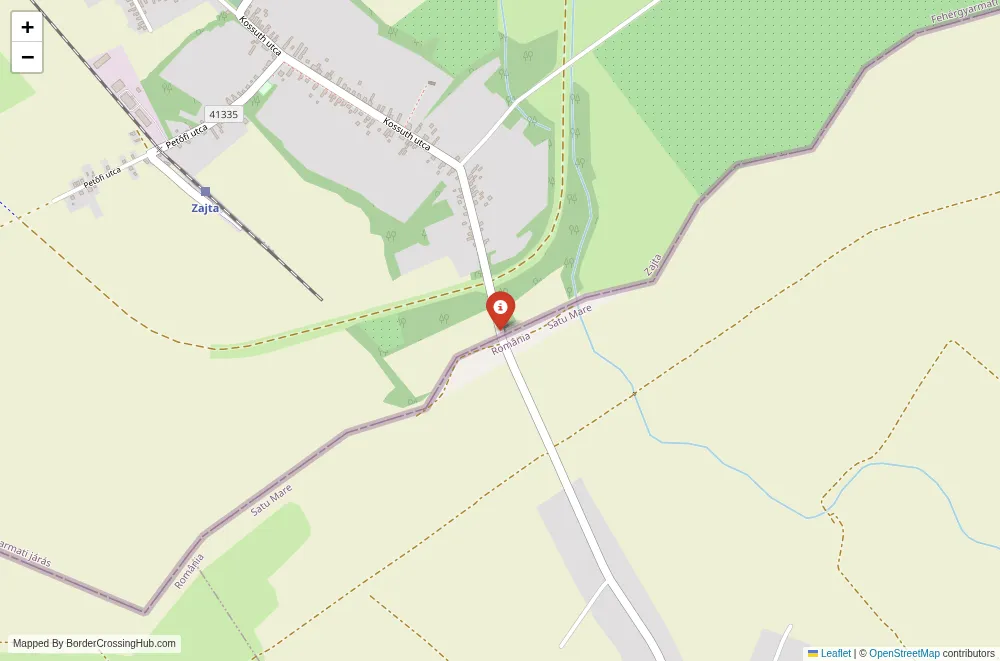
Approximate Border Location
Wait Times
Cars 0-10m; peaks 15-45m day trips
Just crossed? Tap to report:
Operating Hours
Open 24 hrs (12:00 AM-11:59 PM)
Crossing Types
Ped,cars,bikes; rural EU crossing
Border Type
Land crossing via rural road
Peak Times
10:00 AM-04:00 PM; weekends
Daily Crossings
300-1,800/day
Currency Exchange
HUF; RON in Carei/Satu Mare; ATMs
Safety Information
Low risk; watch narrow roads
Languages Spoken
Hungarian/Romanian
Accessibility Features
Paved road; limited curb cuts
About Csengersima & Dorolț/Petea
Monthly Update (March 2026):
As of 03/2026, the Csengersima & Dorolț/Petea Border Crossing stays fairly busy but predictable. Cars and freight vehicles move steadily through the checkpoint, with the Romanian side sometimes slowing during afternoon traffic. Midday usually flows more smoothly. Cross-border trade and commuting keep the crossing active.
No Cell Service at the Border? No Problem.
Don’t get caught scrambling for paperwork when you lose signal. Download the complete Europe Transit Guide directly to your device and access every critical detail, fast-track strategy, and border rule – 100% offline.
The Csengersima-Petea crossing stands as one of the key road links along the Hungary-Romania border, handling significant local and international traffic in the northern section near Satu Mare county and Szabolcs-Szatmár-Bereg.
Alternative Names
It commonly appears as Csengersima-Petea, Csengersima-Dorolț (Petea), or Petea-Csengersima. Petea refers to the Romanian customs point in Dorolț commune, while Csengersima names the Hungarian side near Csenger town.
Location and Connections
This point sits on main road 49 in Hungary, connecting directly to DN19A in Romania. From Hungarian cities like Nyíregyháza or Debrecen, you reach Csengersima via route 49 in about 1-2 hours through rural plains. On the Romanian side, Petea opens quick access to Carei, Satu Mare (around 30-45 minutes), and further to Oradea or Cluj-Napoca. It’s a practical choice for those traveling between eastern Hungary and northwestern Romania, with good road links on both sides.
Historical Background
The border here follows lines drawn after World War I treaties that reshaped Transylvania and surrounding areas. Csengersima-Petea developed as a major crossing in the 20th century, seeing upgrades including new freight lanes with X-ray gates around 2022 to handle growing trade. It gained extra attention during migration flows and regional events, with reinforcements at times for security. Recent changes came with Romania’s full Schengen accession on January 1, 2025, shifting dynamics from full controls to more fluid movement.
Geopolitical and Economic Role
This crossing supports heavy passenger and freight flow in an agricultural and commercial zone with mixed Hungarian and Romanian populations. It carries everyday commuters, shoppers heading to markets in Carei or Satu Mare, and trucks moving goods between the two EU neighbors. Post-2025 Schengen integration, it facilitates smoother regional exchange, though Hungary reintroduced temporary entry checks on its side to address security under Schengen rules. Bilateral agreements expanded overall crossings from 12 to 22 along the frontier, reducing average distances and boosting connectivity.
Operating Hours and Current Status
The crossing operates 24 hours a day for international passenger and freight traffic, including vehicles with goods. This round-the-clock schedule sets it apart from smaller points and suits long-haul drivers or late travelers. With Schengen land borders largely open since January 2025 (Romania fully integrated), routine person checks lifted on the Romanian side, but Hungary conducts spot or entry verifications. Freight lanes remain active with customs facilities. Check police.hu, politiadefrontiera.ro, or apps like BorderAlarm for live status, as temporary adjustments can occur for events or maintenance.
Visa Requirements for Foreign Visitors
Hungary and Romania are both EU and Schengen members (Romania fully from 2025). EU/EEA/Swiss citizens cross freely with ID. Third-country nationalities like US, Canada, Australia enjoy visa-free short stays up to 90 days in 180 under Schengen rules. Your passport must comply; random checks or EES biometric registration might apply at entry points. No visa-on-arrival needed here for eligible travelers.
Crossing Procedures Step by Step
From Hungary (Csengersima), approach for any Hungarian entry checks (often spot-based now): present passport and vehicle docs; officers may ask questions. Proceed through the zone to Romania (Petea) for minimal or no routine checks due to Schengen. For freight, separate lanes handle customs declarations. Passenger cars stay in vehicle; the process takes 5-30 minutes typically, longer with freight or spot inspections.
Wait Times and Peak Periods
Waits vary: often 10-30 minutes on the Hungarian side during checks, shorter on Romanian. Peaks hit during weekends, holidays, or harvest seasons with local traffic, or when freight builds. It handles volume better than smaller points but can see delays in busy periods. Real-time apps provide driver reports for current conditions.
Transportation Options After Crossing
Private cars dominate; buses from Satu Mare or Carei reach Petea area, then cross to Csengersima for Hungarian connections. Long-distance coaches between Debrecen/Nyíregyháza and Satu Mare/Cluj use this route. Taxis work in nearby towns, but own transport fits best for flexibility.
Road Conditions and Scenery
Route 49 and DN19A offer solid pavement through flat agricultural lands: corn fields, sunflowers, small villages, and open views. Freight upgrades improved flow; expect occasional trucks but straightforward driving with no major obstacles.
Weather and Seasonal Impacts
Summers bring heat and dry roads; winters risk fog, frost, or snow in plains, though cleared quickly. No seasonal closures, but fog near rivers can slow visibility.
Nearby Attractions
Csengersima has a small-town feel near Csenger with local markets. Petea/Dorolț offers rural Romanian life. Satu Mare nearby features historic centers, museums, and thermal spots; Carei has a castle. The area suits exploring border culture and regional cuisine.
Practical Travel Tips
Cross anytime with 24/7 access, but daytime avoids night fog. Carry euros, forints, or lei for minor needs. Use vignette for Hungarian roads if approaching via motorways. Monitor apps for waits; pack water/snacks for any holdups.
Common Scams and Warnings
Busy but organized, with few scam reports. Avoid unofficial money changers near lanes for bad rates. Ignore “fast help” offers. Stick to official booths; checks stay professional for eligible travelers.
Cultural and Economic Notes
The zone mixes Hungarian and Romanian influences in farming and trade communities, with bilingual signs and shared markets driving local economies.
Final Planning Advice
Pick Csengersima-Petea for reliable 24-hour access in the northern border area, especially post-Schengen ease. Verify spot checks or conditions officially, prepare documents, and use it to connect these regions without major hassle. Safe travels.
No reviews yet.