
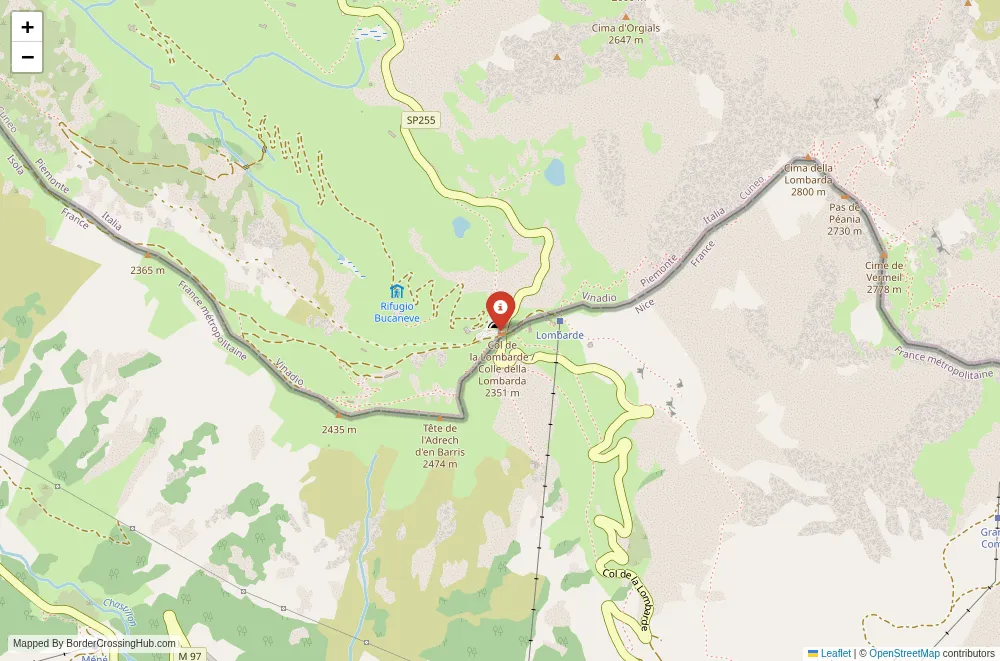
Approximate Border Location
Wait Times
Cars 0-15m; peaks 20-90m summer
Just crossed? Tap to report:
Operating Hours
Seasonal: 08:30 AM-06:30 PM
Crossing Types
Cars,bikes,ped; narrow road
Border Type
Land crossing via mountain road
Peak Times
10:00 AM-03:00 PM; Jul-Aug
Daily Crossings
200-1,200/day
Currency Exchange
EUR only; ATMs in Isola/Vinadio
Safety Information
Tight turns; closures after storms
Languages Spoken
French/Italian
Accessibility Features
Limited; uneven edges, few lay-bys
About Col de la Lombarde & Colle della Lombarda
The Col du Petit Saint-Bernard Colle del Piccolo San Bernardo border crossing stands at 2,188 meters in the Graian Alps, marking one of the most historic and scenic mountain passes that connects the French Tarentaise valley in Savoie (near Bourg-Saint-Maurice and La Rosière) directly to the Italian Aosta Valley near La Thuile.
Location and Basic Connections
You approach this high pass along the D1090 road from Bourg-Saint-Maurice or La Rosière on the French side, or the SS26 from La Thuile on the Italian side. The summit lies right on the France-Italy boundary in a broad alpine saddle, with the road transitioning without a tunnel. The route links the Tarentaise to the upper Aosta Valley, popular for skiers (Espace San Bernardo ski area spans both sides) and drivers seeking classic alpine scenery. No major highways serve the pass; access relies on winding secondary roads. Regional buses from Bourg-Saint-Maurice or Aosta reach valley bases, then private vehicles or taxis handle the steep final sections. The crossing suits cyclists tackling a famous Tour de France climb, hikers on GR5 and Alta Via trails, or those combining French and Italian Alps exploration.
Alternative Names
This point is called Col du Petit Saint-Bernard (French), Colle del Piccolo San Bernardo (Italian), Little St Bernard Pass (English), or the La Rosière-La Thuile frontier.
Historical Background
The pass traces to Roman times as the Via Alpis Graia, with a Roman column and Jupiter temple ruins at the summit. It served pilgrims, merchants, and armies for centuries. The hospice at the top, founded in the 11th century by Saint Bernard of Menthon, provided shelter (now a museum and restaurant). During the 1939 Retirada and WWII, refugees used similar western Pyrenean-style paths, though Petit Saint-Bernard stayed peripheral. The road modernized in the 20th century, with the ski resort Espace San Bernardo developing post-war to link La Rosière and La Thuile across the border. The pass ties into the Mont Blanc massif’s long history of transalpine travel.
Geopolitical Significance
Within the Schengen Area, no permanent passport controls apply at Petit Saint-Bernard. France’s temporary internal Schengen checks (extended to April 30, 2026, due to security concerns like jihadist threats, antisemitic incidents, migration smuggling, and public order) can lead to random ID or vehicle inspections across borders including Italy, but quiet high-mountain passes like this see them less often than motorways. The pass supports tourism (skiing in winter, hiking/cycling in summer) and local ties without major freight. In early 2026, the road remains closed to vehicles since September 22, 2025, due to urgent maintenance and safety works on the French side (earlier than usual winter closure). It is expected to reopen in spring 2026 when conditions allow; the Italian SS26 also closes for winter up to the border. Check official sources (e.g., Savoie or Aosta Valley road services) for reopening updates, as weather and repairs dictate access.
Practical Crossing Procedures
When open, you drive or cycle straight over the summit without stopping under Schengen rules. The border is marked by a pillar or signs at the top. Random patrols may request ID, check documents, or inspect goods, but these are uncommon here. Most nationalities cross freely (90 days visa-free short stay in Schengen). Carry your passport or national ID for any verification. Vehicles need registration and insurance; chains or winter tires required seasonally (though irrelevant during closure). Customs limits apply for alcohol, tobacco, or other items; declare excesses. Pedestrians and cyclists cross easily, though the road is steep and exposed. Current closure means no vehicle transit; hiking trails may allow foot access around barriers, but risks apply.
Typical Wait Times and Operating Hours
When open, the pass operates 24/7 with no formal hours or queues. Random checks take minutes if they occur. Winter weather causes short closures from snow or avalanches, but the low elevation keeps it open more often than higher cols. Current 2025-2026 closure (from September 2025 onward) eliminates standard access; reopening targets spring 2026, weather permitting.
Transportation Options
Private cars or motorcycles handle the steep, remote climb when open. Regional buses reach Bourg-Saint-Maurice (France) or Pré-Saint-Didier (Italy), then taxis or rideshares continue. No direct public buses cross. Cycling is popular for the long, steady ascent (gentle gradients average around 5%). The route suits independent travelers or those linking French spa towns to Aosta Valley.
Road Conditions and Scenery
Both sides feature switchbacks, steep sections (especially French side), and narrow lanes through alpine meadows and forests. The summit offers panoramic views of Mont Blanc massif, glaciers, and valleys. Winter snow closes it reliably; summer provides clear but exposed driving. Chains or winter tires mandatory when snowy; avalanche risks possible.
Scams and Warnings
This remote high pass sees few scams. Weather risks dominate: avalanche closures or ice strand drivers; carry supplies and check status. Random checks may occur; cooperate. The area has low crime but mountain driving risks (exposure, altitude effects). Current closure (ongoing since September 2025) makes vehicle transit impossible until spring reopening; avoid planning around it without confirmation. Hiking trails exist but barriers and weather add risks.
Nearby Attractions
The summit features Roman ruins (Jupiter temple column), a hospice (now museum/restaurant), and the Espace San Bernardo ski area (lift-linked across border). La Rosière (France) and La Thuile (Italy) offer skiing, thermal baths, and valley trails. Nearby Mont Blanc views and hiking in the Tarentaise or Aosta Valley add appeal.
Seasonal Variations and Delays
Summer (June-October) normally provides open roads and tourism peaks. Winter closes the pass due to heavy snow (usual from November). The extended 2025-2026 closure (maintenance + winter) delays reopening into spring 2026. Weather overrides all; check cams or road services.
Cultural and Economic Role
The pass sustains cross-border tourism, skiing, and local ties between Savoie and Aosta Valley. It blends French and Italian alpine culture in food, festivals, and mountain heritage.
Final Planning Notes
The pass is currently closed (as of February 2026); plan alternatives like Mont Blanc Tunnel or Great St Bernard. Carry ID, chains in season, and monitor reopening via official sites. This suits adventurers ready for high-mountain conditions when accessible.
Crossing This Historic Alpine Pass
Col du Petit Saint-Bernard Colle del Piccolo San Bernardo delivers a stunning high-altitude border experience in the western Alps, rich in Roman and medieval history beneath Mont Blanc. With the current extended closure, wait for spring reopening and stay updated on conditions for a safe passage across this iconic Franco-Italian link.
No reviews yet.