
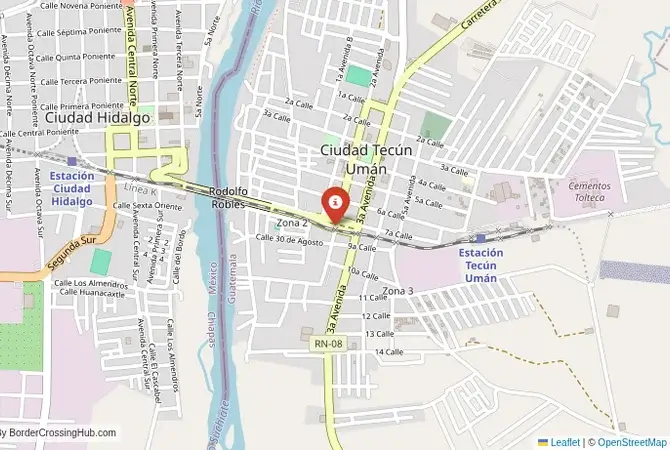
Approximate Border Location
Wait Times
30–180 min peds/vehicles
Just crossed? Tap to report:
Operating Hours
Open 24 hours
Crossing Types
Pedestrians, vehicles, commercial
Border Type
Land crossing via bridge
Peak Times
6:00–9:00 AM, weekends
Daily Crossings
~35,000–45,000 travelers
Currency Exchange
Exchangers near Hidalgo (MXN, GTQ)
Safety Information
Busy; pickpocket risk
Languages Spoken
Spanish
Accessibility Features
Ramps, elevators
About Ciudad Hidalgo & Tecún Umán
Monthly Update (February 2026):
Ciudad Hidalgo & Tecún Umán Border Crossing ticks along steadily, though northbound lines stack slightly mid-morning. February 2026 has been mostly stable, with local market days nudging waits unpredictably. Pedestrian crossings quietly shift the rhythm.
A Bustling River Crossing
The Ciudad Hidalgo Tecún Umán crossing connects Ciudad Hidalgo, Chiapas, Mexico, with Tecún Umán, San Marcos, Guatemala, via the Suchiate River on Mexico Federal Highway 200. Open 24/7, this port links Tapachula (20 minutes north) to San Marcos (30 minutes south). A busy crossing for pedestrians, vehicles, and trade, it is a key hub for Central American migration and commerce. Foreign visitors should check Mexico’s Instituto Nacional de Migración (INM) or Guatemala’s immigration updates, as scams, congestion, and occasional migration related checks are common.
Historical Background
Established in the early 20th century, this crossing supported Chiapas’s agricultural trade and Guatemala’s coffee commerce. Named for revolutionary heroes, it facilitated movement of bananas and textiles. In the 1930s, smugglers used the Suchiate River, with a 1936 coffee smuggling tale becoming local lore. The 2000s saw bridge upgrades to handle growing trade, and today it processes thousands daily. Migration surges and trade disputes occasionally cause delays, but its role as a vibrant binational hub endures, connecting dynamic communities.
Crossing Details and Wait Times
Southbound, stamp out at Ciudad Hidalgo’s INM office; travelers need a valid passport and FMM for entry into Mexico. Northbound, INM requires a passport. Open 24/7, vehicle waits are 15 to 45 minutes, peaking at 60 minutes during mornings (7 to 10 AM) or weekends. Pedestrian lanes take 10 to 20 minutes, with rickshaws aiding river crossing. Check INM or Guatemala’s sites for updates. No SENTRI lanes; cash only payments for vehicle permits.
Scam Warnings
Scams thrive in busy Tecún Umán, with “visa guides” charging $15 to $40 for fake services. Bogus “immigration offices” may overcharge for FMM forms. Use only INM or Guatemalan channels, ideally online. Currency exchange scams offer poor rates (2.5 MXN = 1 GTQ); carry MXN/GTQ or use Tapachula ATMs. Pickpocketing risks soar during peak hours, so secure valuables. Avoid “expedited crossing” offers, as they are scams targeting travelers in crowded conditions.
Transportation Options
From Tapachula, it is a 20 minute drive to Ciudad Hidalgo via Highway 200. From Tecún Umán, buses ($20 GTQ) reach San Marcos in 30 minutes. Colectivos ($30 to $50 MXN) serve the crossing; rickshaws ($10 MXN) cross the river. Taxis are plentiful. Negotiate fares. Gas and services are in Tapachula or San Marcos, 10 to 30 minutes away. Pedestrians use crowded lanes; vehicles face moderate traffic. Cyclists can use rickshaws but need coordination.
Road Conditions and Views
Highway 200 is paved but congested; Guatemala’s roads are narrow. Summer (June to August) hits 35°C, requiring AC; winter (November to March) is mild at 15 to 25°C. The Suchiate River and coastal plains offer lush views. Check Mexico’s (800) 990 3900 for road updates; floods can disrupt travel. The crossing’s greenery and distant hills create a vibrant backdrop, especially at sunset, making it a scenic route for travelers.
Local Sights
Tapachula’s Parque Central, 20 minutes north, features colonial charm. Tecún Umán’s markets, 10 minutes south, offer crafts. Try Tapachula’s tacos at Taquería El Fogón or San Marcos’s tamales at Comedor La Frontera. Izapa ruins, 30 minutes north, showcase Mayan history, while Quetzaltenango’s cultural sites, 2 hours south, are great for exploration. These spots highlight the region’s rich heritage.
Cultural and Economic Role
This crossing blends Chiapas’s coastal heritage with San Marcos’s Mayan culture, seen in shared events like the Tecún Umán Feria, featuring music and crafts. It supports trade in bananas and coffee, fueling both economies. Local markets and migration routes thrive on cross border activity. Community events, markets, and traditional dances foster a strong binational bond, with locals sharing a love for spicy cuisine and vibrant traditions.
Travel Tips
Open 24/7, but check INM or Guatemala’s immigration for schedules. Carry MXN/GTQ for tolls ($2 to $4) or shops. An FMM saves time. Summer travelers need hydration; check Mexico’s (800) 990 3900 for road updates. Declare all goods. Agents are strict on produce and alcohol. Secure valuables and pack snacks for waits, as facilities are limited in peak hours at this busy crossing.
Extra Tips for Visitors
Cell service is reliable but spotty in rural areas. Download maps ahead. Summer humidity is high; winter is mild but rainy. Locals are friendly. Ask about coffee trade stories for insights. Try Tapachula’s Los Portales for enchiladas or Tecún Umán’s street tamales. Photographers, capture sunrise over the Suchiate River for vibrant shots. This crossing’s lively energy and cultural depth make it a memorable stop for adventurers.
No reviews yet.