
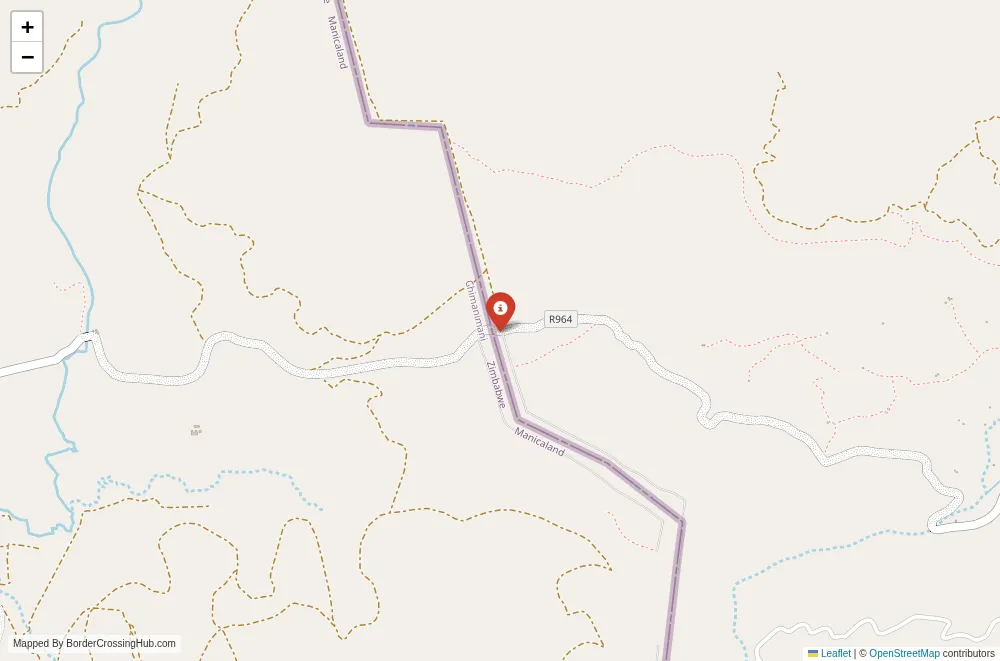
Approximate Border Location
Border Countries
- 🇿🇼Zimbabwe
- 🇲🇿Mozambique
Border Cities
- 🇲🇿Cashel
- 🇿🇼Rotanda
Wait Times
Cars 10-45m; peaks 60-240m weekends
Just crossed? Tap to report:
Operating Hours
08:00 AM-04:00 PM
Crossing Types
Ped,cars; border controls
Border Type
Land crossing via local road
Peak Times
09:00 AM-12:00 PM; weekends
Daily Crossings
500-2,500/day
Currency Exchange
USD/ZAR; MZN in Mutare; ATMs limited
Safety Information
Remote roads; checks can be slow
Languages Spoken
Shona, Portuguese, English
Accessibility Features
Basic; uneven approaches
About Chitompo & Chitompo
Monthly Update (March 2026):
As of 03/2026, the Chitompo & Chitompo Border Crossing stays quiet with only light local traffic. Cars and small pickups appear now and then rather than forming steady lines. Inspections are straightforward but can take time when several vehicles arrive together. Rural travel patterns largely set the rhythm.
No Cell Service at the Border? No Problem.
Don’t get caught scrambling for paperwork when you lose signal. Download the complete Africa Transit Guide directly to your device and access every critical detail, fast-track strategy, and border rule – 100% offline.
The Chitompo-Chitompo border crossing serves as a remote northern land connection between Zimbabwe and Mozambique, positioned in the Zambezi Valley region where Mashonaland Central Province meets Tete Province. You approach this point mainly for overland travel from Centenary or Mount Darwin in Zimbabwe toward areas south of Cahora Bassa Dam in Mozambique, or when heading toward the Zimbabwe-Zambia tripoint opposite Zumbo. Alternative names include the Chitompo Border Post, with both sides sharing the name Chitompo (ZIM for Zimbabwe side, MOZ for Mozambique side).
Location and Basic Connection
Chitompo on the Zimbabwe side lies in Mashonaland Central Province, while the Mozambique counterpart sits in Tete Province. The crossing links unpaved or basic gravel roads through arid lowveld terrain, facilitating local traffic, small trade, and occasional passenger vehicles. It remains one of the quieter options along the 1,231-kilometer Zimbabwe-Mozambique frontier, far from major commercial hubs like Forbes-Machipanda or Nyamapanda-Cuchamano. The border zone features flat plains with scattered acacia and proximity to the Zambezi system, including routes that cross the Panhame River on the Mozambican side.
Historical Background
The frontier here stems from colonial-era mappings between British and Portuguese authorities, with the area seeing limited development due to its remoteness. During Zimbabwe’s liberation struggle and Mozambique’s civil war, the region experienced sporadic activity, but the crossing stayed minor. Post-conflict, it supported informal trade and pastoral movements. Recent bilateral cooperation, including joint police efforts against cross-border crime in 2025-2026, has kept the post stable. Geopolitically, it aids local connectivity in this northern stretch, near the Cahora Bassa Dam and the Zambezi confluence with Zambia.
Current Operating Status
As of early 2026, the crossing operates daily from 07:00 to 17:00 local time (UTC+2 for both sides). It handles passenger and limited freight without recent major disruptions. Zimbabwe provides visa-on-arrival for many nationalities (typically $30-50 USD cash, single entry); Mozambique offers visa-on-arrival for eligible travelers (usually $50 USD cash). The post sees primarily local use, with no widespread closures noted. Always verify through embassies or recent reports, as remote posts can vary for holidays or maintenance.
Practical Crossing Procedures
You cross by vehicle or on foot. From Zimbabwe at Chitompo, complete exit formalities at immigration and customs for stamps and checks. Move across to the Mozambique side at Chitompo for entry. Mozambique requires visa payment (USD cash preferred), document review, and standard questions. Zimbabwe exit involves stamps and possible vehicle inspections. Bring passport photos, cash for fees, proof of funds, accommodation, and onward travel. The process takes 30 to 90 minutes typically, with basic facilities and straightforward handling.
Wait Times and Peak Periods
Queues stay short given low traffic, often clearing quickly. Early mornings or late afternoons move fastest. Peaks tie to local trade, market days, or seasonal movements, but this post avoids heavy delays. No significant backups reported recently.
Transportation Options
Zimbabwe’s approach uses gravel roads from Centenary or Mount Darwin. In Mozambique, tracks lead northwest across the Panhame River for about 120 km toward the Zimbabwe-Zambia tripoint near Zumbo. Shared taxis, private vehicles, or motorcycles work; no regular buses cross directly. Use official hires and prepare for rough conditions.
Scams and Safety Warnings
Scam reports remain minimal at this remote post, but watch for informal offers of “assistance” or poor-rate exchanges; proceed to official counters. Petty overcharges for transport occur occasionally. The isolated lowveld carries wildlife risks near Zambezi areas and general remoteness limits support. Both countries feel secure during open hours, but standard caution applies. Avoid unofficial deals and stay on designated paths.
Road Conditions and Scenery
Zimbabwe’s side features gravel through dry plains and small settlements. The border zone includes basic buildings amid scrub. Mozambique’s approach mixes dirt tracks with river crossings (Panhame), surrounded by baobabs, mopane woodland, and open lowveld. Dry season keeps paths navigable; wet periods add mud and challenges.
Seasonal Variations and Weather Impacts
Dry months (May-October) provide best access and steadier local flows. Wet season brings rain that affects dirt sections and rivers, slowing travel. Trade stays modest year-round, with activity aligned to drier periods.
Nearby Attractions
Chitompo offers rural hamlet life and proximity to Cahora Bassa Dam views farther north. Zimbabwe’s side links to Mashonaland Central landscapes. Mozambique’s route heads toward Zumbo and Zambezi confluence. The area suits those exploring northern frontiers or transboundary regions over major tourism.
Cultural and Economic Role
Local trade in essentials, agriculture, and goods sustains the crossing, supporting community livelihoods. It facilitates family movement and small exchanges in this remote zone, reinforcing ties along the northern frontier.
Final Planning Tips
Arrive early with USD cash for visas, printed documents, offline maps, and supplies for remote roads. Prepare for basic facilities and potential rough tracks. Check status ahead via embassies or forums. With prep, you manage formalities and navigate this understated northern border.
Wrapping Up the Crossing
Chitompo-Chitompo keeps things straightforward and low-key between Zimbabwe and Mozambique. Time your visit for dry conditions, handle the essentials, and it provides access to quiet northern routes. Safe travels.
No reviews yet.