Monthly Update (September 2026):
Chikanda & Kamba remains a useful northern Benin-Nigeria connection, and Nigeria's federal government specifically confirmed that the Kamba border crossing reopened in February 2026. That makes the crossing more relevant for regional travelers this year than it was during the earlier period of Nigerian border restrictions. No September closure has been reported. Travelers should nevertheless expect conventional immigration and customs processing rather than the relatively frictionless movement found within some West African regional routes.
About this crossing
You will notice quickly that this is not a remote outpost like some rural crossings, but it also does not reach the intensity of major highways. It sits somewhere in between: active, practical, and shaped by cross-border commerce.
Historical Context and Trade Importance
This crossing developed as part of long-standing trade routes linking northern Benin with northwestern Nigeria. Before modern borders were firmly enforced, communities in this region maintained strong economic and cultural ties, many of which still continue today.
Nearby Border Crossings




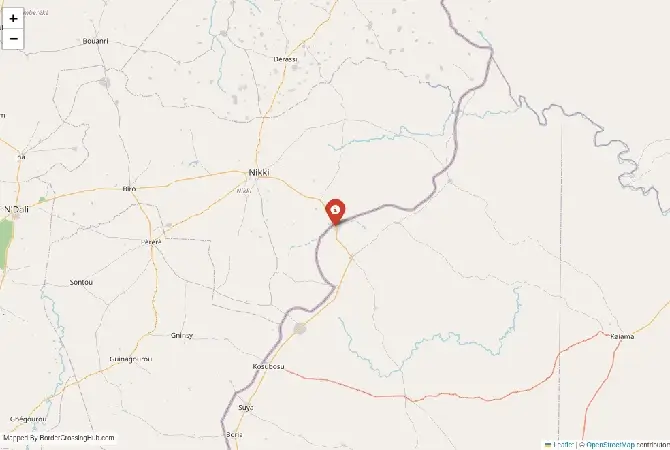
Kamba, on the Nigerian side, has grown into a regional trading town, while Chikanda plays a similar role on the Benin side. Goods such as agricultural products, textiles, and household items frequently move across this border.
Compared to coastal crossings, the traffic here is more regional than international, but it still plays a meaningful role in connecting inland economies.
Border Facilities and Layout
Facilities at Chikanda and Kamba are more developed than at smaller village crossings, though still relatively modest. You will find designated immigration and customs areas, with separate sections for pedestrians and vehicles.
The layout is straightforward, but not always clearly signposted. You may need to ask for directions between offices, especially during busy periods.
Electricity and basic administrative systems are usually available, but processes often remain manual. Expect paper logs, physical stamps, and direct interaction with officials rather than automated systems.
Operating Hours and Timing Your Crossing
The border generally operates during daylight hours, typically opening in the morning and closing in the evening. However, exact times can vary, and enforcement is not always strict.
Arriving early in the day helps reduce waiting time and ensures that all offices are open. Later in the afternoon, you may encounter slower processing or reduced staffing.
Unlike major crossings, nighttime operations are limited or nonexistent, so planning your arrival time is important.
Visa Requirements and Documentation
You should have all documents prepared before reaching the border.
For Nigeria, most foreign travelers need a visa obtained in advance. Visa-on-arrival is not reliably available at land borders like Kamba.
For Benin, an eVisa is required for most nationalities. You should apply online ahead of time and carry printed confirmation.
A yellow fever vaccination certificate is mandatory for entry into both countries. This is routinely checked, so keep it accessible with your passport.
Crossing Procedure and Wait Times
The process follows the usual sequence: exit formalities on one side, then entry procedures on the other. Distances between checkpoints are short, and the flow is generally easy to follow.
Wait times are moderate. On a typical day, you might complete the crossing in 30 to 60 minutes. However, delays can occur if there is increased vehicle traffic or additional inspections.
If you are traveling with a vehicle, customs procedures may take longer. Officials may inspect documents carefully, especially for foreign-registered vehicles.
Road Conditions and Transport Links
Access to this crossing is relatively good compared to more remote routes. Roads leading to Kamba are generally passable and connect to Nigeria’s broader road network.
On the Benin side, Chikanda is linked by regional roads that are in fair condition, though not always well maintained. Travel times can vary depending on weather and road quality.
Public transport options are available. Shared taxis, minibuses, and local buses operate between nearby towns and the border area. This makes the crossing accessible even if you are not driving.
Trade Traffic and Daily Activity
One of the defining features of the Chikanda–Kamba crossing is its steady trade activity. You will see traders moving goods in small quantities as well as larger shipments transported by trucks.
The atmosphere is active but not overwhelming. Unlike larger borders where truck queues dominate the scene, traffic here is more balanced between commercial and personal travel.
This creates a working rhythm that reflects the daily needs of the surrounding communities.
Seasonal Factors and Weather Impact
Weather conditions can influence your experience. During the rainy season, typically from May to October, roads on both sides can become muddy and slower to navigate.
Flooding is less common than at river crossings, but heavy rain can still affect travel times. In the dry season, heat and dust are the main challenges.
Planning your trip with seasonal conditions in mind can help avoid unnecessary delays.
Scams & Warnings
As with many West African borders, you should be aware of potential scams. Unofficial “helpers” may approach you offering to speed up the process for a fee.
You should handle these situations carefully. In most cases, their services are not necessary. Following official procedures is usually enough.
Requests for unofficial payments can also occur. You should remain polite but firm, asking for receipts and clarification for any fees. Keeping small denominations of local currency can make legitimate payments easier.
Confusion during the process is another common issue. Taking your time and ensuring you receive all required stamps will help prevent problems later.
Local Life and Cross-Border Interaction
This crossing reflects the strong connection between communities on both sides. You will see farmers, traders, and families moving back and forth as part of their daily routines.
The mix of languages is also noticeable. English is widely used on the Nigerian side, while French is common in Benin. Being able to communicate in both, even at a basic level, can make the process easier.
Practical Tips for Travelers
You should keep your documents organized and ready for inspection. Printed copies of visas and vaccination certificates are essential.
Carrying water and snacks is advisable, especially if you encounter delays. Facilities near the border are limited.
Mobile network coverage is generally available but can be inconsistent. Having offline access to important information can be helpful.
Final Thoughts
The Chikanda–Kamba crossing offers a practical inland route between Benin and Nigeria, shaped by regional trade and steady local movement.
Wrapping Up
You should approach this crossing with preparation and patience. It is less chaotic than major border points but still requires attention to detail and flexibility to handle the conditions you may encounter.
View all border crossings between Benin and NigeriaPractical information
Fuel
Benin: <1 km - Nigeria: <1 km
Currency
XOF,NGN exchangers
Safety information
Moderate checks, delays
Connectivity
Mobile coverage (2G/3G/4G); local SIMs
Have you crossed here?
Help other travelers by sharing your experience, wait times, and any updates.