
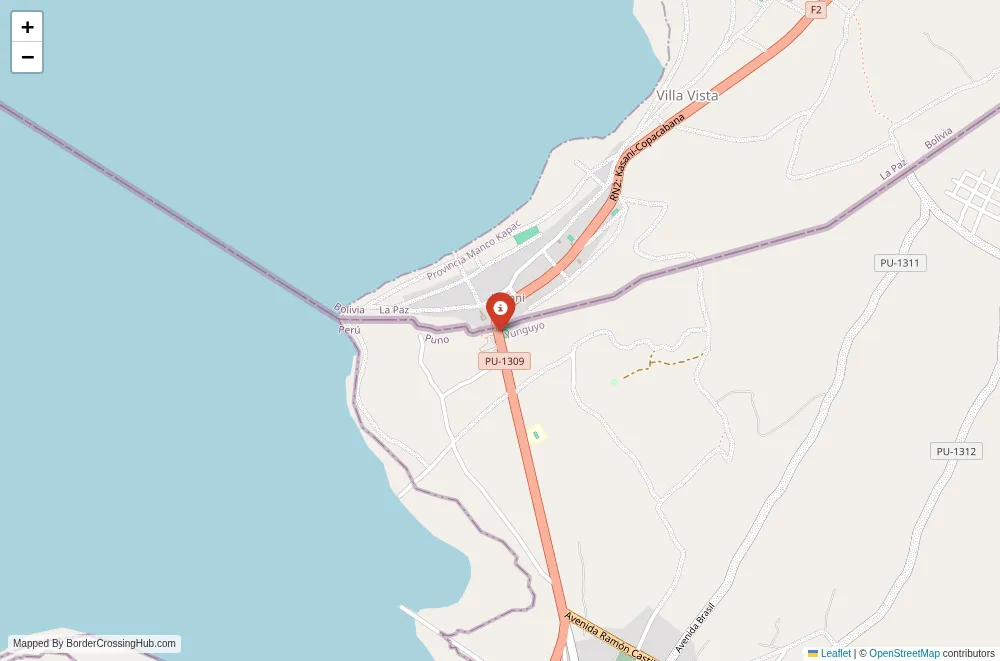
Approximate Border Location
Wait Times
Ped/cars 15-60m; peaks 90-210m
Just crossed? Tap to report:
Operating Hours
07:30 AM-07:00 PM
Crossing Types
Ped,cars,buses; tourist-heavy route
Border Type
Land crossing via road causeway
Peak Times
07:30-10:30 AM; weekends; Jun-Aug
Daily Crossings
800-3,500/day
Currency Exchange
S/; Bs in Yunguyo; exchange desks
Safety Information
Crowding at counters; keep documents secure
Languages Spoken
Spanish
Accessibility Features
Step-free areas; limited accessible toilets
About Carancas & Yunguyo
The Carancas Yunguyo border crossing links the rural Peruvian community of Carancas in Puno’s Yunguyo province to the nearby Yunguyo town area on the Bolivian frontier near Lake Titicaca, though this point remains a very minor or informal passage compared to the established Kasani Yunguyo route just a short distance away.
Location and Basic Connections
You find this area along the southern shore of Lake Titicaca in Peru’s Puno region, with Carancas sitting close to Yunguyo town, about 60 km east of Puno city via the paved road toward the lake. Yunguyo serves as the main Peruvian hub for crossings to Bolivia’s Copacabana side. The primary formal crossing is at Kasani (Bolivia) Yunguyo (Peru), a few kilometers from Carancas, where immigration posts handle most traffic. Carancas itself gained brief international attention in 2007 from a meteorite impact event that created a crater nearby, but it does not host a dedicated major border post. Connections rely on colectivos or minibuses from Puno to Yunguyo (around 2 hours), then short rides or walks to the Kasani area for the actual frontier. On the Bolivian side, transport from Copacabana picks up easily for onward trips to La Paz or elsewhere.
Alternative Names
This zone is often lumped under Paso Yunguyo Kasani, Yunguyo border, or Copacabana Yunguyo crossing. Carancas specifically refers more to the local community and meteorite site than a distinct border name, with Kasani Yunguyo as the standard label for the main crossing.
Historical Background
The Titicaca shore frontier dates to 19th century agreements after independence, with Yunguyo emerging as a key point for lake trade and movement. The Kasani Yunguyo passage formalized in the 20th century as tourism grew around Copacabana and Puno. Carancas stayed rural until the 2007 meteorite fall, which drew scientists and media but did not alter border functions. Peru upgraded facilities at Kasani Yunguyo in recent years, including security enhancements in 2024, to manage flows better. The area has seen occasional protest-related disruptions, but the crossing reopened reliably post-events.
Geopolitical Significance
This route ranks as the preferred tourist-friendly alternative to the busier Desaguadero crossing farther south. It handles steady passenger movement for Lake Titicaca visitors heading between Puno and La Paz via Copacabana. Binational ties allow smooth neighborhood traffic for locals in Yunguyo and Copacabana zones. The crossing supports tourism economies on both sides, with fewer crowds and a more relaxed feel. As of early 2026, it operates normally without major restrictions reported, though always check Peruvian Migraciones or Bolivian migration sources for any protest or weather impacts.
Practical Crossing Procedures
You cross primarily at the Kasani Yunguyo posts, a short distance from Carancas. From Peru, get your exit stamp at Yunguyo immigration, walk or take a short ride across the frontier line (often marked by a chain or arch), then enter Bolivia at Kasani for stamps and basic checks. Most nationalities receive visa-free entry for tourism (90 days in each country). Bring your passport valid six months, proof of onward travel if requested, and small cash. Vehicles get quick inspections; contents glanced at and VIN checked on the Peruvian side. The process stays straightforward and quick for foot passengers or small groups.
Typical Wait Times and Operating Hours
Hours run roughly 07:30 to 18:00 on the Peruvian side and 08:30 to 19:00 on the Bolivian side, with daily operation. Waits average 20 to 45 minutes total, often faster than Desaguadero due to lower volume. Peak tourist times or weekends add slight delays, but officials move things along efficiently.
Transportation Options
Colectivos or minibuses run from Puno to Yunguyo (low cost, frequent departures), then short taxis or walks to the border. From Kasani, colectivos head to Copacabana in minutes. Organized buses or hop-on hop-off services like those from La Paz to Puno handle the full route with border stops. Private vehicles cross easily with standard paperwork. This setup works well for independent travelers or those combining with Copacabana visits.
Road Conditions and Scenery
The road from Puno to Yunguyo stays paved and scenic along Lake Titicaca, with views of blue waters, reed boats, and terraced hills. Closer to the border, it turns to local streets in Yunguyo, then a short flat stretch to Kasani. The lake backdrop dominates, with distant mountains and floating island glimpses on clear days. Altitude hovers around 3800 meters, so expect thin air.
Scams and Warnings
This friendly crossing sees few issues, but touts near Yunguyo may push overpriced transport or “help” with stamps; head straight to official offices. Currency exchange at the border offers poor rates; change in Puno or Copacabana. Occasional reports mention minor overcharges on colectivos during busy periods. Keep valuables secure in crowds. Protests in either country can block roads temporarily, stranding travelers. Monitor news or migration updates before going.
Nearby Attractions
Yunguyo offers markets with local crafts and food. Carancas features the 2007 meteorite crater site (now a small attraction with a fence and info signs) for geology fans. Copacabana (Bolivia) draws crowds with its basilica, Isla del Sol boat trips, and lakeside relaxation. Puno provides Uros floating islands and Sillustani ruins. The crossing fits perfectly into Titicaca exploration itineraries.
Seasonal Variations and Delays
Dry season (May to October) brings stable weather and steady traffic. Rainy months (November to April) cause occasional road issues or delays from mud. Cold nights persist year-round at altitude. Tourist peaks around holidays increase passenger numbers slightly.
Cultural and Economic Role
Daily crossings maintain Aymara community links, with trade in lake fish, textiles, and produce. Tourism bolsters both sides through visitors to Copacabana and Puno. Shared traditions in food, music, and festivals appear in border markets.
Final Planning Notes
Cross in daylight for comfort and carry passport copies, small cash (PEN, BOB, USD), water, and sun protection. Use reputable transport and check status via official sites. This suits those seeking a relaxed Titicaca border experience.
Handling This Titicaca Shore Crossing
Carancas Yunguyo (via the Kasani post) provides an easy, scenic entry to Bolivia along Lake Titicaca, with minimal hassle and strong local flavor. Plan for altitude, stick to official steps, and enjoy the lake views as you move between Peru and Bolivia.
No reviews yet.