
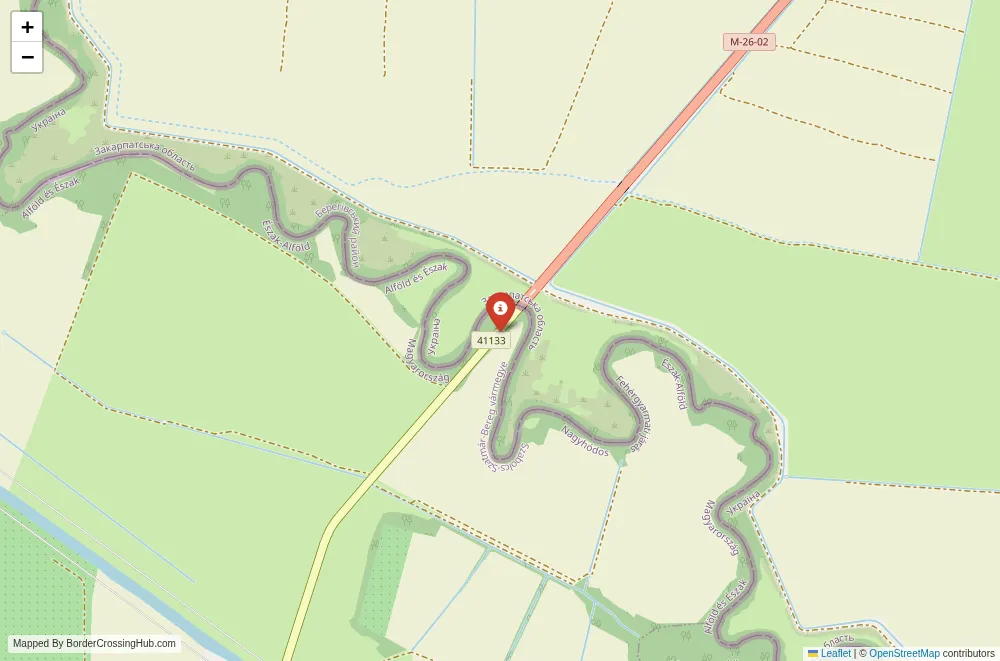
Approximate Border Location
Wait Times
Cars 45-180m; peaks 180-480m
Just crossed? Tap to report:
Operating Hours
07:00 AM-07:00 PM
Crossing Types
Ped,cars; border controls
Border Type
Land crossing via rural road
Peak Times
Morning 07:00-10:00 AM; weekends
Daily Crossings
800-4,000/day
Currency Exchange
HUF; UAH, EUR in Vynohradiv; ATMs limited
Safety Information
Queues; keep documents ready
Languages Spoken
Ukrainian/Hungarian
Accessibility Features
Paved lanes; limited accessibility
About Câmpulung la Tisa & Teresva
Monthly Update (March 2026):
As of 03/2026, the Câmpulung la Tisa & Teresva Border Crossing sees steady daily traffic and feels mostly stable. Cars move across the Tisa bridge regularly, though lines can stretch slightly on the Ukrainian approach during peak hours. Mornings often pass quicker. Cross-border commuting and small trade keep the flow consistent.
No Cell Service at the Border? No Problem.
Don’t get caught scrambling for paperwork when you lose signal. Download the complete Europe Transit Guide directly to your device and access every critical detail, fast-track strategy, and border rule – 100% offline.
The Câmpulung la Tisa-Teresva border crossing (also known as Câmpulung la Tisa – Тересва, or sometimes listed under railway points like Campulung la Tisa – Teresva) functions exclusively as a rail link along the Romania-Ukraine frontier, situated in the Maramureș region where the Tisza River valley meets forested hills.
Location and Basic Connections
This point joins the Romanian railway station at Câmpulung la Tisa in Maramureș County to Teresva station on the Ukrainian side in Zakarpattia Oblast’s Tyachiv Raion. It lies along a historic rail corridor that ties into the broader Sighetu Marmației network in Romania and lines toward Solotvyno or other Zakarpattia areas in Ukraine. No road crossing exists here; the Romanian Border Police lists any associated road point as closed. Access depends entirely on rail, with the line featuring broad-gauge (1520 mm) track on the Ukrainian side and a transition to dual-gauge sections toward Sighetu Marmației. Pre-suspension, it supported freight and occasional passenger services in this remote, scenic part of the Carpathian foothills.
Historical Background
The rail infrastructure traces back to Austro-Hungarian and later Soviet-era developments, when lines crossed fluidly through Maramureș and Zakarpattia. The bridge over the Tisza at this point served as a vital connector for local communities with mixed Romanian, Ukrainian, and Rusyn heritage. Passenger and freight traffic flowed until around 2008, when low volumes, smuggling concerns, and infrastructure issues led to suspension. Efforts to revive the line gained momentum post-2022 amid war-related needs for alternative routes, with test runs and repairs on segments like Berlebash-Valea Vișeului and Teresva-Câmpulung la Tisa. Ukrainian Railways pushed for reopening, and Romanian CFR SA conducted repairs, but full regular service has not materialized consistently.
Current Status and Safety Warnings
As of early 2026, this remains a non-operational or highly restricted railway crossing for civilian use. No regular passenger trains cross here; freight or special movements may occur sporadically under strict controls. The broader Romania-Ukraine border stays open at other points, but rail links like this one face ongoing challenges from infrastructure gaps and regional security. The area carries risks typical of remote border zones near conflict-influenced regions. Unauthorized approaches to rail facilities invite detention or fines from patrols. Landmines or remnants from past events pose hazards in some frontier sections, though less acute here than farther east. Foreigners attempting to explore without permission face extra scrutiny. Rely on official sources: Romania’s Border Police, Ukraine’s State Border Guard Service, and rail operators CFR SA or Ukrainian Railways. Avoid planning travel via this point.
Operating Hours and Wait Times
When the line saw activity (pre-2008 and during brief revivals), operations followed train schedules rather than fixed hours, with processing tied to arrivals/departures. Border checks for cleared trains took minutes to an hour depending on cargo or passengers. No current civilian operations mean no queues or hours apply.
Visa Requirements for Foreign Visitors
Romania (EU/Schengen external border) grants visa-free entry for many nationalities up to 90 days. Ukraine allows visa-free stays for numerous countries, typically 90 days in 180, or e-visas. Rail points historically required valid tickets and documents, with possible extras for border-zone areas. With no regular service, visa rules do not apply here. Illegal rail crossing attempts carry heavy penalties.
Crossing Procedures Step by Step
In past functional periods, trains stopped at Câmpulung la Tisa for Romanian exit/customs, crossed the Tisza bridge (a short segment), then cleared Ukrainian entry at Teresva with document and cargo checks. Focus included manifests, security scans, and gauge-related notes (broad gauge dominant). No pedestrian or vehicle options existed. Civilian procedures have halted; the line sits restricted or dormant.
Transportation Options
Rail was the only method. Pre-suspension, tickets on regional lines from Sighetu Marmației or Ukrainian sides arranged passage. No buses, taxis, or roads cross directly. Current lack of service eliminates options; nearby road points like Sighetu Marmației handle overland travel instead.
Road Conditions and Scenery
No crossing road exists, but nearby access tracks are rural and paved/gravel, prone to weather wear. The Tisza valley scenery dominates: river views, forested hills, small villages, and Carpathian edges. Flat river plains transition to wooded slopes, with a remote, green feel year-round.
Nearby Attractions
Câmpulung la Tisa offers quiet rural life in Maramureș with traditional wooden churches and folk architecture. Sighetu Marmației nearby features the Memorial to the Victims of Communism and Sighet Prison museum. On the Ukrainian side, Teresva lies near the Tisza and Carpathian nature, with Solotvyno salt mines or Rakhiv mountains farther out. The area ties into Maramureș ethnographic trails.
Seasonal Variations and Weather Impacts
Rail in this valley contends with winter snow/ice on tracks, spring floods from the Tisza, and summer storms. Infrastructure vulnerabilities amplify seasonal delays. Security and repair status override weather; no regular ops mean external factors dominate.
Practical Travel Tips
Do not attempt crossing here. For rail enthusiasts or border research, use maps, official rail timetables, and reports. In Maramureș or Zakarpattia, follow border rules, avoid restricted rail zones, secure documents, and skip photography of facilities.
Cultural and Economic Role
Historically it enabled local exchanges in goods, family visits, and cultural ties across Maramureș-Zakarpattia communities sharing traditions, languages, and river-based life. Economically modest, focused on freight like timber or local produce rather than major trade.
Final Note on This Rail Crossing
Câmpulung la Tisa-Teresva persists as a quiet, largely inactive rail trace amid infrastructure and regional realities. Skip it for travel and watch official rail/border updates for revival signs. Safe paths on your next adventure.
No reviews yet.