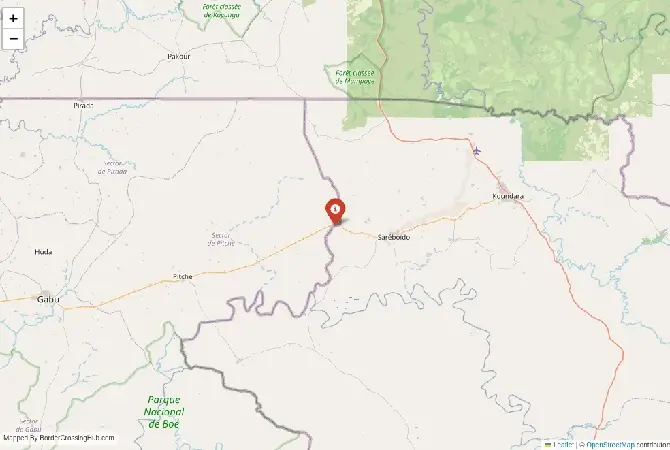
Monthly Update (September 2026):
Buruntuma & Kandika remains a remote Guinea-Bissau-Guinea frontier route with no significant September reopening or closure identified. The crossing is far less important for international travelers than the principal routes connecting Guinea-Bissau with Senegal. Because infrastructure and official services are limited in this part of the frontier, travelers should confirm that the crossing is operating before making the journey. Local road conditions are likely to be a bigger constraint than border queues.
About this crossing
This is a remote crossing with very little international traffic, so you will mostly encounter locals moving between nearby villages.
Historical Background and Border Context
The boundary reflects the colonial split between Portuguese Guinea and French Guinea. After Guinea-Bissau declared independence in 1973, the border became formalized, but local connections remained largely unchanged. Ethnic groups such as the Fulani and Mandinka continue to live on both sides, maintaining trade and family ties that predate modern borders.
Nearby Border Crossings




The Koundara region has long been somewhat isolated within Guinea, which contributes to the limited development of infrastructure near the crossing.
First Impressions at the Border
Arriving at Buruntuma, you will likely find a very simple checkpoint consisting of a small building and a few officials. The pace is slow, and it is not unusual to wait for officers to begin processing if they are not immediately present.
On the Kandika side, the setup is similarly basic. You may need to locate the correct office yourself, as signage is minimal. The overall environment feels informal compared to busier crossings in the region.
Crossing Procedures and Wait Times
You start with exit formalities in Guinea-Bissau, where your passport is checked and stamped. This step is usually straightforward, though delays can happen if staff are handling multiple tasks.
Entry into Guinea tends to involve a more careful review of documents. Officers may ask questions about your travel plans and verify your visa. Wait times vary widely. On a quiet day, the process might take around 20 to 30 minutes, but it can extend beyond an hour if there are complications or several travelers.
Electricity and administrative issues can occasionally slow things down, so patience is important.
Visa Requirements and Documentation
Guinea requires visas for most foreign visitors, and you should arrange yours before arriving at Kandika. This crossing is not suitable for obtaining a visa on arrival.
Guinea-Bissau also requires visas for many nationalities, so make sure your paperwork is complete before reaching the border. Carry printed copies of your passport and visa, as officials may request them for record keeping.
Road Conditions and Access
Getting to Buruntuma can be challenging. Roads are often unpaved and may become difficult during the rainy season. Muddy conditions and flooding can slow travel significantly.
On the Guinea side, roads from Kandika are similarly basic, with uneven surfaces and limited maintenance. Travel speeds are generally low, and journeys can take longer than expected.
Transport options are limited. Shared vehicles operate without fixed schedules, and you may need to wait for enough passengers before departure.
Scams & Warnings
You should approach this crossing with caution due to its remote location. Assistance is limited if issues arise, and communication can be difficult if you do not speak local languages.
Unofficial fees are a known issue. Individuals may offer help with paperwork and then request payment. It is best to deal directly with uniformed officials and ask for clarification if any charges seem unclear.
Keep your belongings secure and avoid displaying valuables. While the area is generally calm, its isolation means you need to rely on your own preparation.
Seasonal Factors and Travel Timing
The rainy season has a strong impact on this crossing. Roads can become muddy or temporarily impassable, increasing travel times. Planning your trip during the dry season makes the journey easier.
Heat during the dry months can also slow border operations, especially in the afternoon. Arriving earlier in the day can help reduce waiting times.
Local Life Around the Border
Communities near Buruntuma and Kandika rely on agriculture and small scale trade. You will see local markets where goods such as grains, livestock, and everyday items are exchanged across the border.
Languages vary across the area. French is used in Guinea, while Portuguese and Crioulo are common in Guinea-Bissau. Local languages are widely spoken on both sides.
Facilities are minimal. You should not expect ATMs, reliable internet, or a range of food options near the crossing.
Economic Role of the Crossing
Although quiet, the Buruntuma–Kandika crossing supports local economies by allowing the movement of goods and people. Trade is often informal, reflecting the close ties between communities on both sides.
The relaxed atmosphere can make procedures feel inconsistent, so flexibility is important.
Practical Tips for Travelers
Preparation is essential. Bring enough cash, keep your documents organized, and allow extra time for delays. Dress modestly and remain respectful when interacting with officials.
If you are traveling overland through multiple countries in the region, build extra time into your schedule to account for unpredictable conditions.
Final Word
The Buruntuma–Kandika crossing offers a remote and lightly traveled route between Guinea-Bissau and Guinea. You will encounter basic infrastructure and variable road conditions, but also gain insight into rural cross border life. Careful planning and realistic expectations will help you manage the journey without unnecessary complications.
View all border crossings between Guinea-Bissau and GuineaPractical information
Fuel
Guinea-Bissau: <1 km - Guinea: <1 km
Currency
GNF,XOF limited
Safety information
Busy trucks, some delays
Connectivity
2G/3G/4G mobile coverage
Have you crossed here?
Help other travelers by sharing your experience, wait times, and any updates.